- News
- North East
- Assam
- Beyond the Bard of Brahmaputra: Discovering Bhupen Hazarika's life as singer, poet, filmmaker and visionary
Beyond the Bard of Brahmaputra: Discovering Bhupen Hazarika's life as singer, poet, filmmaker and visionary
Celebrated for his music, films, and writings, he used art to promote social justice, humanity, and cultural pride. His works, from songs like Manuhe Manuhor Babe to acclaimed films, continue to inspire generations.
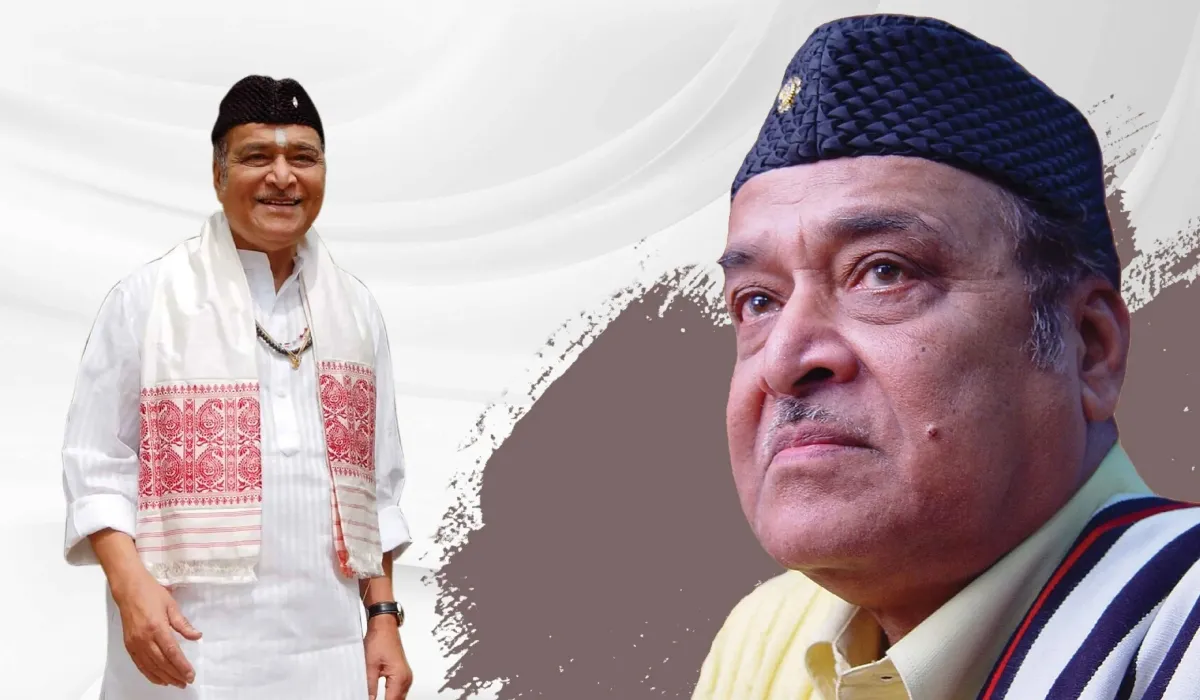
As someone who grew up in Assam, Bhupen Hazarika’s voice has always been more than just music — it has been the sound of our collective soul. Every time Manuhe Manuhor Babe (Humans for humans) played somewhere, it felt as though the Brahmaputra itself was speaking — flowing with empathy, courage and timeless wisdom. On the occasion of his death anniversary today, November 8, we remember not just the man but the movement he created through his music and his enduring message of humanity.
Just two months ago, on September 8, Assam and the rest of India celebrated his birth centenary with heartfelt tributes, concerts, and academic events that revisited his enduring legacy. Today, as we observe his passing, those celebrations feel even more significant — a reminder that Bhupen Da may have left us in 2011, but his voice continues to live on through every heart that hums his melodies.
The voice that united a people
Dr Bhupen Hazarika, often called the Bard of the Brahmaputra, remains one of the most influential cultural figures from Northeast India. His music was deeply rooted in Assamese folk traditions yet carried a universal message of humanity, justice, and compassion. His compositions, like Bistirno Parore and Manuhe Manuhor Babe transcended time and borders, becoming anthems of empathy and equality.
For every Assamese household, his songs were part of daily life — songs that made us think, reflect, and hope. My own father often said, “All his songs carry deep meanings; something today’s songs lack.” That sentiment rings truer today than ever.
Early life: The making of a genius
Born on September 8, 1926, in Sadiya, Assam, Bhupen Hazarika was destined for greatness. Growing up in a culturally rich environment, he was exposed early to the artistic traditions of Assam. His family’s frequent transfers — especially to Tezpur, the cultural hub of Assam — connected him with legends like Kalaguru Bishnu Prasad Rava and Rupkowar Jyoti Prasad Agarwala.
It was under their guidance that a young Bhupen recorded his first song, Kakhote Kolosi Loi Jai O Rosoki Bai, at just nine years old in Kolkata. This marked the beginning of a seven-decade-long artistic odyssey.
The filmmaker who wove stories with soul
Inspired by Jyoti Prasad Agarwala’s Joymoti, Bhupen Da ventured into filmmaking, debuting as a director with Era Bator Sur in 1956. He went on to create masterpieces that combined melody, meaning, and movement. His films, such as Shakuntala and Chameli Memsaab, received national acclaim for their lyrical storytelling and powerful music.
In Bollywood, he left an indelible mark with timeless songs like Dil Hoom Hoom Kare (Rudaali) and Ganga Behti Hai Kyon (Rudaali, Hindi version of Bistirno Parore), blending Assamese soul with global appeal.
Philosophy: Music as a moral compass
What made Bhupen Da truly extraordinary was his belief in art as a tool for social transformation. His music carried messages of unity, equality, and human dignity — values that transcended religion, caste, and geography.
Through his art, he stood against injustice and spoke for the voiceless. Songs like Ahh Ahh Ulai Ahh reflected his revolutionary spirit, while Manuhe Manuhor Babe became a moral anthem for humanity. He once said, “My songs are my protest, my prayer, and my philosophy.”
Cultural bridge to the world
Bhupen Hazarika’s genius was not confined to Assam. As a cultural ambassador, he represented India on global platforms in the U.S., Japan, and Europe. His ability to blend Assamese folk with world music earned him admiration across borders.
His friendships with iconic personalities like MF Hussain, Lata Mangeshkar, and Hemanta Kumar shaped an artistic legacy that defied boundaries.
Awards, recognition and timeless legacy
Throughout his life, Bhupen Da received countless honours — the Padma Shri (1977), Padma Bhushan (2001), Dadasaheb Phalke Award (1992) and posthumously, the Bharat Ratna (2019). Yet, for the people of Assam, his greatest recognition has always been the love he inspired and the pride he instilled.
As his confidant Kamal Kataki once said, “For Assamese society, Bhupen Da is like Bhishma Pitamah. He is not God, yet he is nothing short of one.”
The centenary and the legacy that lives on
In September, Assam celebrated Bhupen Da’s 100th birth anniversary with community gatherings, concerts, and exhibitions across the state. From Guwahati’s Sankardev Housing Complex to local schools and colleges, tributes poured in from all corners. Organisers like Indrajit Konwar urged the inclusion of Bhupen Hazarika’s works in school curricula, so that new generations could draw inspiration from his art and ideals.
Today, as we mark his death anniversary, these celebrations feel deeply connected — bookending a life that continues to flow like the Brahmaputra itself: vast, eternal, and full of soul.
An eternal river of song
To us Assamese, Bhupen Da is more than a legend — he is an emotion that flows as endlessly as the Brahmaputra. His words remind us of our roots, our humanity, and our responsibility to dream of a better world.
As his immortal lines echo through time —
“Asom Amar Jononi, Ami Tarun Senani…” — We know that Bhupen Hazarika did not just sing for Assam; he sang for all humankind.