Why did Pakistan reject Trump's Abraham Accords push over Iran peace deal?
Pakistan rejected Trump’s push to join the Abraham Accords because it says recognising Israel goes against its long-standing policy and “fundamental ideology.” Islamabad maintains that it will not recognise Israel until an independent Palestinian state is created.
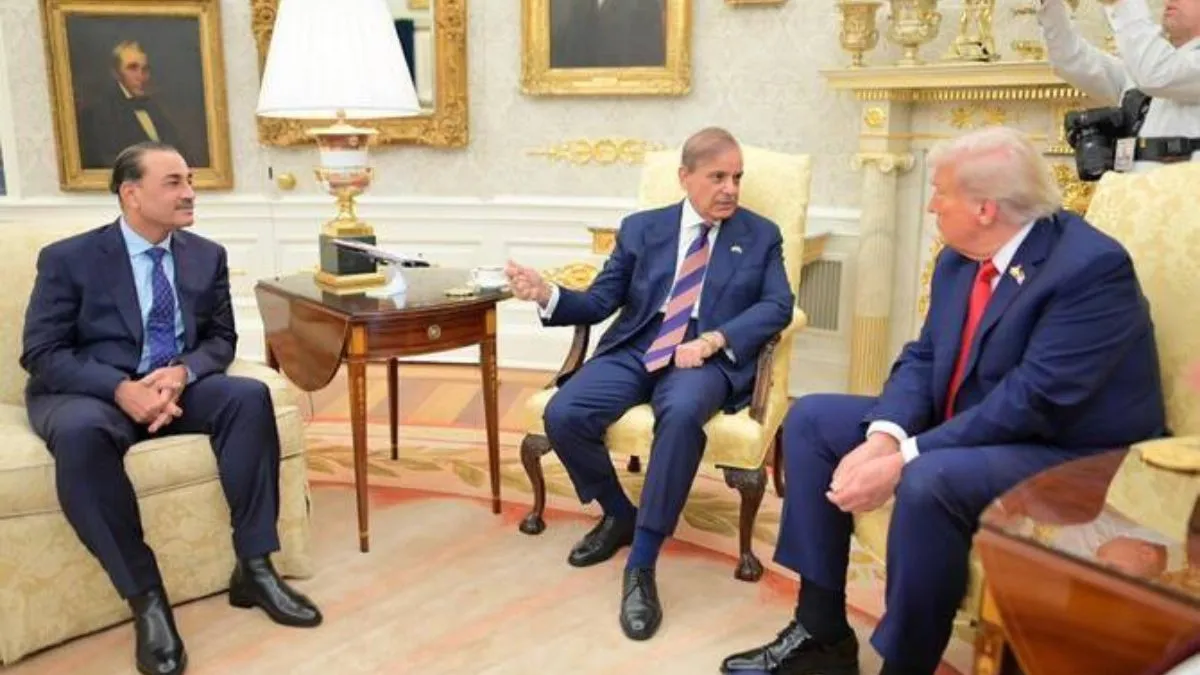
Pakistan has become the first country to openly reject US President Donald Trump’s proposal to join the Abraham Accords as part of a larger peace effort linked to Iran and the Middle East. Trump wanted several Muslim-majority countries including Pakistan, Saudi Arabia, Qatar, Turkey and Jordan to formally recognise Israel under the Abraham Accords framework. But Islamabad made it clear, Pakistan is not ready to do that.
What are the Abraham Accords?
The Abraham Accords are agreements first introduced by Trump in 2020 to improve relations between Israel and Arab countries.Under these accords, countries agree to establish diplomatic ties, business relations and security cooperation with Israel.
The United Arab Emirates and Bahrain were the first to sign the agreements, followed later by Morocco and Sudan. Trump now wants more countries to join the bloc, saying it could bring long-term peace and stability to the Middle East.
Why did Pakistan say no?
Pakistan’s rejection is rooted in a mix of ideology, politics, religion and foreign policy. In very simple terms, Pakistan believes recognising Israel without first solving the Palestine issue would go against its decades-old national position.
Pakistan’s Defence Minister Khawaja Muhammad Asif said joining such an agreement would clash with the country’s “fundamental ideologies”. He also questioned whether Israel could be trusted diplomatically, making Islamabad’s stand even more direct.
For more than 75 years, Pakistan has supported the Palestinian cause and refused to formally recognise Israel. Pakistan says it can only recognise Israel if an independent Palestinian state is created with East Jerusalem as its capital.
This position goes all the way back to Pakistan’s founder, Muhammad Ali Jinnah, who opposed the partition plan for Palestine in 1947. Successive Pakistani governments civilian and military have largely maintained the same line. Even recently, Foreign Minister Ishaq Dar repeated that there would be “no change” in Pakistan’s policy unless there is a two-state solution.
The ongoing war in Gaza has made any conversation about recognising Israel extremely sensitive inside Pakistan.
Public anger over civilian deaths in Gaza remains high, and many religious as well as political groups strongly oppose any move towards normalising ties with Israel. For the Pakistani government, joining the Abraham Accords right now could trigger massive political backlash at home.
Pakistan also has to think about Iran
Another major reason is Iran. Pakistan shares a long border with Iran and maintains important strategic and economic ties with Tehran. Trump reportedly linked expansion of the Abraham Accords with a broader peace settlement involving Iran. But Pakistan appears uncomfortable combining the two issues.
Islamabad does not want its relations with Iran to suffer by appearing too close to a US-backed regional arrangement involving Israel.
‘Even our passports don’t mention Israel’
During his television interview, Defence Minister Khawaja Asif pointed to an important fact, Pakistani passports do not recognise Israel. He said Pakistan remains one of the few countries whose passports do not even list Israel as a valid state for travel recognition.
The statement was meant to underline how deeply rooted Pakistan’s official policy is on the issue.
Also Read: Embarrassment for Pakistan PM as Trump names Munir but skips Shehbaz Sharif in Abraham Accords post