These countries don't recognise Palestine as a state: Complete list
Nearly 50 countries, including major Western powers, still do not recognise Palestine as a state despite growing global support and shifting international dynamics.
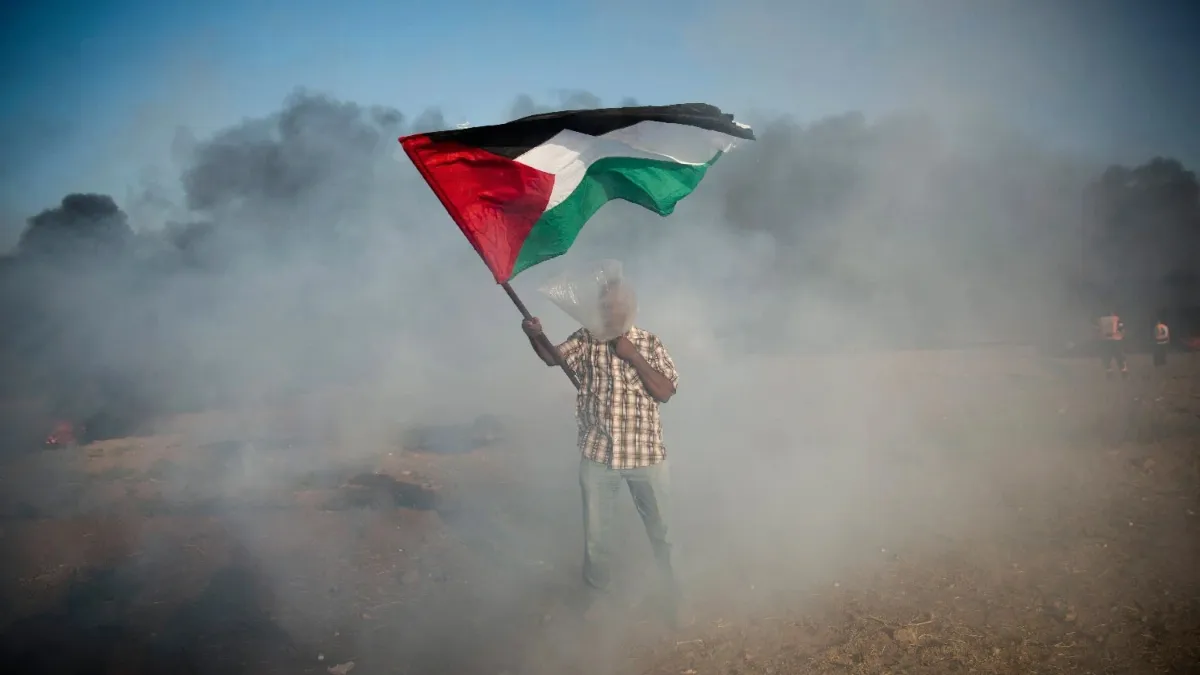
In a landmark move, France announced today that it will officially recognise the State of Palestine starting in September, joining a growing list of nations backing Palestinian statehood. Despite a growing global consensus in support of Palestinian statehood, nearly 48 countries — including some of the world’s most powerful Western nations—continue to withhold formal recognition of the State of Palestine. As of mid-2025, over 140 of the 193 UN member states recognise Palestine, but a significant bloc remains opposed or hesitant.
Countries that have not recognised Palestine
Europe
Andorra, Austria, Belgium, Croatia, Denmark, Estonia, Finland, Germany, Greece, Italy, Latvia, Lithuania, Liechtenstein, Luxembourg, Moldova, Netherlands, North Macedonia, Portugal, San Marino, Slovenia, Switzerland, United Kingdom, Monaco
America
Barbados, Canada, Jamaica, Panama, United States
Asia
Armenia, Japan, Myanmar, Singapore, South Korea
Middle East
Israel
Oceania
Australia, Fiji, Kiribati, Marshall Islands, Micronesia, Nauru, New Zealand, Palau, Samoa, Solomon Islands, Tonga, Tuvalu
Africa
Cameroon, Eritrea
The recognition divide
The State of Palestine was proclaimed in 1988 and has since gained wide recognition across Asia, Africa, and Latin America. It holds non-member observer state status at the United Nations and is a member of several international bodies, including UNESCO and the International Criminal Court.
Yet, many powerful nations — such as the United States, the United Kingdom, Germany, France, Canada, Japan, and Australia — have not recognised Palestine as a sovereign state. This has created a clear divide between Global South nations and Western-aligned powers.
Why have some countries not recognised Palestine?
Support for a negotiated two-state solution
Countries like the US, UK, France, and Germany maintain that Palestinian statehood should result from direct negotiations with Israel, not through unilateral recognition. They argue that premature recognition could jeopardise peace talks and further destabilise the region. These governments emphasise that any lasting resolution must involve mutual agreement on contentious issues like borders, security, refugees, and the status of Jerusalem.
Strategic diplomatic alignments
Nations with strong strategic ties to Israel, including Canada, Australia, and Japan, avoid recognition to preserve alliances in defense, trade, and technology. These countries often vote alongside Israel and the United States in international forums, reinforcing a bloc of support that resists Palestinian claims to statehood without conditions.
Domestic political dynamics
In several European democracies, domestic political groups — especially on the right — oppose Palestinian recognition due to concerns over immigration, terrorism, and perceptions of anti-Israel bias. Governments in such contexts often prioritize internal political stability and public opinion over foreign policy shifts.
US diplomatic pressure
As a global superpower and Israel’s staunchest ally, the United States exerts considerable influence on many countries. Washington has consistently discouraged its allies from recognizing Palestine outside of a negotiated process. It also uses its veto power at the UN Security Council to block Palestinian membership or resolutions perceived as unfavorable to Israel.
The changing tide?
Several countries have signalled a shift in position. France, for example, is expected to recognise Palestine by September 2025, joining recent moves by Ireland, Norway, and Spain, which formally recognised the state in May 2024.
These recognitions have intensified pressure on other Western countries to follow suit, especially amid ongoing violence in Gaza and increased international advocacy for Palestinian rights.
What recognition means
Recognition does not necessarily result in full diplomatic relations, nor does it immediately change realities on the ground. However, it strengthens Palestine's legal and political standing in the international community and reinforces calls for a two-state solution.
At the same time, opponents argue that unilateral recognition undermines negotiation-based peace frameworks and complicates the already fragile Israeli-Palestinian relationship.