India votes against UNHRC resolution condemning Iran crackdown, Tehran thanks New Delhi for support
The UNHRC resolution was adopted with 25 countries voting in favour, seven against, and 14 abstaining. It criticised Iran over the handling of nationwide protests that began on December 28.
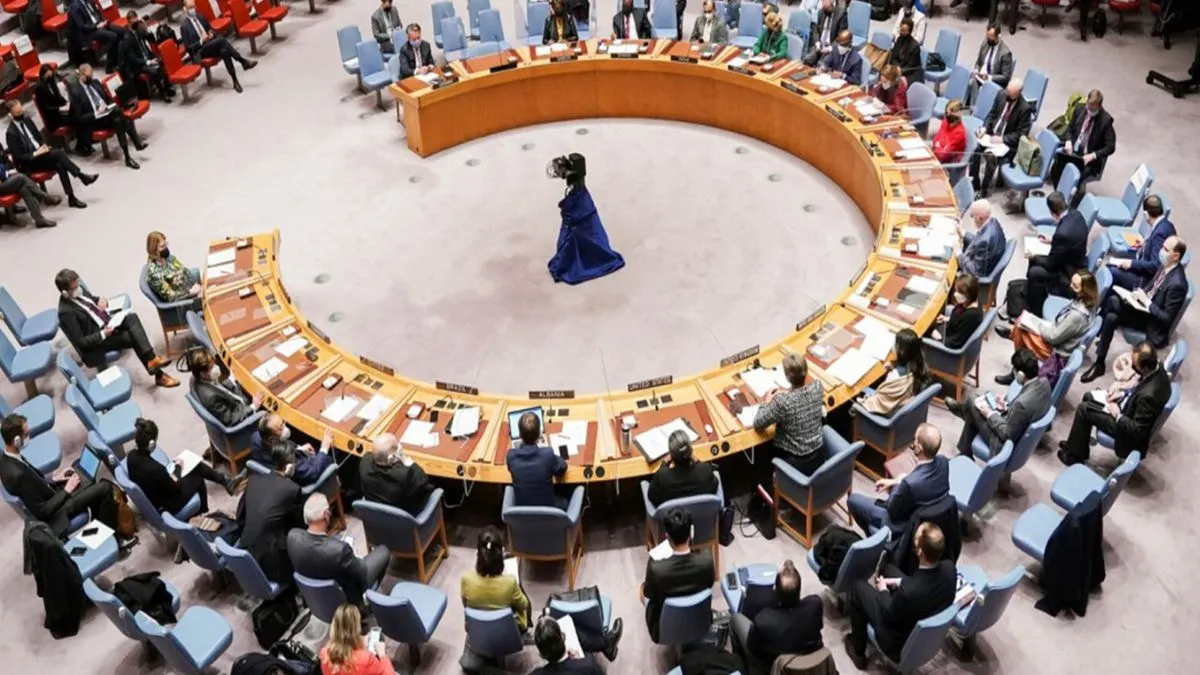
Iran has thanked India for standing by it at the United Nations Human Rights Council (UNHRC). Iran’s Ambassador to India, Mohammad Fathali, expressed gratitude after India voted against a resolution related to Iran during a special UNHRC session. The resolution was passed on Friday during the Council’s 39th special session.
Mohammad Fathali took to X to thank the Indian government for its position at the UN. "I extend my sincere gratitude to the Government of India for its principled and firm support of the Islamic Republic of Iran at the UNHRC, including opposing an unjust and politically motivated resolution. This stance reflects India's commitment to justice, multilateralism, and national sovereignty," he wrote.
The UNHRC resolution
The resolution was adopted with 25 countries voting in favour, seven against, and 14 abstaining. It criticised Iran over the handling of nationwide protests that began on December 28. The resolution expressed concern over the deaths of a large number of people, including children, injuries to many others, and the arrest of thousands during the protests.
As part of the resolution, the UNHRC extended the mandate of the Independent International Fact-Finding Mission on Iran for two more years. It also extended the mandate of the Special Rapporteur on human rights in Iran for one year. The Council also called for an urgent investigation into the handling of the protests.
"The UNHRC adopted the resolution in which it extended the mandate of the Independent International Fact-Finding Mission on Iran for two years, and the mandate of the Special Rapporteur on the situation of human rights in Iran for one year. The resolution also called for an urgent investigation by the Fact-Finding Mission, in the context of the repression of nationwide protests beginning 28 December 2025," read a statement issued by the UNHRC.
"It urged the Government of the Islamic Republic of Iran to respect, protect and fulfil its human rights obligations and to take all measures necessary to stop and prevent extrajudicial killing, other forms of arbitrary deprivation of life, enforced disappearance, sexual and gender-based violence, arbitrary arrest and detention, incommunicado detention and torture and other cruel, inhuman or degrading treatment or punishment, including against peaceful protesters," it added.
India and Iran remain in touch
Last week, External Affairs Minister S Jaishankar spoke with Iranian Foreign Minister Seyed Abbas Araghchi over the phone. The two leaders discussed the changing situation in the region. "Received a call from Iranian Foreign Minister Seyed Abbas Araghchi. We discussed the evolving situation in and around Iran," Jaishankar said in a post on X.
Travel advisory issued for Indians
Soon after the conversation, India issued a fresh advisory asking its citizens to avoid travelling to Iran due to recent developments. "In view of the ongoing developments in Iran, Indian nationals are once again strongly advised to avoid travel to the Islamic Republic of Iran until further notice," the advisory said.
The government also advised Indian citizens and Persons of Indian Origin (PIOs) already in Iran to remain cautious. They were asked to avoid protest areas, follow local updates, and stay connected with the Indian Embassy in Tehran.
Indian residents in Iran were also urged to register with the Embassy if they had not already done so.