'Don't like you either': Trump's awkward conversation with Australian envoy | WATCH
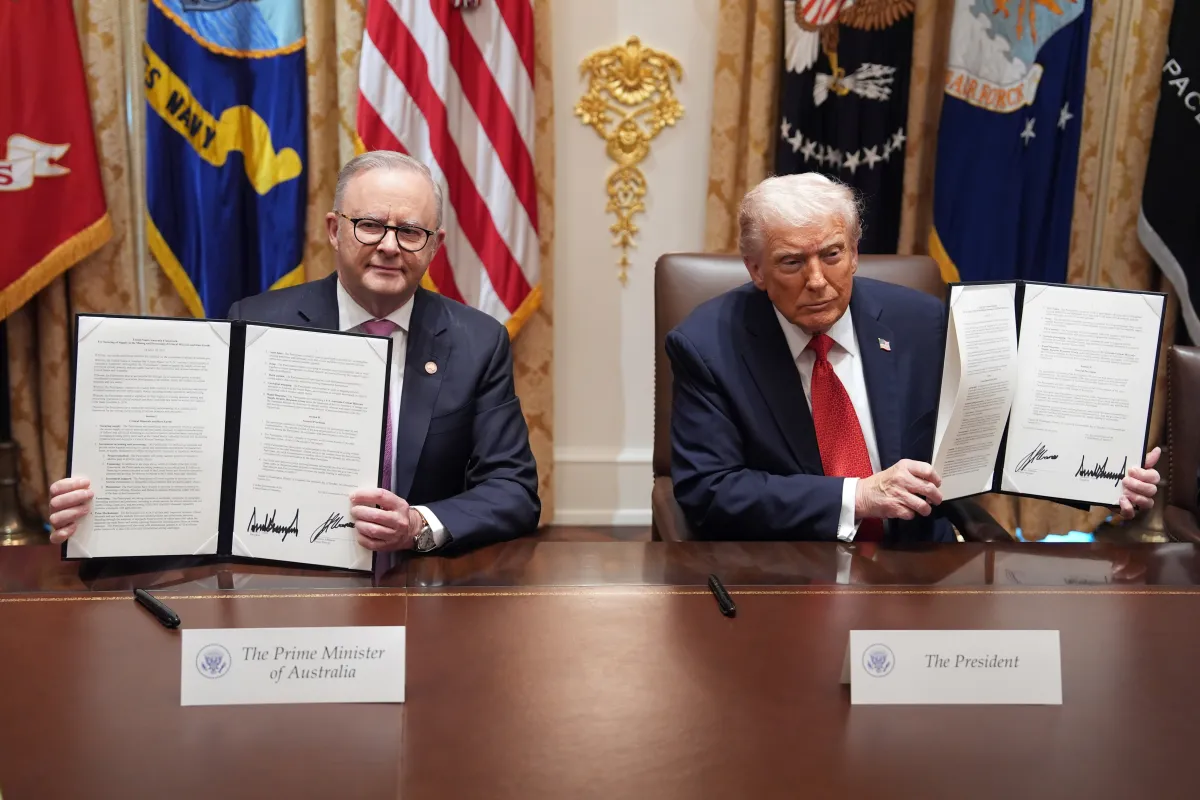
Trump on Monday signed a multibillion-dollar agreement on rare-earth and critical minerals with Australia PM Anthony Albanese. After signing the agreement, a reporter asked Trump about Kevin Rudd's criticism of him. To this, Trump said maybe Rudd would 'like to apologise'.
The White House witnessed an awkward moment on Monday (local time) between Donald Trump and Kevin Rudd after the US President said that he doesn't like the former Australian prime minister. Notably, Rudd is currently Australia's ambassador to the US.
Trump on Monday had signed a multibillion-dollar agreement on rare-earth and critical minerals with Australia PM Anthony Albanese. After signing the agreement, a reporter asked the 79-year-old about Rudd's criticism of him. To this, Trump said maybe Rudd would 'like to apologise'.
Then Trump turned towards Albanese and asked where Rudd was and whether he was still working for the Australian government. Albanese gestured towards Rudd, who was sitting in front of the two leaders. "You said bad?" Trump asked Rudd.
Rudd said, "That was before I took this position, Mr President." Before Rudd could say anything further, Trump replied: "I don’t like you either. I don’t. And I probably never will." Following this, the room erupted in laughter.
Rudd's criticism of Trump
During Trump's first term in 2020, Rudd had described the 79-year-old "the most destructive president in history" and called him "village idiot". Later, Trump had criticised Rudd and called him 'nasty' and said that he is "not the brightest bulb in the shed."
US, Australia sign critical-minerals agreement
Meanwhile, Trump and Albanese on Monday signed a USD 8.5 billion critical-minerals agreement after months of negotiations. "In about a year from now we'll have so much critical mineral and rare earth that you won't know what to do with them," said Trump. "They'll be worth USD 2."
Albanese, on the other hand, said that the deal will take the relationship between the US and Australia to a next level.
"Australia is really, really going to be helpful in the effort to take the global economy and make it less risky, less exposed to the kind of rare earth extortion that we're seeing from the Chinese," Kevin Hassett, the director of the White House's National Economic Council, told reporters.