Waqf Amendment Act: Supreme Court to hear pleas challenging new law today - 10 key points
The Centre notified the Waqf (Amendment) Act, 2025, after it received the assent of President Droupadi Murmu on April 5, following its passage in Parliament amid intense debates in both Houses.
New Delhi:
The Supreme Court is set to hear a series of petitions today challenging the recently amended Waqf law, which governs the administration of Muslim charitable properties.
A three-judge bench comprising Chief Justice of India Sanjiv Khanna and Justices Sanjay Kumar and KV Viswanathan will take up the matter at 2 pm.
Here are 10 key points:
- Six BJP-ruled states—Madhya Pradesh, Rajasthan, Chhattisgarh, Assam, Maharashtra, and Uttarakhand—have filed applications to join the proceedings in defence of the amended legislation.
- The Waqf (Amendment) Bill was passed earlier this month in both the Lok Sabha and the Rajya Sabha after extensive debates.
- Though the Supreme Court had earlier stated it would not intervene in legislative matters, it has agreed to examine the constitutional validity of the law following petitions that allege it infringes on fundamental rights, including the right to equality and the right to practise religion.
- The law is being challenged by leaders from opposition parties such as the Congress, Janata Dal (United), Aam Aadmi Party, DMK, and CPI.
- Religious groups and civil society organisations, including the Jamiat Ulema-e-Hind and the All-India Muslim Personal Law Board, have also filed petitions against it.
- Critics of the law argue that it is arbitrary, unconstitutional, and discriminatory against Muslims. Some have called for its complete repeal, while others seek a stay on its implementation. AIMIM leader Asaduddin Owaisi, in his petition, claimed that the amendment dilutes existing protections for Waqf properties, unlike those maintained for other religious communities—an act he described as discriminatory.
- AAP leader Amanatullah Khan has challenged the inclusion of non-Muslims in Waqf boards, stating that it violates Article 14 of the Constitution and lacks any logical connection to the purpose of managing religious properties.
- The central government, however, has defended the amendment, arguing that it is a property-related reform and not a religious matter. It has cited widespread irregularities in the management of Waqf properties and claimed that the proceeds often fail to benefit underprivileged Muslims, women, and children—issues the new law aims to address.
- The government also stated that the bill was drafted after extensive consultations and has the backing of several non-Muslim minorities. It passed the scrutiny of a Joint Parliamentary Committee, and many member-suggested amendments were included.
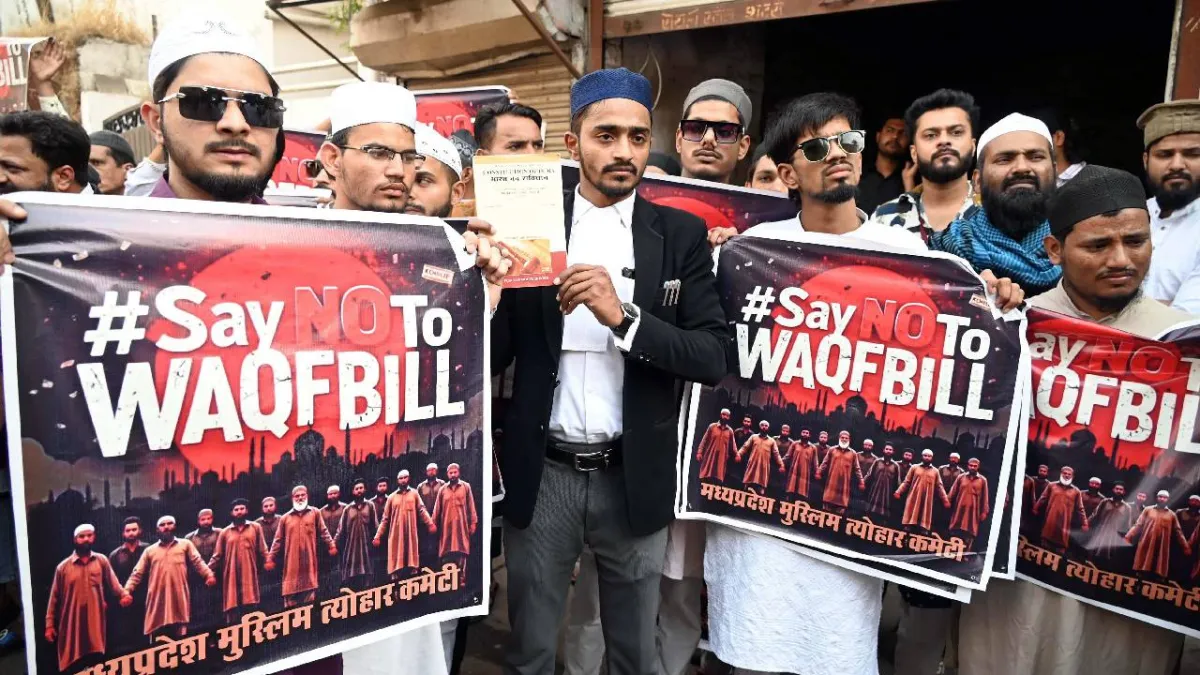
- Despite the government's assurances, the law has sparked protests across various parts of the country. The most violent unrest occurred in West Bengal, where three people were killed and several displaced. Chief Minister Mamata Banerjee has since declared that her government will not implement the amended law.