Uttarakhand UCC completes one year; CM Dhami highlights milestones advancing equality and justice
The UCC’s most visible impact has been in women’s empowerment and social justice. Practices such as halala, polygamy, child marriage, and triple talaq are now illegal under the new law. Notably, in the past year, no cases of halala or polygamy have been reported in the state.
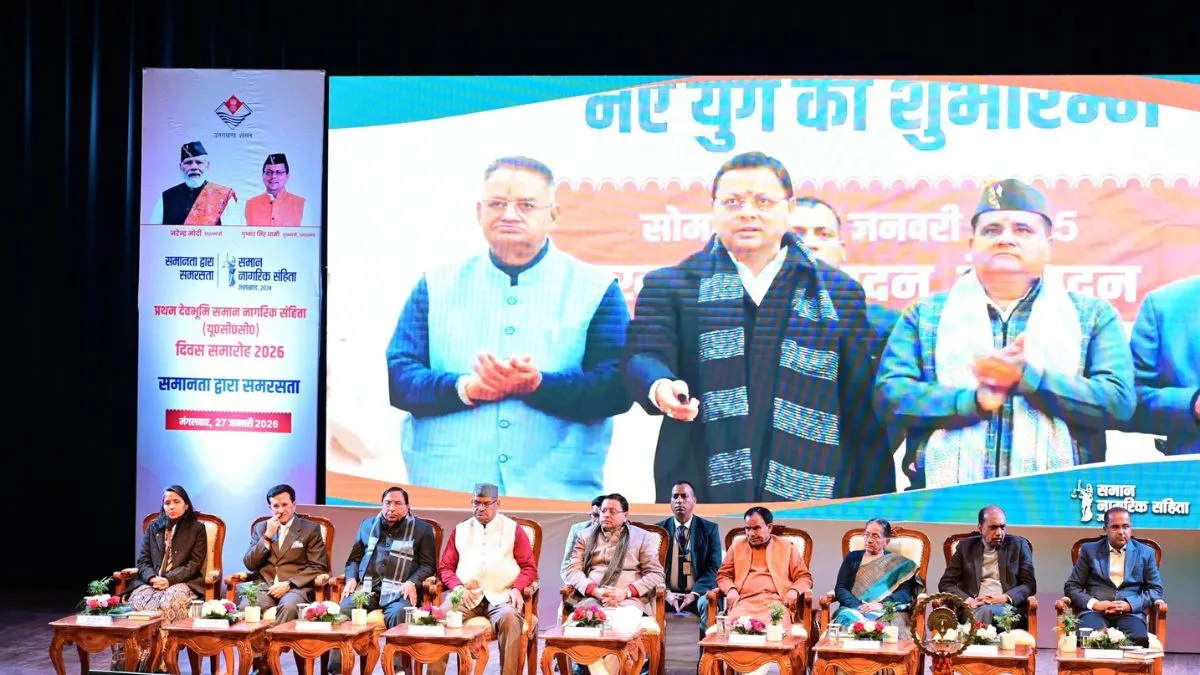
Uttarakhand has completed one year of implementing the Uniform Civil Code (UCC), marking a historic milestone in the state’s social, constitutional and administrative history. Under Chief Minister Pushkar Singh Dhami, Uttarakhand became the first state in India to implement the UCC, translating constitutional principles into practice and promoting equality and social harmony.
The journey began during the 2022 Assembly elections, when CM Dhami pledged to introduce the UCC. After assuming office, the government transformed this promise into action through extensive public consultations, expert committees, legislative procedures and constitutional formalities. The UCC Bill was passed in the Assembly on February 7, 2024, received the President’s assent on March 11, 2024, and came into effect on January 27, 2025.
The UCC embodies Article 44 of the Indian Constitution, reflecting the vision of BR Ambedkar, while also resonating with the ideals of national integration advocated by leaders like Shyama Prasad Mukherjee and Deendayal Upadhyaya. Inspired by Prime Minister Narendra Modi’s philosophy of “Sabka Saath, Sabka Vikas, Sabka Vishwas, Sabka Prayas,” Uttarakhand has demonstrated that strong, inclusive policies unite rather than divide.
Positive impacts of UCC
The UCC’s most visible impact has been in women’s empowerment and social justice. Practices such as halala, polygamy, child marriage, and triple talaq are now illegal under the new law. Notably, in the past year, no cases of halala or polygamy have been reported in the state. The law provides women with equal rights, dignity and security, fostering their active participation in society.
The first year of UCC implementation has also seen significant administrative and digital achievements. Where earlier an average of 67 marriages were registered daily, the UCC has increased registrations to over 1,400 per day, totaling 4,74,447 marriages in less than a year. Citizens can now register marriages online securely and conveniently, saving time, effort and resources.
Beyond marriage registration, the UCC has digitised services such as divorce, wills and live-in relationship registration and closure. In the past year, over 500,000 applications were processed, with more than 95 per cent resolved, and not a single complaint of privacy violation reported.
CM Dhami emphasized that the UCC is not against any religion but targets harmful social practices, promoting equality with harmony. The first year of UCC in Uttarakhand has not only enforced a law but also fostered a new social consciousness rooted in justice, equality, and dignity.