Boost for Ladakh's agriculture: LG Saxena launches check dams under 'Sindhu Jal Samriddhi Abhiyan'
The pilot project, completed at K-Thang Upshi, around 45 km from Leh, has already shown promising results. Constructed between May 12 and May 18, the 200-foot-long rock check dam was built using massive locally sourced boulders weighing between 500 kilograms and 10 metric tonnes.
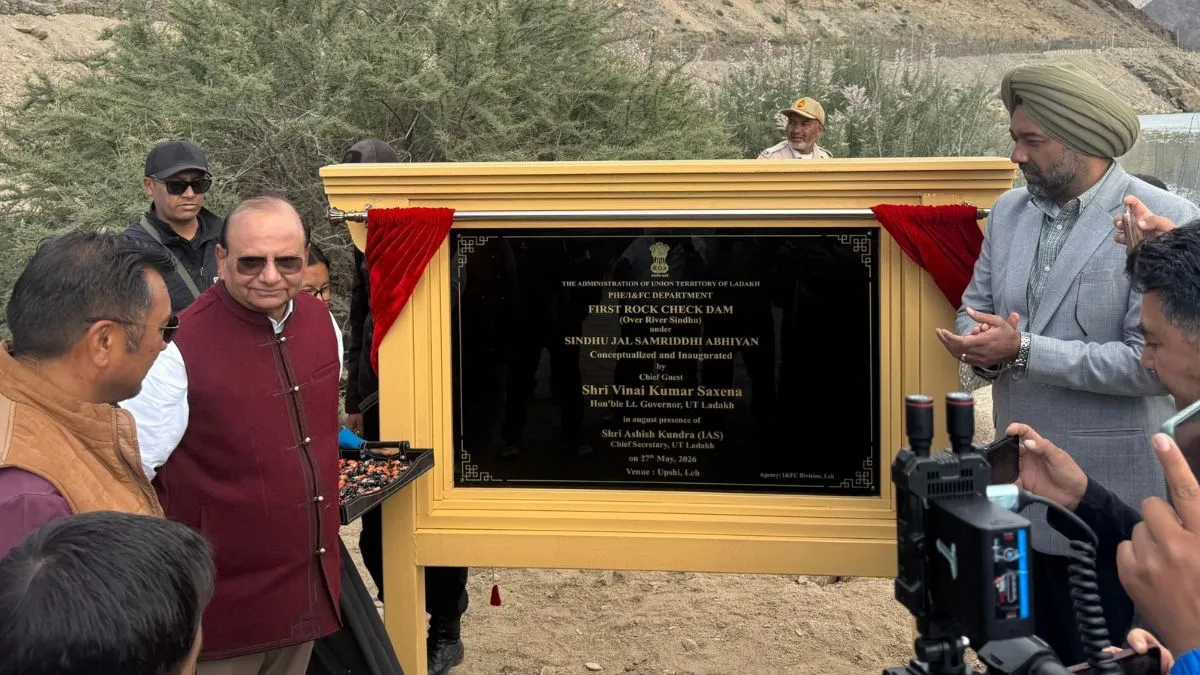
In the cold desert of Ladakh, where the mighty Indus River flows alongside parched farmlands, a new initiative by the Union Territory administration is offering hope to farmers struggling with seasonal water shortages. The initiative called the “Sindhu Jal Samriddhi Abhiyan” has been launched, which is aimed at storing and raising river water levels through low-cost rock check dams built directly across the Indus.
Tackling a longstanding water challenge
Conceived by Ladakh Lieutenant Governor Vinai Kumar Saxena, the project seeks to address a longstanding challenge in the region: despite the abundance of glacial rivers, many villages are unable to access water during the critical sowing season because the river often becomes too shallow and fast-flowing for conventional pumping systems.
Addressing the event, LG Saxena said “Sindhu Jal Samriddhi Abhiyan” has been launched to ensure proper supply of water for agriculture purpose.
“The Indus River is the lifeline of Ladakh. It has nourished a large population living along its banks. This river still has the potential to irrigate lakhs of hectares of agricultural land and support a large population. Many of our villages still lack water despite the Indus flowing close to them. Our fields remain dry when they need water the most during the sowing season. The Sindhu Jal Samriddhi Abhiyan has been launched to address this issue. I am happy to launch this programme today,” he said.
Pilot project shows early success
The pilot project, completed at K-Thang Upshi, around 45 km from Leh, has already shown promising results. Constructed between May 12 and May 18, the 200-foot-long rock check dam was built using massive locally sourced boulders weighing between 500 kilograms and 10 metric tonnes. Nearly 180 metric tonnes of rocks were strategically placed across the riverbed to create the structure, at an estimated cost of just Rs 10 lakh.
Low-cost engineering solution
Unlike conventional cement-concrete barriers, the porous rock check dam slows the flow of water while still allowing it to pass through naturally. This creates a large pondage area upstream, significantly increasing the depth of the river and making water extraction possible for irrigation.
Officials said the pilot dam has created a water storage zone extending nearly 500 metres upstream, holding an estimated 40 million litres of water. Water depth near the banks has risen to 4–5 feet, while the central section now reaches nearly 10 feet.
The administration has designed the structure to withstand seasonal surges in river flow, which rise from around 25 cusecs in May to nearly 200 cusecs during the peak summer months of July and August.
Eco-friendly model for Himalayan rivers
Beyond irrigation, the initiative is also being seen as environmentally sustainable. Since the dams are built entirely from indigenous riverbed rocks, they preserve the ecological integrity of the fragile Himalayan river system while avoiding the use of concrete or non-biodegradable materials.
Encouraged by the response from local communities, the Irrigation and Flood Control Department has begun work on four more experimental rock check dams along the Indus. Officials say future locations will be selected in consultation with villagers, with the long-term goal of creating community-owned water systems to sustain high-altitude agriculture in Ladakh.