Pakistan requested us to stop, says Ex-DGMO Rajiv Ghai as Operation Sindoor marks first anniversary
Operation Sindoor marks first anniversary: Ex-DGMO Rajiv Ghai said the operation demonstrated the strength of India's indigenous defence capabilities, calling "Atmanirbhar" a force multiplier, with over 65 per cent of defence equipment now being manufactured domestically.
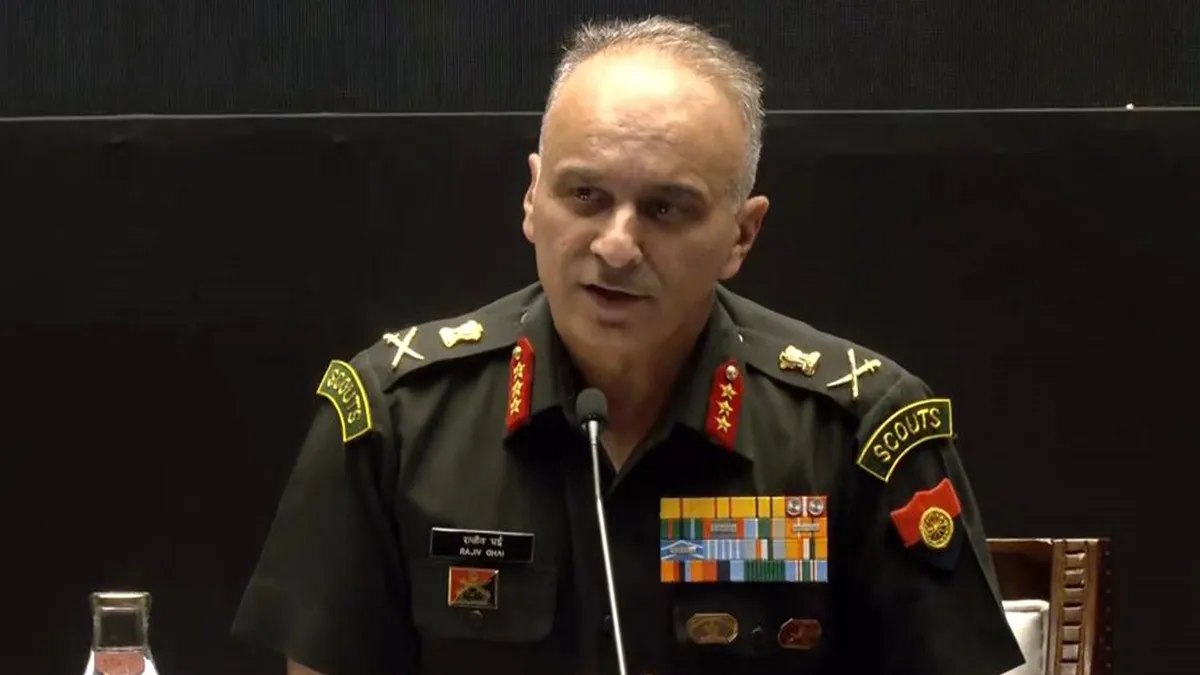
On the anniversary of Operation Sindoor, former Director General of Military Operations (DGMO) Lieutenant General Rajiv Ghai on Thursday said that Pakistan "requested India to stop" during Operation Sindoor, as the operation marked its first anniversary. Ghai said India carried out a calibrated and precise response, achieving its goals and avoiding a prolonged conflict.
Operation demonstrated strength of India's indigenous defence capabilities
He said the operation demonstrated the strength of India's indigenous defence capabilities, calling "Atmanirbhar" a force multiplier, with over 65 per cent of defence equipment now being manufactured domestically.
Operation Sindoor was launched in the aftermath of the Pahalgam terror attack that claimed 26 lives, prompting a strong military response from India.
Operation Sindoor proved that Atmanirbhar is not just a slogan
Addressing the press conference in Jaipur, Lieutenant General Ghai, who served as Director General of Military Operations (DGMO) during Operation Sindoor, said, "Operation Sindoor proved that Atmanirbhar is not just a slogan, it is indeed a force multiplier. Today, over 65% of our defence equipment is being manufactured domestically. I also want to speak of our exit strategy and escalation control. In an era of prolonged conflicts around the world, we struck hard, achieved clearly defined objectives and then decided to cease hostilities when the Pakistanis were compelled to negotiate and requested us to stop. The objectives were achieved through a calibrated shot and sharp shock that altered the enemy's risk appetite and disrupted his command and control without locking India into a long-drawn war or conflict, the ill effects of which we are seeing in ongoing conflicts around the world."
"Finally, the operation placed enormous responsibility on every arm of the state. Intelligence agencies provided the accurate information that is so critical to precision targeting. Cyber and electronic warfare units maintained information dominance. The government managed the international environment as also the internal security and public reassurance. The armed forces executed the kinetic phase with discipline, precision and minimal collateral impact. This multi-agency, multi-domain coordination will remain the template for future operations," he further added.
Ghai highlights joint military coordination during Operation Sindoor
Ghai also highlighted India's indigenous defence strength and joint military coordination during Operation Sindoor, calling it a decisive and precise anti-terror response. He further said Operation Sindoor was a tri-service effort integrating land, air and maritime capabilities with real-time coordination and intelligence sharing.
He added that nine standoff precision strikes, seven by the Indian Army and two by the Indian Air Force,were carried out with total surprise, targeting terror hubs in Pakistan-occupied Jammu and Kashmir and deep inside Pakistan."...
The Operation also showcased indigenous capability. A significant percentage of the weapon systems, munitions, rockets and missiles, sensors and electronic warfare suits that were employed were developed and produced in India. The BrahMos, Akash, advanced surveillance and targeting systems along with homegrown ammunition and spares, all played a decisive role.
Also Read: