Operation Sindoor: Army Deputy Chief flags few lessons for India's defence against multi-front threats
Lt Gen Singh underlined the significance of a tri-services approach involving the Army, Navy, and Air Force. “It was deliberately designed to send the right message that we indeed are an integrated force,” he said.
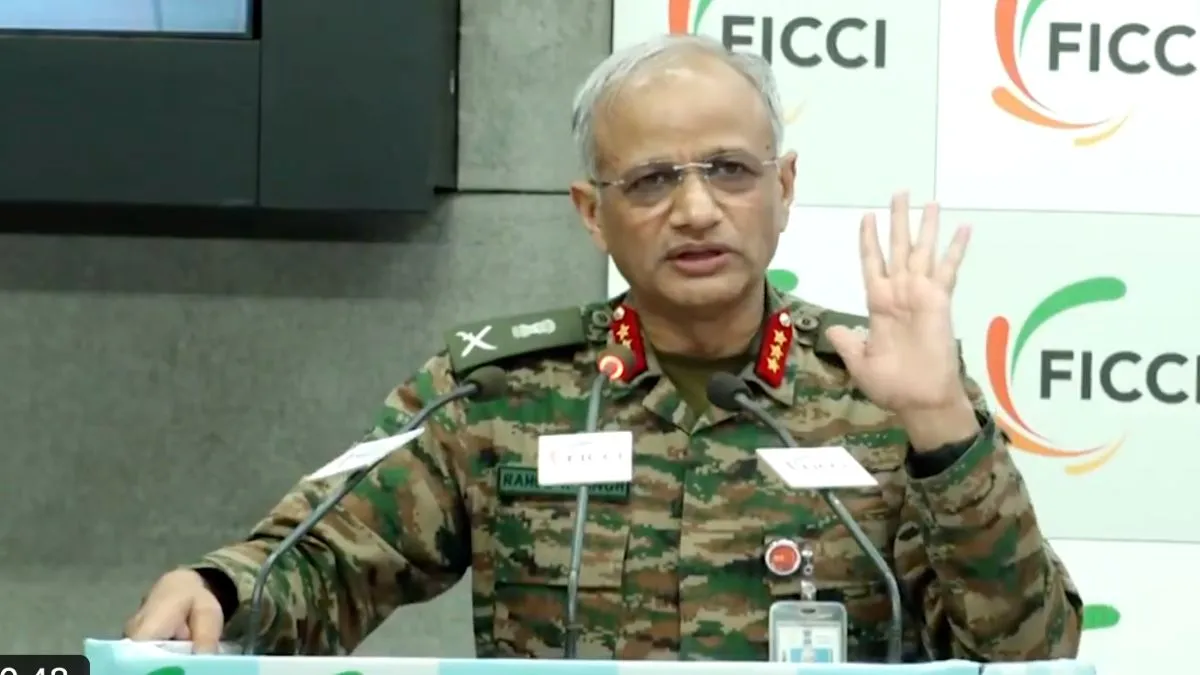
Operation Sindoor has emerged as a landmark in India’s military strategy, offering valuable lessons in intelligence-driven warfare, escalation control, and technological readiness, according to Deputy Chief of Army Staff Lt Gen Rahul R Singh.
Speaking at a FICCI event on ‘New Age Military Technologies’ on Friday, Lt Gen Singh described the operation as a “masterly stroke” designed to halt conflict at the right time while showcasing India’s integrated military prowess.
Strategic escalation without full-scale war
“War is easy to initiate, but it’s very difficult to control,” Lt Gen Singh noted, highlighting the calculated nature of Operation Sindoor. The operation, which engaged nine of 21 identified targets, was launched after extensive intelligence gathering and aimed to assert India’s dominance in the escalation ladder without triggering a broader conflict.
“The strategic messaging by leadership was unambiguous. There is no scope of absorbing the pain the way we did a few years ago,” he said, indicating a decisive shift in India’s military doctrine.
Tri-services integration and target flexibility
Lt Gen Singh underlined the significance of a tri-services approach involving the Army, Navy, and Air Force. “It was deliberately designed to send the right message that we indeed are an integrated force,” he said.
Target selection remained dynamic till the last moment. “It was only the final day or the final hour that the decision was taken that these nine targets would be engaged,” he added, illustrating the fluidity of modern military planning.
Heavy reliance on intelligence and real-time monitoring
A key takeaway from the operation, Singh explained, was the centrality of real-time data and surveillance. “The operation relied heavily on intelligence gathering and real-time monitoring of targets,” he said, adding that both technological and human intelligence were crucial in identifying actionable threats.
Preparing for fifth-generation warfare
Lt Gen Singh warned of emerging warfare dimensions, including cyber and drone threats. “We need to prepare for fifth-generation warfare,” he said. “A computer nerd, maybe perhaps sitting in one part of the country, could control the entire thing.” To that end, he announced that a comprehensive drone framework would be released by September–October.
Indigenous tech push and economic linkages
Pointing to India's continued reliance on imported components, Singh urged industries to invest in critical technologies like drone engines and secure communication systems. “Secret technology, engines we are grappling with... we need to invest in these things,” he said.
He also linked military readiness to economic ambitions, asserting, “A USD30 trillion economy is possible, in case industries play up... if our Armed Forces provide the secure environment that is required for the nation to progress."