Mumbai-Ahmedabad bullet train hits key milestone with first mountain tunnel breakthrough in Palghar
The bullet train corridor spans 508 kilometres, with tunnels covering 27.4 kilometres. Of this, around 21 kilometres are underground tunnels and 6.4 kilometres are surface tunnels.
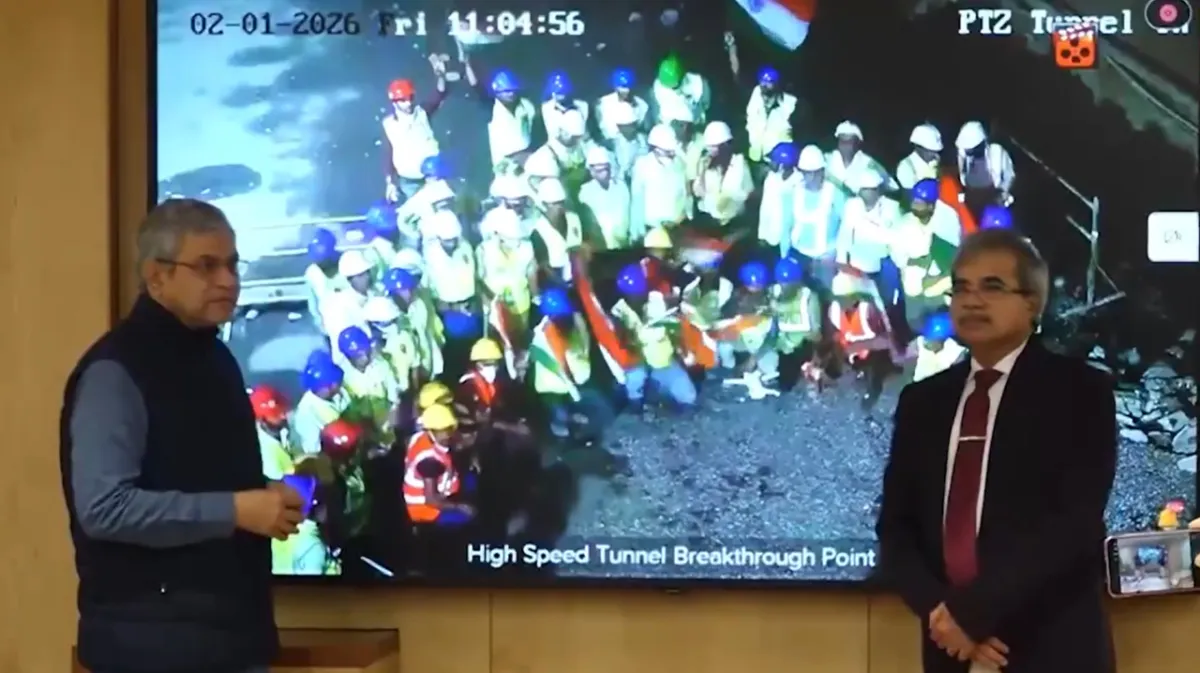
India’s first bullet train corridor has reached a significant milestone with the successful breakthrough of a high-speed mountain tunnel in Maharashtra’s Palghar district, Railway Minister Ashwini Vaishnaw said on Friday. Addressing a press conference, Vaishnaw said Mountain Tunnel 5 had been completed, marking an important phase of the Mumbai Ahmedabad Bullet Train project. He said the corridor includes a total of 7 mountain tunnels and 1 undersea tunnel.
Bullet Train project length and tunnel details
The bullet train corridor spans 508 kilometres, with tunnels covering 27.4 kilometres. Of this, around 21 kilometres are underground tunnels and 6.4 kilometres are surface tunnels. The project includes 8 mountain tunnels in total, 7 in Maharashtra with a combined length of 6.05 kilometres, and 1 tunnel in Gujarat measuring 350 metres.
The first underground tunnel, around 5 kilometres long between Thane and Bandra Kurla Complex, was completed in September 2025. The second tunnel, Mountain Tunnel 5, is located in Palghar district and measures 1.48 kilometres, or 1.39 kilometres excluding the hood and portals. MT5 is the first and longest among the 7 planned mountain tunnels.
Stations and depots
Vaishnaw said the project will have 12 stations, with Sabarmati serving as the terminal station in Gujarat and Bandra Kurla Complex as the terminal in Mumbai. He added that 3 depots are being constructed, even though a corridor of this length would normally require only 2, due to delays in approvals during the previous Maharashtra government’s tenure.
Last month, the project completed the launch of a 130 metre span of a 230 metre long steel bridge over National Highway 64 and the Bharuch Dahej freight rail line near Kanthariya village in Gujarat’s Bharuch district. The bridge consists of 2 spans of 130 metres and 100 metres.
Advanced construction techniques
The 130 metre span, launched on December 9, 2025, stands about 18 metres high, is 14.9 metres wide and weighs approximately 2,780 metric tonnes. Fabricated in Bhuj, the bridge has been designed for a 100 year lifespan and assembled using over 1,22,146 high strength Tor Shear bolts, C5 system painting and metallic bearings.
The bridge launch was completed within 12 hours with traffic diversions on NH 64 and intermittent blocks on freight rail lines to ensure safety and precision. Authorities said these measures minimised disruption to road users and rail operations.
Bullet Train route and connectivity
The Mumbai Ahmedabad High Speed Rail Corridor covers around 508 kilometres, including 352 kilometres in Gujarat and Dadra and Nagar Haveli and 156 kilometres in Maharashtra. The route will connect key cities such as Sabarmati, Ahmedabad, Anand, Vadodara, Bharuch, Surat, Bilimora, Vapi, Boisar, Virar, Thane and Mumbai.
Built to international engineering standards, around 465 kilometres, or about 85 percent of the corridor, is being constructed on viaducts to reduce land acquisition and enhance safety. So far, 326 kilometres of viaduct work has been completed, and 17 of the 25 planned river bridges are already in place.
Once operational, the bullet train is expected to cut travel time between Mumbai and Ahmedabad to nearly 2 hours. The project is expected to boost business, tourism and economic activity along the corridor, driving long term regional development.