Indian Railways set to launch nine Amrit Bharat Express trains from Bengal and Assam; check routes
Since their introduction in December 2023, as many as 30 Amrit Bharat Express trains have become operational. Designed for long-distance travel, these non-AC sleeper services offer a comfortable and seamless journey at an affordable cost of approximately Rs 500 per 1,000 kilometres.
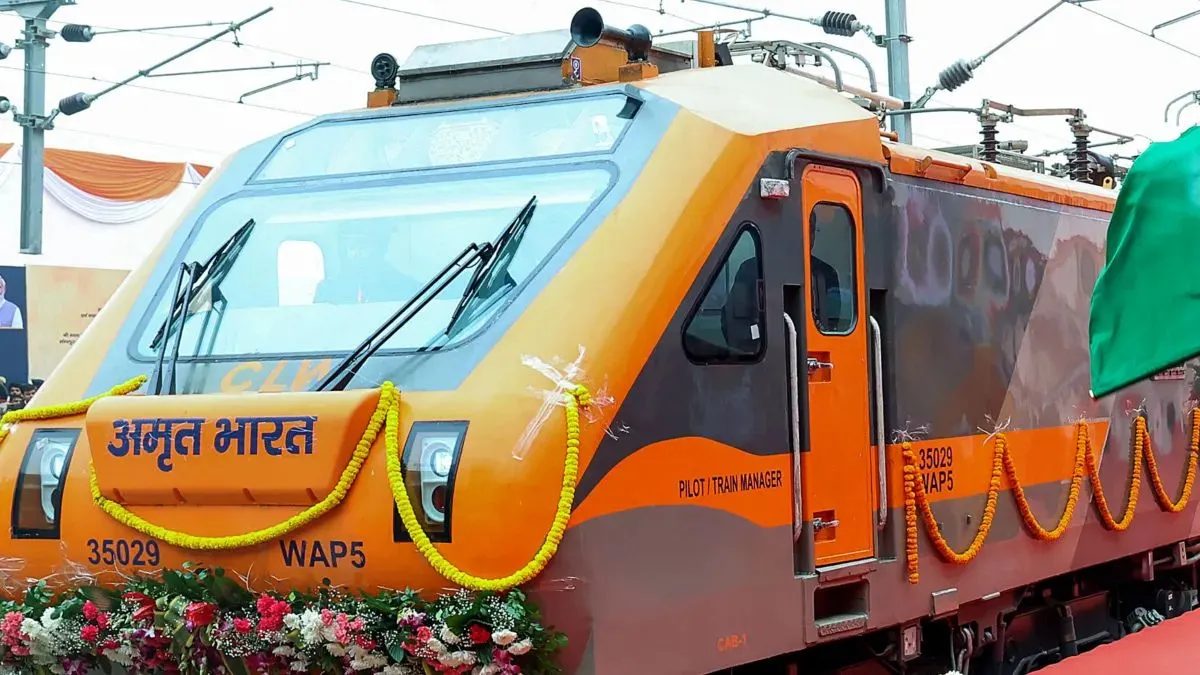
Indian Railways is planning to roll out nine new Amrit Bharat Express trains from West Bengal and Assam to improve long-distance travel across the country. The proposed services aim to offer affordable connectivity between eastern India and several major regions.
These trains are expected to pass through densely populated states such as Bihar and Uttar Pradesh, making travel easier for a large number of passengers. At the same time, they will link faraway states including Tamil Nadu, Maharashtra and Karnataka, helping connect the north, east and south of India through a single network.
Union Railway Minister Ashwini Vaishnaw shared details of the new routes on social media platform X.
However, the Railways has not yet announced the official launch date for these new trains.
Proposed routes of new Amrit Bharat Express trains
- Guwahati (Kamakhya) – Rohtak Amrit Bharat Express
- Dibrugarh – Lucknow (Gomti Nagar) Amrit Bharat Express
- New Jalpaiguri – Nagercoil Amrit Bharat Express
- New Jalpaiguri – Tiruchirappalli Amrit Bharat Express
- Alipurduar – SMVT Bengaluru Amrit Bharat Express
- Alipurduar – Mumbai (Panvel) Amrit Bharat Express
- Kolkata (Santragachi) – Tambaram Amrit Bharat Express
- Kolkata (Howrah) – Anand Vihar Terminal Amrit Bharat Express
- Kolkata (Sealdah) – Banaras Amrit Bharat Express
About Amrit Bharat Express trains
Since their introduction in December 2023, as many as 30 Amrit Bharat Express trains have become operational. Designed for long-distance travel, these non-AC sleeper services offer a comfortable and seamless journey at an affordable cost of approximately Rs 500 per 1,000 kilometres.
These trains are designed mainly for middle- and lower-income travellers. They operate at higher speeds than conventional passenger trains and focus on linking major cities with smaller towns, supporting inclusive and efficient rail travel across India.