Indian Army Day 2026: Exoskeletons to Autonomous Vehicles, how technology will transform battlefield
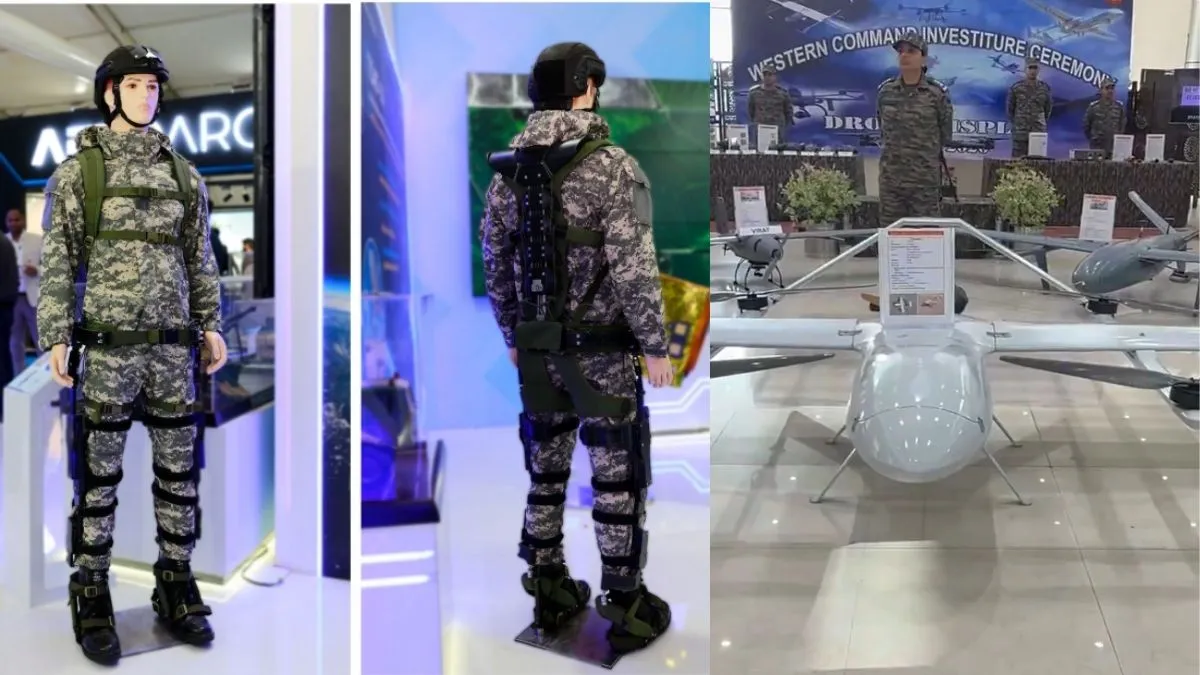
The Indian Army is actively developing and testing exoskeletons, which would enhance soldiers’ strength, endurance and mobility, allowing them to carry heavier loads, move faster, and operate longer with less fatigue.
Indian Army Day is observed every year on January 15 to mark a defining moment in India’s military history—the appointment of Field Marshal KM Cariappa as the first Indian Commander-in-Chief of the Indian Army in 1949. This year marks the 78th anniversary of that historic transition, symbolising India’s assertion of sovereignty and self-reliance in defence after Independence.
The occasion reflects national pride and honour, celebrated through ceremonial parades, wreath-laying tributes, and displays of military strength that reinforce the Army’s commitment to unity, discipline, and national security.
The main Army Day parade will be held on Mahal Road, attended by Defence Minister Rajnath Singh and Army Chief General Upendra Dwivedi. Similar commemorative events will also take place across the country, highlighting the Army’s enduring role in safeguarding the nation.
While Indian Army Day commemorates past leadership and sacrifices, it also serves as a reminder that the nature of warfare is constantly evolving. From traditional battlefields to technology-driven operations, the Army’s journey continues into a future shaped by innovation and modernisation.
Future warfare: How technology will play a crucial role
Future battlefield technology will dramatically reshape how wars are fought, shifting towards speed, automation, and reduced human risk. The Indian Army is actively developing and testing exoskeletons, which would enhance soldiers’ strength, endurance and mobility, allowing them to carry heavier loads, move faster, and operate longer with less fatigue.
DRDO and Tata Advanced Systems are actively involved in this task.
Besides, India is also working on building Autonomous Combat Vehicles (ACVs) across land and air. This project is also being developed by the DRDO. These vehicles are being built indigenously, which would make India self-reliant in next-generation defense systems.
These systems can react faster than humans, operate in contested environments, and reduce casualties by keeping soldiers farther from danger. Artificial intelligence will integrate data from satellites, drones, and ground units to support real-time command and control, enabling faster and more precise decisions.