No personal agenda and bias in 'Aap Ki Adalat', deepfakes are the new threat: Rajat Sharma
Creative Economy Forum: Rajat Sharma advises young media students to stay vigilant and cautious, warning about the dangers posed by certain segments of the media that aim to discredit respected public figures. He also emphasises on the importance of authenticity in news reporting.
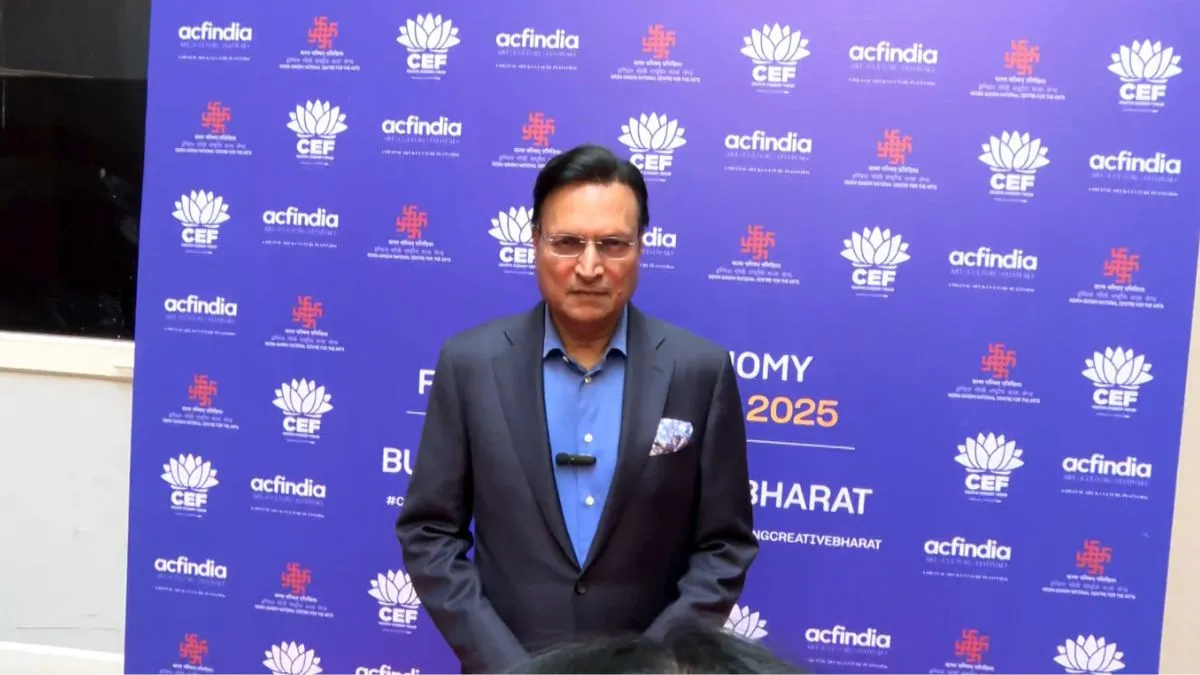
India TV Chairman and Editor-in-Chief Rajat Sharma recounted how the iconic show 'Aap Ki Adalat' was never a planned venture but a creative concept that emerged from a chance conversation during a Delhi-Mumbai flight. He was speaking at the 'Creative Economy Forum – Season 3' event in Delhi on Saturday (November 8).
Rajat Sharma, then an editor at a Mumbai newspaper, was travelling with actor Gulshan Grover and Subhash Chandra, the founder of Zee TV. Grover asked Rajat Sharma to arrange an interview on Zee TV, but when Subhash Chandra suggested Rajat Sharma conduct the interview himself, the India TV chairman initially declined, doubting that viewers would be interested in just two people talking.
To make it more engaging, Rajat Sharma proposed creating a courtroom-like setting where politicians could be questioned directly. The concept was well-received, and after discussions with the creative team, the first interview was conducted with Lalu Prasad Yadav, marking the start of the show that aired on Zee TV in 1993, 'Aap Ki Adalat'.
Credibility and appeal of the show
Over the years, 'Aap Ki Adalat' has maintained its credibility, becoming a trusted platform where prominent personalities from politics, Bollywood, sports, and spirituality face tough questions. Rajat Sharma emphasises that he never pushes his own agenda or fabricates questions for headlines. He genuinely engages with guests, allowing them to express their views while maintaining the show's integrity. This transparent approach has made it a coveted platform for many, sustaining its popularity for over three decades.
Media evolution and challenges
Rajat Sharma, the Chairman and Editor-in-Chief of India TV, recognises the changing landscape of media, noting that technology has impacted creativity and people's engagement with life. He laments how the excitement of real emotions has diminished, replaced by fleeting digital interactions. Forms of fake news and deepfakes have presented new challenges, with Rajat Sharma himself falling victim to manipulated videos. Despite this, he works to raise awareness about misinformation.
He also reflects on the lack of quality media training institutes in India, expressing hopes to establish free educational platforms for aspiring media professionals in the future. He stresses the importance of real news and responsible journalism in an era dominated by social media and rapid information flow.
Future outlook and advice
Rajat Sharma advises young media students to remain aware and cautious, highlighting the dangers of certain media segments that seek to undermine respected figures. He insists that news should always be authentic and that channels spreading fake news should apologise quickly. He points to the responsibility of editors and broadcasters in deciding what serves society's best interests and urges the media community to uphold these values.
Creative Economy Forum
Supriya Suri, founder of the Creative Economy Forum, highlighted the event’s role in empowering creative professionals to become entrepreneurs. The forum brings industry leaders from fashion, entertainment, and news to share insights on career growth and innovation, supporting the creative economy's expansion and development.