India-EU Summit yields 13 major agreements: From historic FTA to green energy and skilled mobility
The India-EU Summit concluded with 13 agreements covering a wide range of areas, including trade, skilled mobility, security and defence, finance, science and technology, and renewable energy.
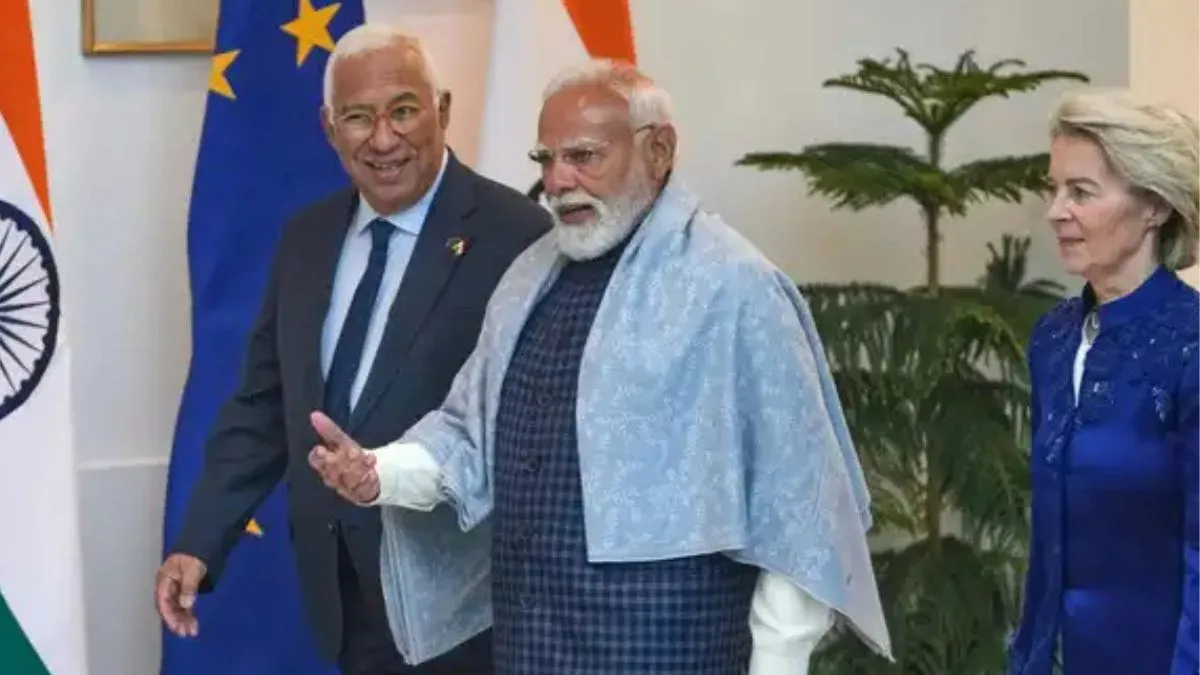
India and the European Union (EU) on Tuesday finalized the long-awaited Free Trade Agreement (FTA), a landmark deal expected to boost trade, investment, and economic cooperation between the two largest democracies. This agreement was the centerpiece of the India-EU Summit, underlining shared goals for growth, jobs, and prosperity.
The India-EU Summit concluded with 13 agreements covering a wide range of areas, including trade, skilled mobility, security and defence, finance, science and technology, and renewable energy.
Check the 13 major agreements
- Joint India-European Union Comprehensive Strategic Agenda
- India-EU Free Trade Agreement (FTA)
- MoU between RBI and European Securities and Market Authority (ESMA)
- Administrative Arrangement on Advanced Electronic Signatures and Seals
- Security and Defence Partnership
- Launch of India-EU Security of Information Agreement negotiations
- MoU on Comprehensive Framework for Cooperation on Mobility
- EU pilot Legal Gateway Office in India
- Administrative Arrangement between NDMA (India) and DG-ECHO (EU)
- Constitution of a Green Hydrogen Task Force
- Renewal of India-EU Agreement on Scientific & Technological Cooperation (2025–2030)
- Exploratory talks for India to join Horizon Europe Programme
- Four Joint Trilateral Projects
- Digital Innovation & Skills Hub for Women & Youth
- Solar-Based Solutions for Empowering Women Farmers
- Early Warning Systems
- Solar-Based Sustainable Energy Transition in Africa, Indo-Pacific, Caribbean, and Small Island Developing States
Prime Minister Narendra Modi described the pact as the "mother of all deals", noting that together India and the EU account for nearly 25 per cent of global GDP and one-third of world trade. The agreement is expected to have wide-ranging implications for prices, industry competitiveness, and supply chains.
Impact on overall trade
Under this agreement, more than 90% of EU products exported to India will be subject to reduced or zero tariffs. This is estimated to save European exporters approximately €4 billion annually, the direct benefit of which is likely to accrue to Indian consumers and domestic industries in the form of lower prices and improved input costs.
Currently, trade between India and the EU exceeds €180 billion annually, supporting approximately 800,000 EU jobs. Under this agreement, tariffs on 96.6% of EU products in India will be reduced or eliminated, which is expected to double EU exports to India by 2032. The tariff reductions are expected to result in annual duty savings of approximately €4 billion on European products.
This agreement represents the largest trade concession ever granted by India to any trade partner. It will give EU industrial and agri-food companies preferential access to the world's fastest-growing large market of 1.45 billion people, with a GDP of approximately €3.4 trillion.