Centre to launch UMEED portal on June 6 to streamline registration of Waqf properties: Reports
All Waqf properties across India will be registered through this portal and the Election Commission data will be used for identification of the properties, reports suggested.
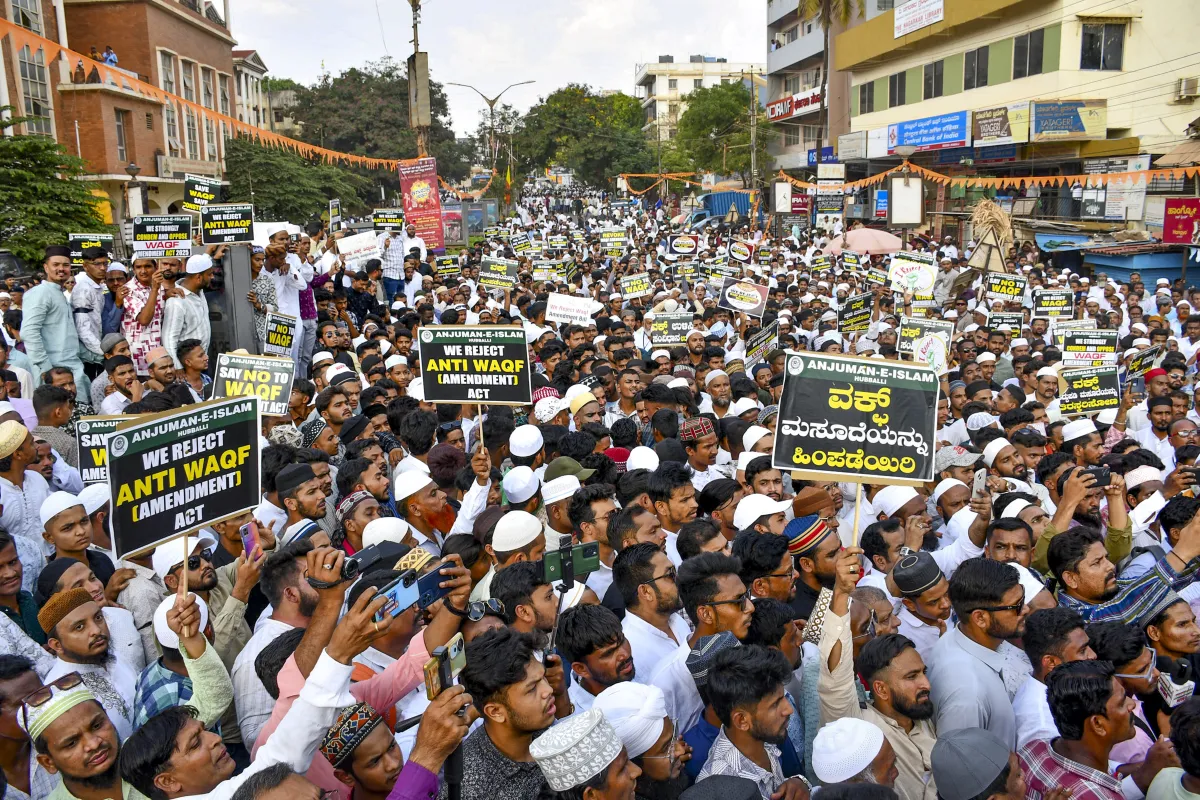
The central government is all set to launch the UMEED portal (Unified Waqf Management, Empowerment, Efficiency, and Development) on June 6, reports suggested. This portal will facilitate the registration of Waqf properties, which must be completed within six months. The portal will be launched to promote management and transparency of Waqf properties.
However, the properties in the name of women cannot be declared as Waqf, and the beneficiaries of Waqf properties should primarily be women, children, and the poor. Other descriptions of properties, including dimensions and geo-tagged locations, are required for registration.
The Waqf properties not registered within the stipulated deadline due to technical or other significant reasons may be granted an extension of one to two months. However, the properties that remain unregistered beyond the permitted time will be considered disputed and referred to the Waqf Tribunal for resolution.
Waqf properties will be registered through new portal
All Waqf properties across India will be registered through this portal and the Election Commission data will be used for identification of the properties, reports suggested.
It should be noted that the State Waqf Board will oversee the registration process and the poroperties not registered within the stipulated deadline will be considered disputed and referred to a tribunal.
Waqf Act: SC issues notice to Centre, states
Last month, the Supreme Court issued notice to the Centre and state governments on a plea challenging the Constitutional validity of certain provisions of the Waqf Act, 1995, as amended by the Waqf (Amendment) Act, 2025.
A bench of Chief Justice of India BR Gavai and Justice Augustine George Masih tagged the plea along with pending petitions challenging the 1995 Waqf Act.
The apex court was hearing the petition filed by one Nikhil Upadhyay challenging the 1995 Act. During the hearing, the bench asked advocate Ashwini Upadhyay, appearing for the petitioner, as to why he was challenging 1995 Act in 2025.
Upadhyay responded that he was also challenging 2013 Waqf Amendment Act. To this, CJI said, "Even then, 2013 to 2025. 12 years. There is delay."
SC hears please challenging Places of Worship Act 1991
Supreme Court is already hearing petitions challenging the Places of Worship Act 1991 and the National Minority Commission Act 1992, advocate submitted.
Additional Solicitor General Aishwarya Bhati, representing the Centre, told the bench that the court has not allowed the challenge to the 1995 Act to be heard along with the petitions challenging the 2025 Amendment. However, there is no objection to this fresh petition being tagged along with the other petition challenging the 1995 Act.
The petition submitted that only Muslims have a law relating to the administration of their charitable properties, and other religions do not have a similar law; hence, the Waqf Act 1995 was discriminatory.
The petition challenged the constitutional validity of certain sections of the Waqf Act 1995 as amended by the Waqf (Amendment) Act 2025, contending that these provisions are against Articles 14, 15, 21, 25, 26, and 27 of the Constitution.
The petitioner further stated that the state cannot grant, at the cost of the public exchequer, the expenses incurred for the verification of Waqfs and their properties, while there is no similar exercise nor a grant of expenses for the survey of other religious institutions and their properties.