What is 6/24 partial vision? Breaking down Imran Khan’s medical examination report
The medical board examining Imran Khan reported that his unaided vision is 6/24 in the right eye and 6/9 in the left eye. These numbers refer to visual acuity, which measures how clearly a person can see without glasses or corrective lenses.
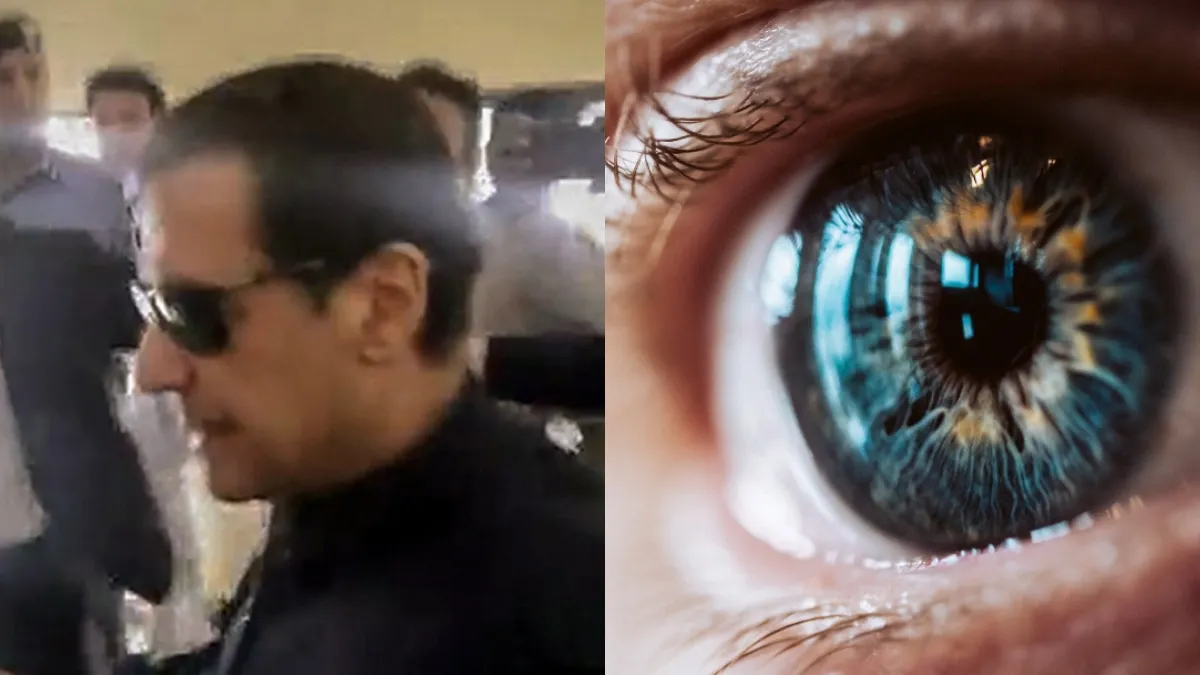
Former Pakistan Prime Minister and Pakistan Tehreek-e-Insaf (PTI) founder Imran Khan was recently examined by a specialised medical board at Adiala Jail in Rawalpindi. The examination focused on assessing his eye health and overall vision condition, with detailed findings highlighting differences in visual clarity between his right and left eyes.
Unaided Vision and Improvement With Glasses
According to the medical report, Imran Khan’s unaided vision was recorded as 6/24 partial in his right eye and 6/9 in his left eye. This indicates that his right eye has significantly reduced visual clarity compared to normal eyesight, while the left eye performs closer to standard levels.
However, the report noted improvement when corrective glasses were used. With spectacles, his vision improved to 6/9 partial in the right eye and 6/6 in the left eye. A 6/6 measurement is considered normal vision, meaning a person can clearly see objects at six metres that someone with standard eyesight can see at the same distance. In contrast, 6/9 vision means the person must be at six metres to see what someone with normal eyesight can see from nine metres away.
Medical Board and Specialist Involvement
According to the ANI report, the examination was conducted by a team of senior eye specialists. The board included Prof. Dr Nadeem Qureshi, head of the vitreoretinal department at Al-Shifa Trust Eye Hospital in Rawalpindi, and Prof. Dr M. Arif, head of the ophthalmology department at the Pakistan Institute of Medical Sciences (PIMS) in Islamabad. Their evaluation included multiple advanced eye tests to assess internal eye structures and overall retinal health.
Detailed Eye Examination Findings
A slit-lamp examination revealed that the cornea was clear in both eyes, with no abnormal cells found in the anterior chamber. This suggests that the front structures of the eyes appeared healthy.
In the right eye, doctors observed that the vitreous, the gel-like substance inside the eye, was mostly clear but showed a few fibrillar opacities. Additionally, mild bleeding was detected in the peripheral region of the eye.
The report also highlighted moderately dense retinal haemorrhages across all four quadrants of the right eye. Several cotton wool spots were observed, which are typically associated with reduced blood flow in the retina.
Doctors also noted resolving macular oedema, indicating that swelling in the central retina was decreasing. Importantly, the retina remained attached, and the foveal contour, essential for sharp central vision, was still visible.
OCT Scan Shows Improvement in Retinal Condition
An optical coherence tomography (OCT) scan provided further insights into the condition of the retina. The test confirmed that macular swelling in the right eye had reduced significantly. The central macular thickness decreased from 550 to 350 microns, suggesting gradual recovery and improvement in retinal health.
According to the report, PTI Chairman Barrister Gohar Khan and Opposition Leader in the Senate Allama Raja Nasir Abbas visited PIMS in Islamabad on Sunday, where doctors briefed them on Imran Khan's condition. Even Imran Khan's personal physicians were briefed over a phone call.
However, earlier, PTI leader Latif Khosa formally approached Chief Justice of Pakistan (CJP) Yahya Afridi, expressing serious reservations over the manner in which incarcerated PTI founder Imran Khan was examined by a medical team. His letter highlighted deep concerns regarding the former premier's check-up, which reportedly took place in "secrecy" at the Adiala jail.