Why is Vladimir Putin's visit to India significant? A look back at India-Russia bonhomie over the years
Russian President Vladimir Putin’s upcoming visit to India, his first since the Ukraine war marks a crucial moment in the long, trust-based relationship between New Delhi and Moscow. Despite Western pressure, sanctions and global tensions, India and Russia continue to rely on each other in key areas
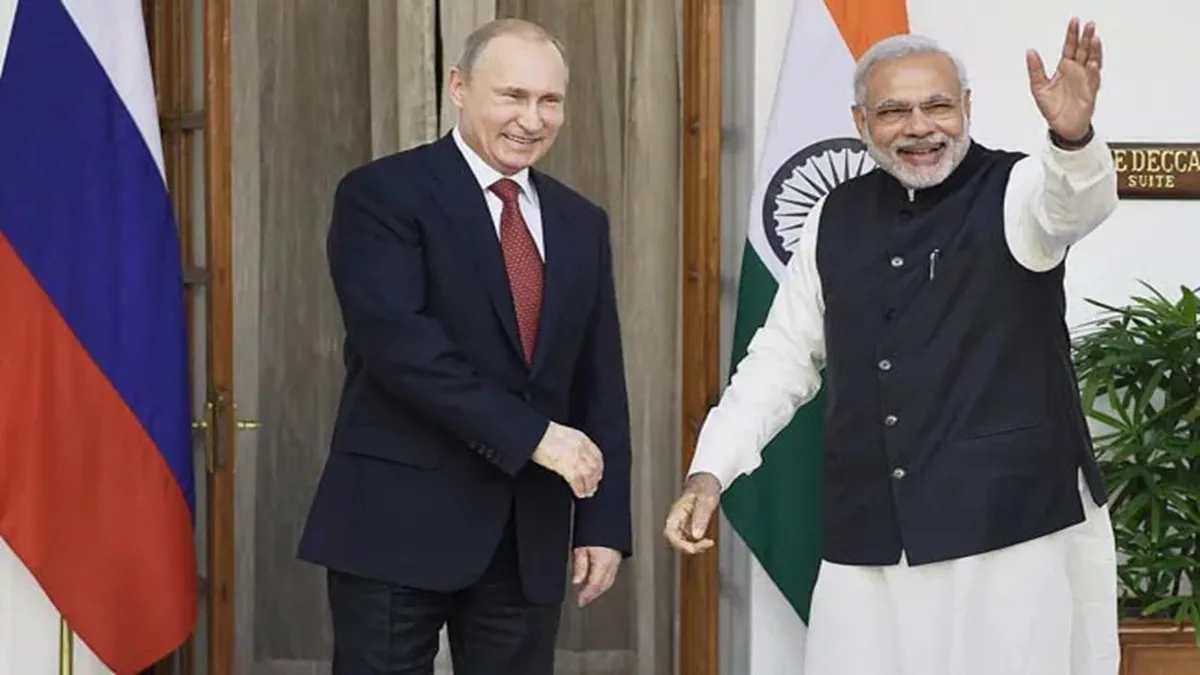
When Russian President Vladimir Putin arrives in New Delhi this week for the 23rd India–Russia Annual Summit, it will mark his first trip to India since the invasion of Ukraine and one of his rare travels outside Russia. Beyond the optics, the visit carries deep geopolitical weight. For New Delhi, it’s a chance to reinforce its long-standing ties with Moscow while balancing growing pressure from the West. For Putin, it’s an opportunity to show that Russia still has strong partners outside Europe and the US.
A partnership built over decades
India and Russia have shared one of the world’s most dependable strategic relationships since the Soviet era. From defence and space to nuclear energy and oil, Russia has shaped India’s rise as a military and technological power.
Since Prime Minister Narendra Modi took office in 2014, he and Putin have met more than 20 times, a sign of a relationship driven not by convenience but by long-term strategic trust. Both leaders often call each other “dear friends.”
India follows a policy of strategic autonomy, meaning it charts its own path without taking sides between global power blocs. Russia has always respected this, backing India’s push for a permanent UNSC seat and staying away from India’s domestic politics.
Why Putin’s this visit is especially important
Putin’s trip comes at a time when India is balancing more partners than ever, Russia as an old friend, and the US and Europe as growing defence and economic partners. But the Ukraine war and Western sanctions have complicated this balancing act.
For Russia, India has become a crucial market for oil, weapons and trade as Western doors close. For India, Russian energy and defence technologies are still essential, even as it diversifies.
India’s military still relies heavily on Russian systems from fighter jets and tanks to missiles and submarines. The cooperation has evolved from simply buying equipment to building and developing systems together.
The BrahMos missile, a joint India-Russia creation, is the best example of this transformation. Reports say it played a decisive role during Operation Sindoor, where Russian-origin systems like the S-400, Sukhoi fighters, and air-defence networks helped India dominate the battlefield.
India also wants to discuss new deals, including the Su-57 fighter jet and the S-500 defence system, during Putin’s visit.
After the Ukraine invasion, India began buying Russian oil at large discounts. This helped India manage its energy bill but made bilateral trade extremely one-sided, about $68.7 billion, with Russia exporting 13 times more to India than the other way around.
India has stayed neutral on the Ukraine conflict calling for peace, avoiding criticism, but refusing to side with any camp. This balancing act was visible when PM Modi told Putin in 2022, “This is not an era of war.”
Despite differences, both nations continued cooperation, and PM Modi visited Moscow in 2024 soon after winning his third term. Putin’s India trip comes just after meetings with US officials.
A relationship that has survived every test
From the Cold War to the Ukraine conflict, from defence deals to discounted oil, the India–Russia partnership has adapted but never broken. The foundation seems simple, trust, long-term interests, and mutual respect.