- Home
- Explainers
- Why can't India count how many die in its heatwaves each year and why does it matter?
Why can't India count how many die in its heatwaves each year and why does it matter?
India is experiencing increasingly severe heatwaves, but there is no accurate count of how many people are dying due to extreme heat. A PTI investigation reveals that many deaths, especially among the poor and undocumented, go unrecorded or are misclassified.
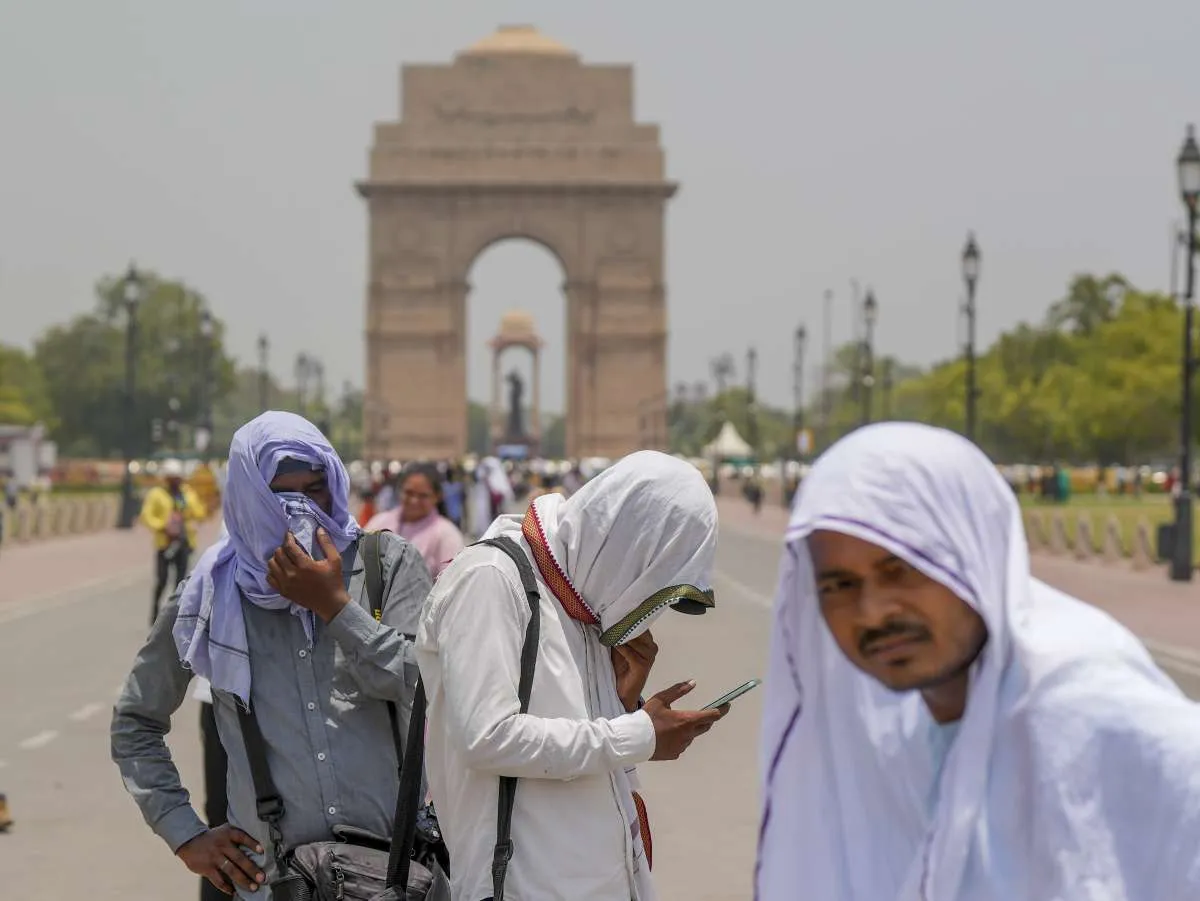
On a sweltering May afternoon last year, a ragpicker collapsed in Delhi’s Ghazipur area. He was rushed to hospital, but declared dead on arrival. With no official confirmation of heatstroke as the cause, his death was never recorded as heat-related, and his family received no compensation.
This is not an isolated case. An investigation by news agency PTI reveals that India's intensifying heatwaves are claiming thousands of lives — yet the country's fractured and outdated data systems are failing to capture the true toll. The absence of reliable figures not only obscures the scale of the crisis but also weakens the government's ability to craft effective responses and protect vulnerable populations.
Disjointed data, conflicting figures
India currently relies on at least three separate sources to track heat-related deaths:
- The National Centre for Disease Control (NCDC) under the health ministry
- The National Crime Records Bureau (NCRB) under the home ministry
- The India Meteorological Department (IMD), which relies heavily on media reports
These agencies offer widely divergent numbers. Between 2015 and 2022:
- NCDC data shows 3,812 deaths from heat-related illness
- NCRB data, often cited in Parliament, puts the figure at 8,171
- IMD records 3,436 deaths from heatwaves
Even within the same year, the gaps are stark. In 2022, the NCRB reported 730 deaths, while NCDC showed only 33, largely because many states failed to report their figures. States like Delhi, Rajasthan, Madhya Pradesh, and Uttar Pradesh were among those missing from the NCDC’s reports.
Why the numbers don’t add up
Officials admit the systems are flawed. A senior Delhi Police officer explained that NCRB numbers often reflect deaths discovered in public spaces and later confirmed through autopsies. The NCDC, on the other hand, records only hospital-reported deaths, which often exclude unattended or undocumented cases. “There’s no integration between data from hospital OPDs, forensic departments, and post-mortem reports,” a health ministry official said, adding that all three datasets are partial and “not directly comparable.”
Compounding the problem is the lack of an electronic health record system. Even in hospitals equipped with digital platforms, staff enter surveillance data manually. Compliance with reporting mandates is poor, and some deaths are misclassified or suppressed to avoid compensation claims.
Real costs, hidden toll
Heat-related deaths are often recorded under causes like cardiac arrest or stroke. Experts suggest a more reliable metric is all-cause mortality — the total number of deaths during a heatwave compared to normal periods, which better reflects the heat’s true impact. But India does not systematically collect or analyse such data. Public health experts and environmental advocates are now calling for urgent reform, including a unified reporting mechanism and better integration of datasets. Soumya Swaminathan, a senior health advisor, warned at the recent India Heat Summit that poor death-reporting systems weaken policymaking. “Without knowing what’s killing people, we can’t save lives,” she said.
A call for transparency
Abhiyant Tiwari of NRDC India and Avinash Chanchal of Greenpeace South Asia both stressed that ignoring or underreporting the numbers delays urgent action. “Until we fix the system, the dead will remain invisible,” Chanchal said.
As climate change brings more frequent and severe heatwaves, experts say India must urgently overhaul its fragmented reporting system — not just to count the dead, but to prevent future deaths.
(With inputs from PTI)