- Home
- Explainers
- Rajnath Singh inaugurates missile integration facility; how missile assembly and integration works
Rajnath Singh inaugurates missile integration facility; how missile assembly and integration works
Speaking at the ceremony, Singh praised BEL for its steady progress in advanced defence technologies. He highlighted the company’s work in areas such as electronic warfare, avionics, naval systems, electro-optics, and tank electronics.
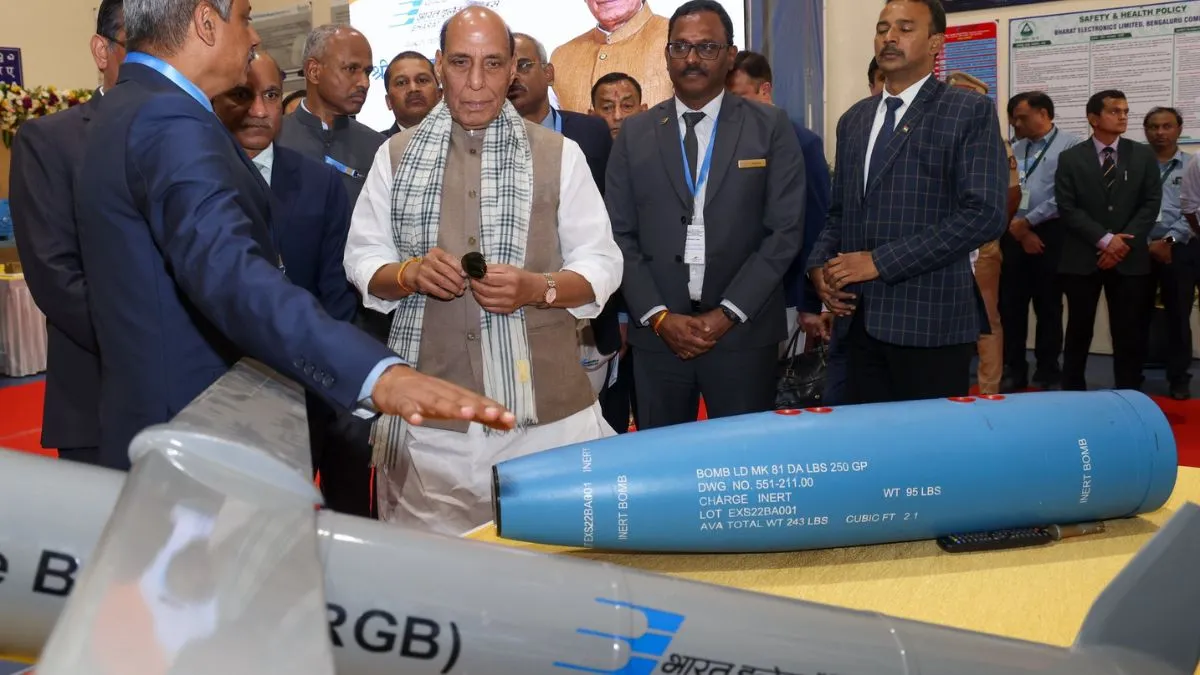
Defence Minister Rajnath Singh on Monday inaugurated a major missile integration centre at Bharat Electronics Limited (BEL) in Bengaluru. During the event, he also flagged off the Akash 3rd and 4th Regiment combat systems and introduced the new Mountain Fire Control Radar.
Speaking at the ceremony, Singh praised BEL for its steady progress in advanced defence technologies. He highlighted the company’s work in areas such as electronic warfare, avionics, naval systems, electro-optics, and tank electronics. He noted that these developments are strengthening India’s defence capabilities and supporting self-reliance in military production.
"BEL has strengthened the network-centric operations. Its integrated systems, real-time data sharing, and decision support capabilities have taken our combat effectiveness to a new level," Singh said.
What is a missile integration facility?
A missile integration facility is a secure site where separate missile components are assembled, connected and tested to form a fully operational system. “Integration” means combining major subsystems—such as propulsion, guidance, control electronics, communication units, and (in military systems) the warhead—into one coordinated unit.
Engineers ensure that hardware and software function together correctly. The facility conducts electrical checks, software validation, environmental tests (vibration, temperature, humidity), and simulated launch procedures to verify reliability and safety.
These facilities are typically operated by defense contractors or government agencies such as the Defence Research and Development Organisation (DRDO).
In simple terms, it is the final assembly and testing center that prepares a missile for deployment or operational use.
How does missile integration work?
Missile integration is the process of connecting a missile to a launch platform (aircraft, ship, or ground system) so it works safely and effectively. It includes mechanical mounting, electrical power and data connections, software updates, and guidance system compatibility. The platform must recognise the missile, send targeting data, and ensure safe launch and separation. Extensive testing—such as simulations, flight trials, and live firing—is required before operational use. Integration ensures the missile communicates properly, launches safely, and performs accurately in combat conditions.
India’s missile integration facility has been designed to streamline the integration of advanced missiles with various aircraft. This facility will enable seamless installation and testing of key missile systems. For instance, the Sukhoi Su-30MKI integrates with missiles such as Astra, Meteor, and BrahMos. Similarly, the Dassault Rafale can accommodate missiles including Meteor, MICA, and SCALP. All this can now happen under one roof.
This facility marks a significant step in enhancing India’s indigenous defense capabilities, allowing efficient integration, testing, and deployment of advanced missile systems across multiple platforms.