- News
- Explainers
- Rajya Sabha numbers game: How BJP's strength changes after 7 AAP MPs' merger
Rajya Sabha numbers game: How BJP's strength changes after 7 AAP MPs' merger
The balance of power in the Rajya Sabha has shifted sharply after seven AAP MPs, led by Raghav Chadha, merged with the BJP. The move raises the BJP's numbers and strengthens the NDA's position, reducing resistance in the Upper House and reshaping the current legislative arithmetic.
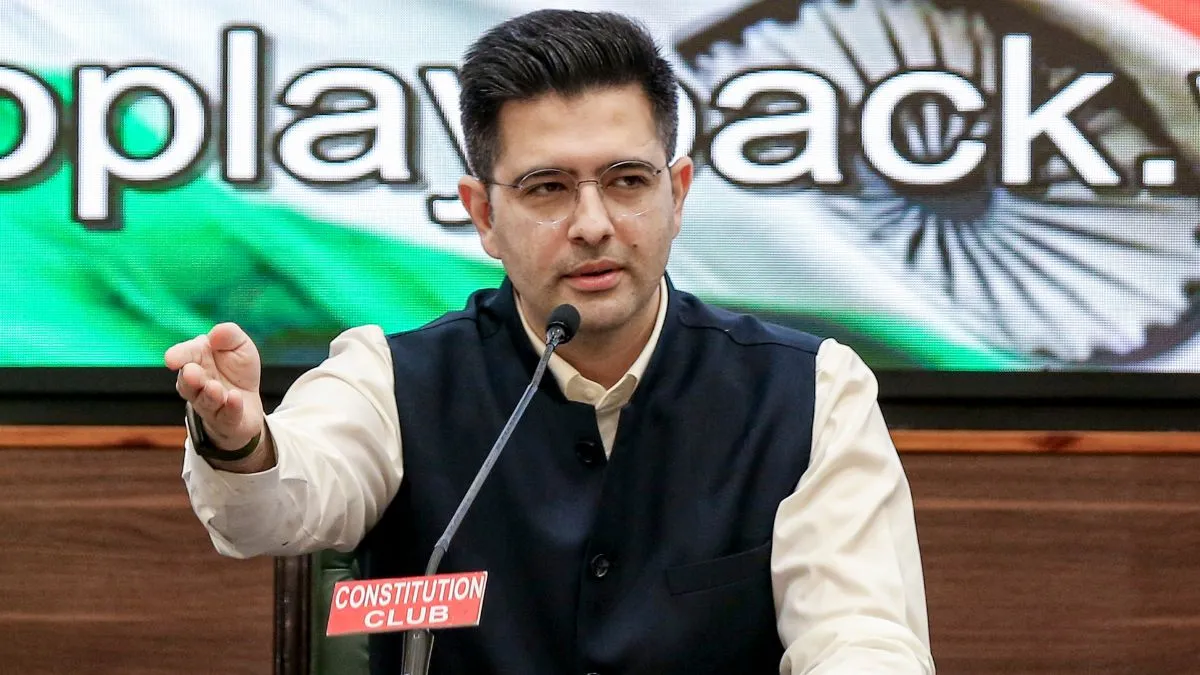
The balance of power in the Rajya Sabha shifted sharply today after a large section of the Aam Aadmi Party (AAP) moved to the Bharatiya Janata Party (BJP). The change is not incremental. It alters how easily legislation can move through the House. Seven of AAP's ten MPs in the Upper House, led by Raghav Chadha, have formally merged with the BJP. The move meets the two-thirds requirement under the Tenth Schedule, which means they avoid disqualification. In effect, a coordinated shift, immediate and decisive.
What changed in numbers?
The BJP's standalone strength rises from 106 to 113. That increase comes directly from the group of seven who moved together. The Rajya Sabha, which often slowed or negotiated government bills, now looks far less resistant.
Who has joined or is likely to join the BJP?
Here is a look at the MPs:
- Raghav Chadha (Punjab)
- Harbhajan Singh (Punjab)
- Sandeep Pathak (Punjab)
- Ashok Mittal (Punjab)
- Rajinder Gupta (Punjab)
- Vikram Sahney (Punjab)
- Swati Maliwal (Delhi)
Who remains with the AAP in the Rajya Sabha?
AAP is reduced to three MPs in the Rajya Sabha:
- Sanjay Singh (Delhi)
- Narain Dass Gupta (Delhi)
- Balbir Singh Seechewal (Punjab)
Impact on AAP's Punjab representation
Six of the seven AAP MPs who moved are from Punjab. This hits the party's position in the state, especially with the 2027 Legislative Assembly election approaching. The shift is not just parliamentary. It has a state-level echo.
Role of nominated members
There are 12 nominated seats in the House. Five are already aligned with the BJP and are included in the 113 figure:
- Ujjwal Nikam (Law)
- C Sadanandan Master (Social Work)
- Gulam Ali Khatana (Social Work)
- Harsh Vardhan Shringla (Diplomacy)
- Satnam Singh Sandhu (Education)
The remaining seven function as independents who tend to support the government on key votes:
- Harivansh Narayan Singh (Journalism)
- Meenakshi Jain (Literature and Education)
- Sudha Murty (Social Work)
- Veerendra Heggade (Social Work)
- Ilaiyaraaja (Art)
- V Vijayendra Prasad (Art)
- PT Usha (Sports)
Taken together, this group effectively pushes the BJP's working strength to around 120.
NDA's position after the shift
When combined with the wider National Democratic Alliance, the numbers reach 148. The majority mark is 123. That places the alliance about 25 seats above the line.
| BJP and NDA parties | Strength |
| Bharatiya Janata Party (BJP) (Post-Merger + 5 Affiliated Nominees) | 113 |
| Other Nominated Members | 7 |
| All India Anna Dravida Munnetra Kazhagam (AIADMK) | 5 |
| Janata Dal United (JDU) | 4 |
| Nationalist Congress Party (NCP) | 4 |
| Telugu Desam Party (TDP) | 2 |
| Shiv Sena (SHS) | 2 |
| United Peoples Party Liberal (UPPL) | 2 |
| Asom Gana Parishad (AGP) | 1 |
| National Peoples Party (NPP) | 1 |
| Pattali Makkal Katchi (PMK) | 1 |
| Rashtriya Lok Dal (RLD) | 1 |
| Rashtriya Lok Morcha (RLM) | 1 |
| Republican Party of India-Athawale (RPI-A) | 1 |
| Janata Dal Secular (JDS) | 1 |
| Independents | 2 |
| Total | 148 |
The shift redraws the arithmetic of the House, bringing the government closer to a smoother legislative path. For now, the numbers speak clearly: the balance has tilted, and the Rajya Sabha enters a markedly different phase.