- News
- Explainers
- Iran's nuclear ambitions started with a reactor sent from US, now Washington itself wants to finish it
Iran's nuclear ambitions started with a reactor sent from US, now Washington itself wants to finish it
The Tehran Research Reactor, a small nuclear facility used for peaceful scientific purposes, was originally supplied to Iran by the United States in the 1960s as part of President Dwight D. Eisenhower’s "Atoms for Peace" initiative.
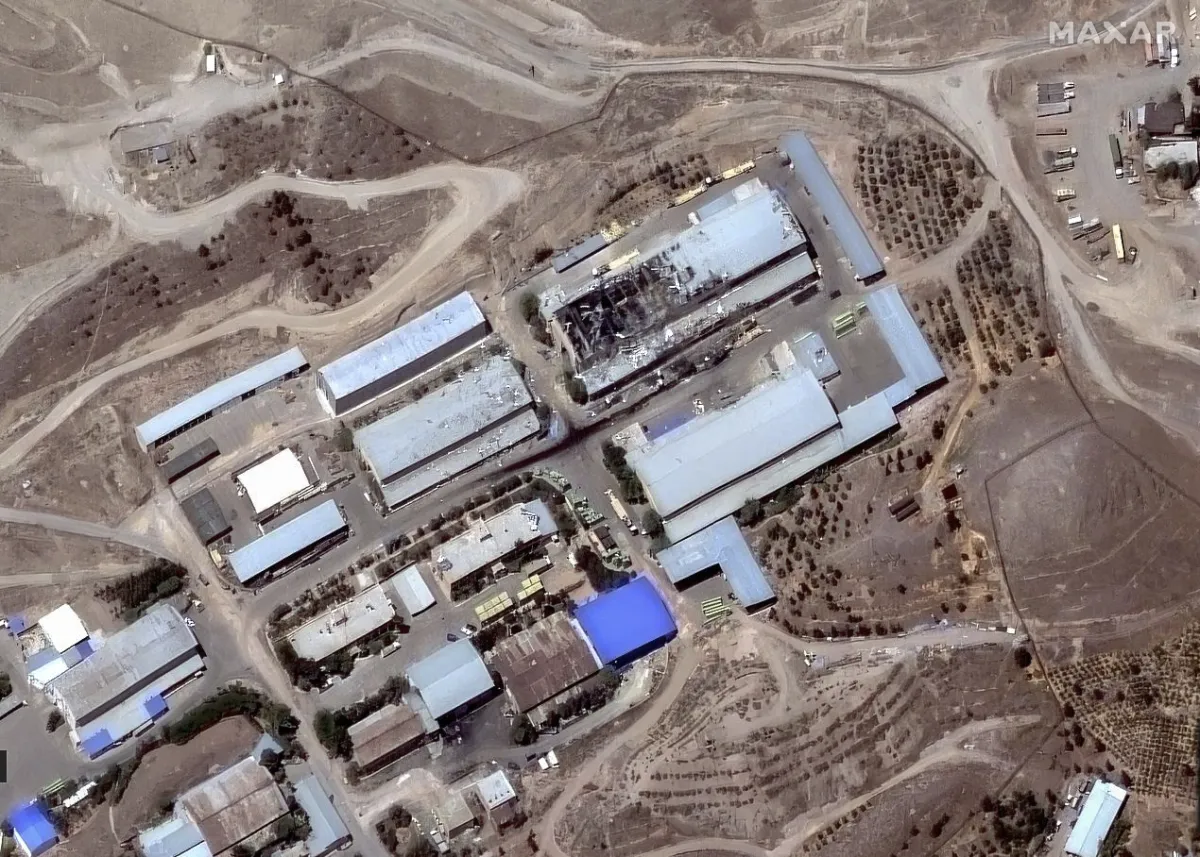
Donald Trump has been addressing a crisis that began decades ago, but it was the US itself only which introduced Iran to nuclear ambitions, giving Tehran its first-ever nuclear reactor in the 1960s.
The Tehran Research Reactor, a small-scale nuclear reactor used for peaceful scientific work, has not been targeted by Israel. It was supplied to Iran by the United States in the 1960s under President Dwight D. Eisenhower's "Atoms for Peace" program.
Reason behind US giving Iran a nuclear reactor
The goal of the program was to share nuclear knowledge with US allies, to assist in economic development and to strengthen political alignment during the Cold War. Along with Iran, the US also provided nuclear training, equipment, and knowledge for civilian use to countries like Israel and Pakistan.
Although the Tehran reactor does not enrich uranium today, Iran's nuclear program was once seen as a national achievement. However, it was also viewed as a potential risk due to its possible military applications.
"We gave Iran its starter kit," said Robert Einhorn, a former US arms control official involved in nuclear talks with Iran. "We weren't terribly concerned about nuclear proliferation in those days, so we were pretty promiscuous about transferring nuclear technology," he said. "We got other countries started in the nuclear business", according to the NYT.
What was the Atoms for Peace project?
The 'Atoms for Peace' program began with Eisenhower's speech to the United Nations in December 1953. He warned about the dangers of a nuclear arms race and called for nuclear technology to be used for constructive purposes.
"It is not enough just to take this weapon out of the hands of the soldiers. It must be put into the hands of those who will know how to strip its military casing and adapt it to the arts of peace," he said.
During this period, Iran was ruled by Shah Mohammed Reza Pahlavi, a Western-educated monarch who worked closely with the United States. His government promoted secular reforms, Western-style education, banned the veil for women, and encouraged modern art. The Shah supported the peaceful use of nuclear energy and allocated significant national resources toward its development. Iranian scientists were trained in the United States, including at institutions like MIT.
How Iran developed its nuclear program: The chronology
By the 1970s, Iran's nuclear program had expanded. The country signed agreements with European allies, including a billion-dollar deal with France for five 1,000-megawatt reactors. Although the US had signed the Nuclear Nonproliferation Treaty in 1968, Pahlavi began to argue that Iran had the "right" to produce nuclear fuel domestically. He framed restrictions on Iran's nuclear activity as violations of national sovereignty, a position still echoed by current Iranian leaders. Iran also approached Germany for additional reactors and South Africa for uranium.
In 1978, concerns within the Carter administration led to a revision of Iran's agreement to purchase eight American reactors. The amended contract prohibited Iran from reprocessing US-supplied nuclear fuel without approval, preventing its conversion into weapons-grade material.
The reactors were never delivered. In 1979, the Islamic Revolution overthrew the Shah. The revolution, fueled partly by resentment toward American support for the monarchy, brought in a new leadership that initially had little interest in maintaining the nuclear program.
Khomenei's nuclear ambitions
Under Ayatollah Ruhollah Khomeini, Iran's clerical leadership deprioritised nuclear energy, associating it with the West and the Shah's legacy. However, after Iran's eight-year war with Iraq in the 1980s, Khomeini reconsidered the strategic value of nuclear technology.
At that point, Iran turned to Pakistan, which had also benefited from the "Atoms for Peace" program and was on its way to building a nuclear bomb. Pakistani scientist Abdul Qadeer Khan, known for operating a nuclear black market, sold Iran centrifuges capable of enriching uranium to weapons-grade levels.
According to Gary Samore, who served as the White House's senior nuclear advisor under Presidents Clinton and Obama, this development was the major turning point.
"Iran's enrichment program is not the result of US assistance," Samore said. "The Iranians got their centrifuge technology from Pakistan, and they have developed their centrifuges based on that Pakistani technology, which itself was based on European designs."
Despite that, Iran's nuclear infrastructure had been initiated decades earlier with American support. In the years that followed, Iran developed more centrifuges and secretly advanced its uranium enrichment capabilities. In 2002, Iran's undisclosed nuclear facilities were revealed, prompting the US and European allies to demand that Tehran stop enrichment activities and fully disclose its nuclear operations.
After more than two decades of diplomacy and, more recently, airstrikes from Israel and the US, the situation remains unresolved. President Trump's claim that three Iranian nuclear sites were "totally obliterated" during last Saturday's bombing is being questioned, as key infrastructure appears to remain intact.
|
Also Read |
|
Pakistan developing ballistic missile capable of hitting US fearing conflict with India: Report |
| http://Moiz Abbas Shah, Pakistan Army major who claimed to capture Abhinandan, killed in encounter |