- Home
- Explainers
- Inside the US-Iran talks: How Vance-led delegation grew 'friendly' with Tehran's negotiators
Inside the US-Iran talks: How Vance-led delegation grew 'friendly' with Tehran's negotiators
Speaking at an early morning briefing on Sunday, US Vice President JD Vance hinted that Iran's refusal to give its nuclear programme was likely the reason why the talks between Washington and Tehran in Pakistan failed.
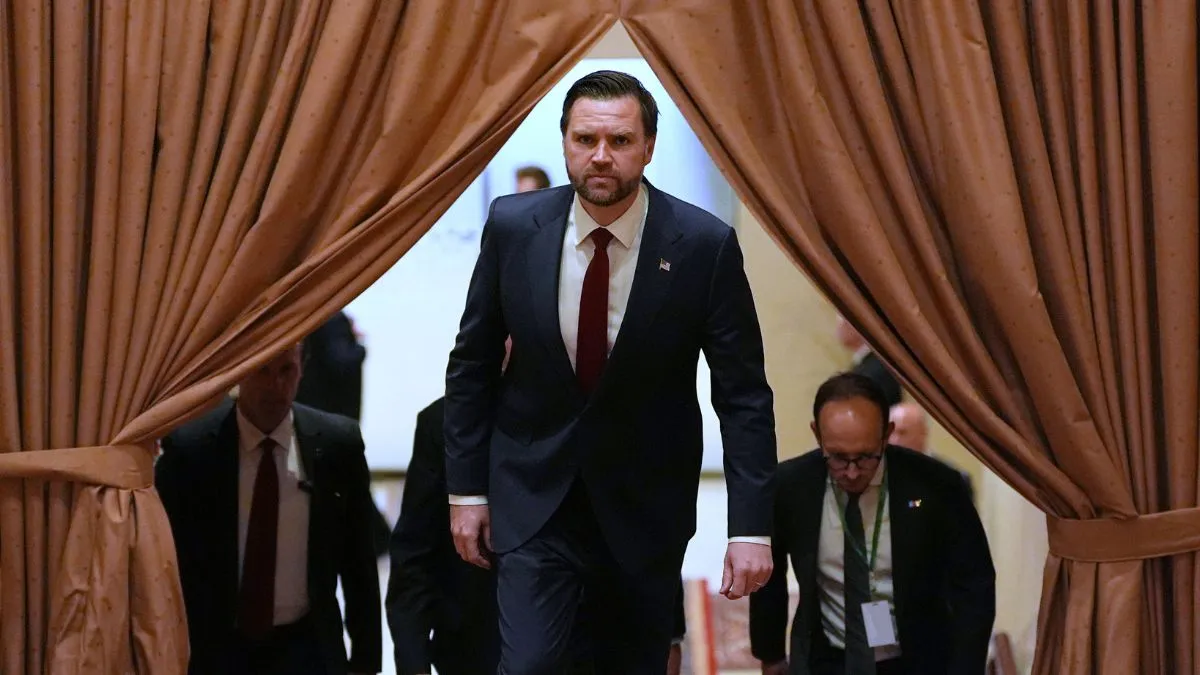
The marathon 21-hour talks between the United States (US) and Iran in Pakistan's Islamabad failed to end the impasse after the two sides did not agree to each other's demands. The US delegation, led by Vice President JD Vance, wanted Iran to give guarantee that it will not seek nuclear weapons, end all uranium enrichment and clear the Strait of Hormuz, which is one of the most critical waterways in the world.
Briefing the media in early Sunday morning, Vance said the US gave its "best and final" offer, but the Iranians were not agreeing, adding that the red lines were made clear to Tehran. The US Vice President further said it is the "core goal" of President Donald Trump to ensure that Iran does not get its hands on nuclear weapons.
But Iran blamed the US and said the demands were "reasonable", with its President Masoud Pezeshkian noting that Washington needs to let go of its “totalitarian” approach to ensure that the two sides reach to an agreement and ensure that it respects the rights of the Iranians.
Why the hopes were high ahead of talks?
The derailment of the talks have left everyone disappointment, as the world had high hopes from it, particularly due to the involvement of Vance. A report by The Washington Post has claimed that after he assumed office, it was Vance's highest-profile assignment to ensure that Iran comes to the table for talks.
An official told the outlet that the V-P was aware about the "mistrust and risk of misunderstanding" between Iran and the US, but still had managed to develop a "rapport and became warmer" with Tehran's negotiators. Even Trump acknowledged this and told Fox News in an interview that Vance's team became "very friendly" with Iran towards the end. However, Iran's refusal to give away its "nuclear ambition" ultimately led to the failure of the talks.
"We had a very intensive Negotiation, and toward the end it got very friendly, and we got just about every point we needed, except for the fact that they refused to give up their nuclear ambition. And that’s the only point, frankly, to me, that was the most important point by far," the US President said.
Iran's nuclear programme: The bone of contention
Iran's nuclear programme is the main contentious point between the two sides. For years, Iran has maintained that its nuclear programme is for civilian use, but the US claimed that the Islamic Republic is seeking nuclear weapons. This was main reason for the 12-day war between them in June last year. Vance's in his Sunday's briefing also hinted that Iran's decision not to give its nuclear programme caused the talks to derail, though he did not elaborate much.
"I won't go into all the details because I don't want to negotiate in public after we negotiated for 21 hours in private. But the simple fact is that we need to see an affirmative commitment that they will not seek a nuclear weapon and that they will not seek the tools that would enable them to quickly achieve a nuclear weapon," the Republican leader said.
It remains to be seen what happens next, as Trump has now announced a naval blockade of all Iranian ports and coastal areas, beginning Monday; although he told Fox News that the US still that Tehran would come around to the Washington's terms. "I predict they come back and they give us everything we want," he said.
ALSO READ - Behind the US-Iran deadlock: Did Netanyahu's call to Vance play a role in derailing talks?