- News
- Explainers
- How states' seats tally will change in Lok Sabha after the Delimitation Bill | Explained
How states' seats tally will change in Lok Sabha after the Delimitation Bill | Explained
Parliament special sitting: The opposition has argued that the delimitation will decrease the representation of southern states. However, the government has argued that the opposition is misleading the people.
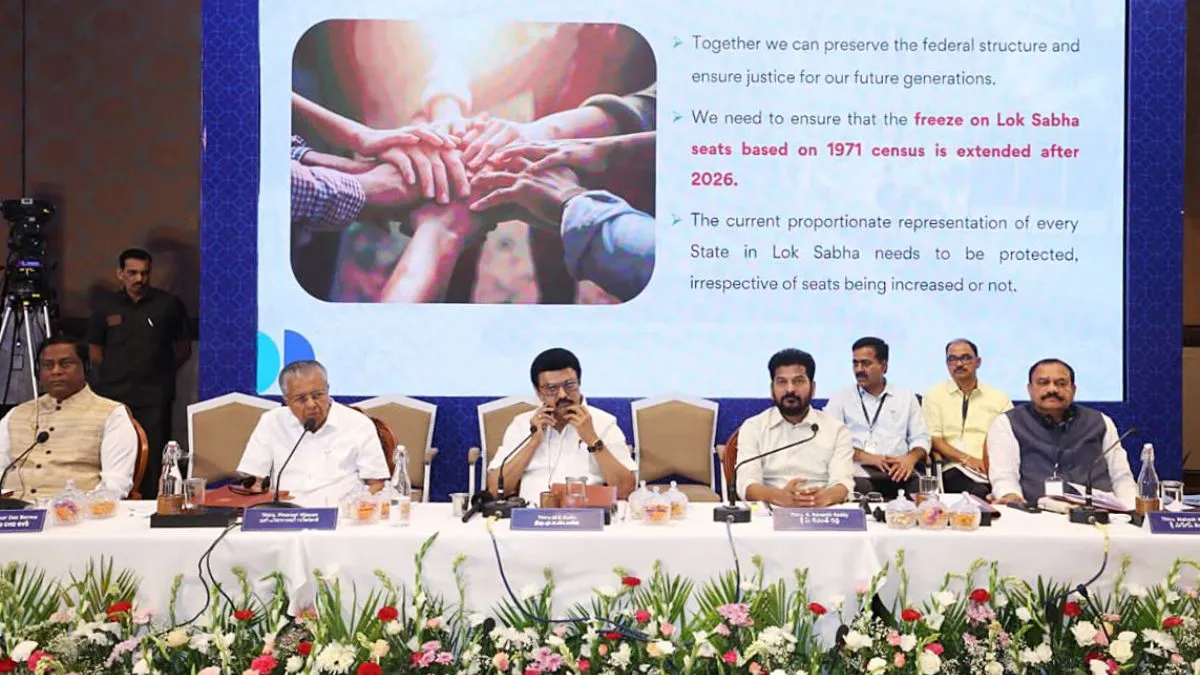
A fiery three-day special sitting of the Parliament will begin from Thursday, as the government tabled three crucial bills. The bills - Constitution (131st Amendment) Bill, Delimitation Bill, 2026, and the Union Territories Laws (Amendment) Bill, 2026 - seek to redraw the constituencies, increase the Lok Sabha's strength and operationalise women's reservation.
The opposition has criticised these bills and argue that they will only create a north-south divide; although it has stated that it supports women's reservation. "On delimitation, the government seems to be playing certain tricks. Therefore, all opposition parties are going to take a united stand and fight in Parliament. I want to clearly state that we are not against Women’s Reservation Bill," Congress president Mallikarjun Kharge said on Wednesday.
Delimitation and expansion of Lok Sabha
According to the draft Constitution Amendment Bill, the strength of the Lok Sabha will be increased from the current 543 to around 850 to "operationalise" the women’s reservation law before the 2029 Lok Sabha elections, following a delimitation exercise based on the 2011 Census. Seats will also be increased in legislative assemblies of all states and union territories (UTs).
| How seats of states will change after delimitation? | |||
| States/ UTs | Current seats | Proposed seats | Gain |
| Uttar Pradesh | 80 | 120 | 40 |
| Maharashtra | 48 | 72 | 24 |
| West Bengal | 42 | 63 | 21 |
| Bihar | 40 | 60 | 20 |
| Tamil Nadu | 39 | 59 | 20 |
| Madhya Pradesh | 29 | 44 | 15 |
| Karnataka | 28 | 42 | 14 |
| Gujarat | 26 | 39 | 13 |
| Andhra Pradesh | 25 | 38 | 13 |
| Rajasthan | 25 | 38 | 13 |
| Odisha | 21 | 32 | 11 |
| Kerala | 20 | 30 | 10 |
The bill also seeks to amend Article 81 of the Constitution. "The House of the People (Lok Sabha) shall consist of not more than 815 members chosen by direct election from territorial constituencies in the states; and not more than 35 members to represent the Union territories, chosen in such manner as Parliament may by law provide," the draft says.
The north-south divide
As per the 'pro rata expansion' model of the Centre, the share of each state will rise by nearly 56 per cent. This calibrated expansion is a deliberate move to preserve the existing balance of political representation among states, seeking to ease longstanding tensions over the "north-south divide" that have repeatedly hindered delimitation efforts.
The government, rejecting the opposition's charge, has said that southern states will benefit via delimitation. Speaking to reporters on Tuesday, Union Minister Kiren Rijiju said also alleged that the opposition is trying to mislead the southern states by saying that they would lose out due to their successful family planning.
"The southern states are fortunate that despite controlling the population growth, despite a lesser number of people in terms of proportionate, in terms of ratio, they still gain because the numbers have risen proportionately," Rijiju said.
"In fact, the southern states are fortunate that despite controlling the population growth... they still gain because the number of seats has risen proportionately," he said. "No state is losing. Every region, every state is given the provision of an increase in seats."
ALSO READ - Why the Delimitation Bill is key to making women's reservation a reality | EXPLAINED