- Home
- Explainers
- How Russia is projecting power against West with Putin's nuclear stare-off with Trump | EXPLAINED
How Russia is projecting power against West with Putin's nuclear stare-off with Trump | EXPLAINED
The immediate trigger for renewed nuclear testing discussions in Russia came after United States President Donald Trump stated last month that the United States might restart nuclear weapons testing.
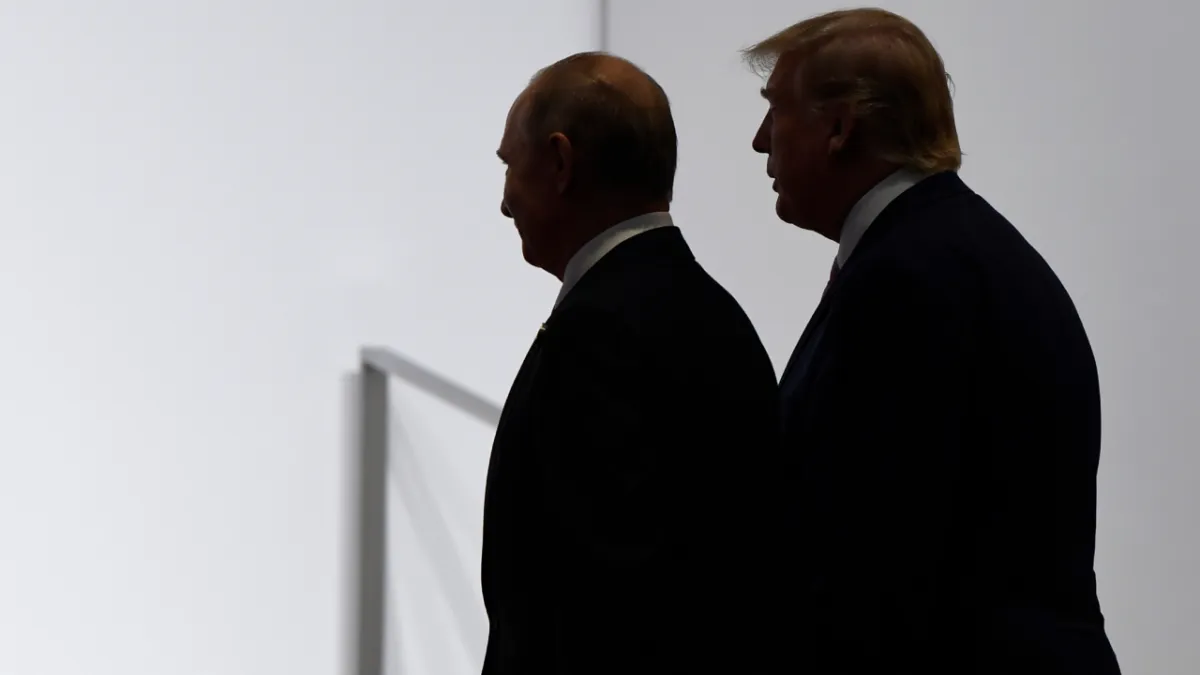
Russia has raised the stakes in its confrontation with the United States with Vladimir Putin signalling that it may resume full scale nuclear testing, while simultaneously deepening its military presence in Venezuela, a known anti-American ally of Russia. The two moves, though unfolding in different regions, are widely viewed as part of a single strategy aimed at challenging American influence and demonstrating that Moscow can project power far beyond its immediate neighbourhood.
Nuclear tensions flare up
The immediate trigger for renewed nuclear testing discussions came after United States President Donald Trump stated last month that the United States might restart nuclear weapons testing. The US has not carried out a nuclear explosion based test since 1992, though its laboratories continue to simulate detonations using sophisticated computer modelling and subcritical experiments that do not produce nuclear yield. The United States Energy Secretary later clarified that Washington was not planning tests involving actual nuclear explosions, but the suggestion alone prompted a pointed reaction from Moscow.
In a meeting with Russia's security council, President Vladimir Putin instructed defence and foreign policy officials to prepare proposals for potentially resuming nuclear tests. He said Russia would only act if the United States conducted such tests first, framing any move as a reciprocal measure. Russia withdrew its ratification of the Comprehensive Nuclear Test Ban Treaty in 2023, arguing that Washington had never ratified the agreement and therefore Moscow should no longer be bound by it unilaterally. The treaty, adopted in 1996, bans all nuclear explosions, but it has never entered full legal force because key nuclear armed states have not ratified it.
Analysts note that Russia may not be eager to conduct a test, as it would be costly and could undermine Moscow's claims of restraint. Yet the threat alone has strategic weight. It signals that Moscow is willing to abandon long standing arms control norms if it sees Washington doing the same. It also allows Russia to remind the international community that it retains one of the world’s largest and most advanced nuclear arsenals.
Military manoeuvres breweing a Caribbean standoff?
At the same time, Russia has stepped up military cooperation with Venezuela, a long standing political ally that has been at odds with the United States for years. In recent weeks, Russian military cargo aircraft landed in Caracas carrying defence personnel and equipment. A new strategic partnership treaty was formalised with Venezuela covering defence, economic cooperation and training programmes. Reports from Venezuelan sources suggest that advanced air defence systems could be part of future transfers.
The arrival of Russian forces and equipment comes as the United States has deployed naval assets, including an aircraft carrier strike group, to the Caribbean. Washington has described this deployment as part of anti narcotics operations, though critics and international observers view it as a broader demonstration of power directed at the Venezuelan government. The presence of Russian forces offers Caracas a significant symbolic boost, showing that it has external backing in the face of United States pressure.
This is not the first time Russia has signalled interest in the western hemisphere. Moscow previously sent bombers and naval vessels to Venezuela and Cuba, actions intended to remind Washington that Russia can operate close to United States territory just as NATO operates near Russia’s borders in Europe. However, the latest moves appear more sustained and politically formalised, suggesting a deeper strategic shift rather than symbolic visits.
Putin's strategic messaging
Taken together, the nuclear test discussions and the Venezuelan deployment are widely seen by analysts as part of Russia’s effort to counter what it perceives as United States dominance of the international security environment. By raising the prospect of nuclear testing, Russia signals that it will not allow the United States to shape global arms control unchallenged. By strengthening ties with Venezuela it shows that American influence in the western hemisphere can be contested.
The developments increase the risk of miscalculation on both sides. They also highlight the decline of major international agreements that once limited nuclear competition and managed geopolitical rivalry.