- Home
- Explainers
- Explained: What is Fatwa and why has Iran issued one against Trump, Netanyahu?
Explained: What is Fatwa and why has Iran issued one against Trump, Netanyahu?
Iran's top Shia cleric has issued a fatwa against Donald Trump and Benjamin Netanyahu, calling them "enemies of Allah" after alleged attacks on Iranian soil. While impactful in some Islamic nations, such fatwas hold no legal weight in secular countries like India.
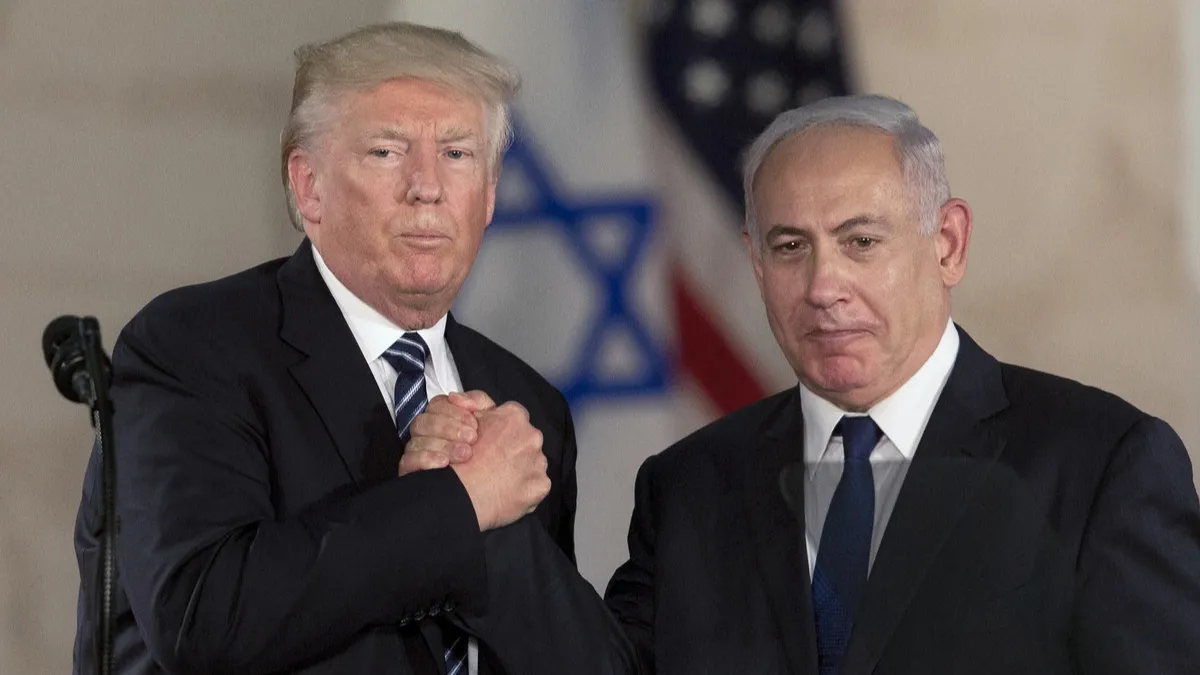
In a dramatic turn in West Asian geopolitics, Iran's top Shia cleric, Grand Ayatollah Naser Makarem Shirazi, has reportedly issued a fatwa against US President Donald Trump and Israeli Prime Minister Benjamin Netanyahu. This move comes in the aftermath of devastating attacks on Iranian soil allegedly carried out by the United States and Israel.
Here’s what the fatwa says, what a fatwa means, and what impact such declarations hold globally — especially in countries like India.
What does the Fatwa say?
In the fatwa issued by Grand Ayatollah Shirazi, Donald Trump and Benjamin Netanyahu have been described as “enemies of Allah.” The statement warns that anyone who threatens or attempts to harm Iran’s Supreme Leader Ayatollah Ali Khamenei will face divine wrath. The declaration is being seen as a religiously grounded warning rather than just a political statement, and it has sent ripples across international circles.
What is Fatwa?
The term fatwa originates from Arabic and refers to a religious ruling or legal opinion issued under Islamic Sharia law. It is typically issued by a Mufti—an Islamic scholar with deep expertise in the Quran, Hadith (Prophet’s sayings), and Islamic jurisprudence. A fatwa is a response to a specific question posed by a believer or authority, and it is intended to provide religious guidance.
Notably, a fatwa is not legally binding unless a government chooses to enforce it, as in the case of some Islamic countries.
Who can issue Fatwa?
Not every religious leader can issue a fatwa. It must come from a qualified Mufti who is considered an authority in Islamic jurisprudence. As explained by Maulana Arshad Madani, president of Jamiat Ulema-e-Hind, a fatwa is issued in response to a religious query and is meant to guide the individual who posed the question. It is not a general law but a personalized religious opinion.
Madani emphasised, "Even if I am a cleric, I cannot issue a fatwa. Only a practicing Mufti with formal religious training can do so."
Are Fatwas political or religious?
While fatwas are primarily religious, they have at times been used in political contexts—especially in countries like Iran where religion and politics are deeply intertwined. However, most Islamic scholars, including those in India, believe fatwas should remain confined to spiritual or religious matters and not interfere with state affairs or political decisions.
How effective are Fatwas in India?
India, despite having one of the largest Muslim populations, does not give legal weight to fatwas. Institutions like Darul Uloom Deoband do issue fatwas on various social and religious matters, but these are advisory.
The Supreme Court of India has also clarified that fatwas are not legally binding and cannot override Indian law. They may influence personal behaviour within a community, but they carry no official or legal compulsion.
A notable example: The Salman Rushdie Fatwa
One of the most famous fatwas in modern history was issued by Iran’s then-Supreme Leader Ayatollah Khomeini in 1989 against British-Indian author Salman Rushdie. Khomeini accused Rushdie of blasphemy in his book The Satanic Verses and called for his execution. Though Rushdie survived, he lived under constant threat for decades and was seriously injured in a 2022 stabbing attack in New York, which many linked to the decades-old fatwa.
The recent fatwa issued against Trump and Netanyahu highlights the intersection of religion, politics, and international conflict in the Middle East. While fatwas carry considerable influence in some Islamic nations, their scope and enforcement vary greatly across borders. In democratic and secular nations like India, fatwas remain personal religious advisories without legal backing.
As the situation unfolds, the international community will closely watch how such religious edicts impact ongoing tensions in the Middle East.