- News
- Explainers
- Border fencing, Teesta treaty and more: How India-Bangladesh equations are reshaping after BJP's Bengal win
Border fencing, Teesta treaty and more: How India-Bangladesh equations are reshaping after BJP's Bengal win
Under now-exiled Prime Minister Sheikh Hasina, India-Bangladesh relations were considered strong and deep, but this changed under former Chief Adviser Muhammad Yunus, and the relationship between Delhi and Dhaka plunged to an unprecedented low.
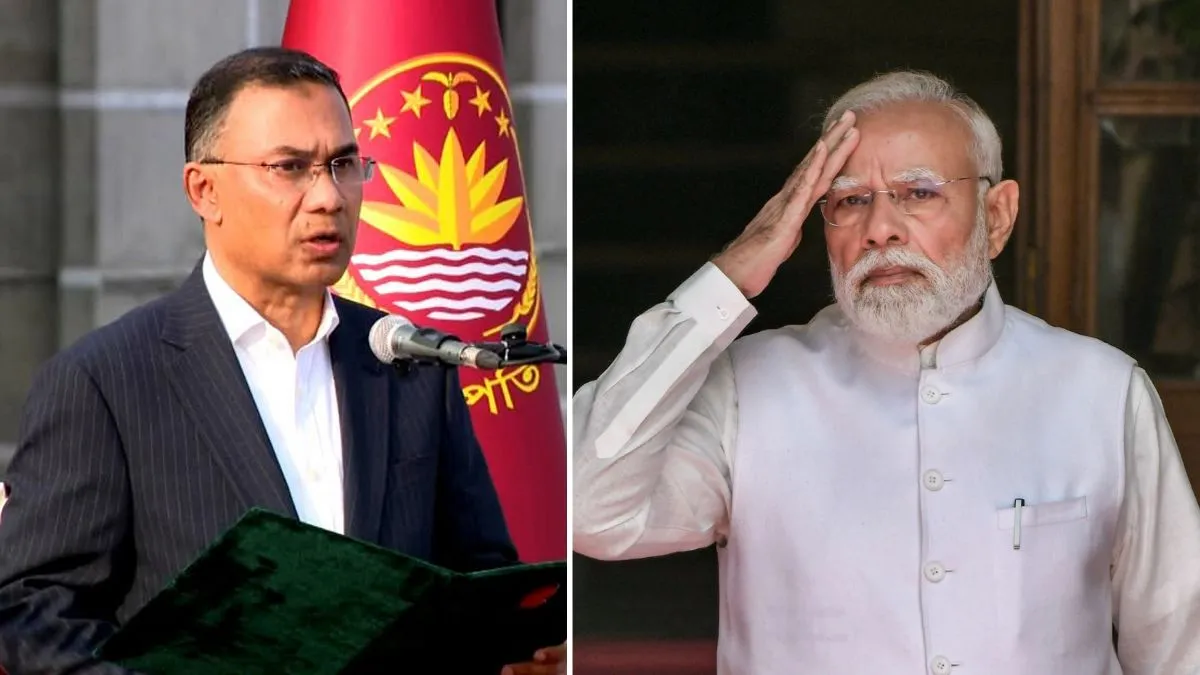
On May 4, history was rewritten in West Bengal. A state, considered ideologically opposed to right-wing politics, was won by the Bharatiya Janata Party (BJP). The saffron party ended the 15-year rule of the Mamata Banerjee-led Trinamool Congress (TMC), winning 207 of the 294 seats in the West Bengal Legislative Assembly. And the BJP's victory in West Bengal could redefine India's relationship with Bangladesh.
Under now-exiled Prime Minister Sheikh Hasina, India-Bangladesh relations were considered strong and deep, but this changed under former Chief Adviser Muhammad Yunus, and the relationship between Delhi and Dhaka plunged to an unprecedented low. However, following the Tarique Rahman-led Bangladesh Nationalist Party's (BNP) victory in Bangladesh and the BJP's win in West Bengal could pave the way for resetting ties, at least for the next five years.
The Ganges Water Sharing Treaty
How the two countries deal with the Ganges Water Sharing Treaty is likely to define their relationship in the future. The 30-year deal was signed in 1996 and will expire in December this year. The BNP has already stated that Bangladesh's relationship with India will "depend" on a new treaty regarding sharing the waters of the Ganges.
At an event last week, Bangladesh's Minister of Local Government, Rural Development and Co-operatives, Mirza Fakhrul Islam Alamgir, said Dhaka seeks immediate talks with Delhi over this treaty.
"We want to send a clear message to the Indian government that a (new Ganges) treaty must be implemented immediately through discussions according to the expectations and needs of Bangladesh's people," Alamgir, who is also BNP's secretary general, was quoted by news agency PTI as saying.
The Teesta Water Sharing Treaty
Additionally, Bangladesh also hopes for finalising the proposed Teesta Water Sharing Treaty, which was opposed by Banerjee, who claimed that sharing Teesta's water will severely hurt North Bengal. But with the BJP's rise to power in the state, Bangladesh hopes that the treaty could be considered again.
"We hope that the agreement reached at that time can be 'considered' again under the current circumstances," Bangladesh Foreign Minister Khalilur Rahman said earlier this month after the BJP stormed to power in West Bengal.
Notably, the BJP has been far more supportive of the Teesta Water Sharing Treaty, as it believes that it is crucial for trade and connectivity with Bangladesh and also to counter China's influence in Dhaka.
The Border Fencing Row
Immediately after Suvendu Adhikari was sworn in as West Bengal's chief minister, he promised to hand over land to the Border Security Force (BSF) for the fencing of the Bangladesh border, which the BJP had alleged that was not happening because of the appeasement politics of Banerjee and the TMC. And on May 20, Adhikari's government initiated the transfer of a 27-km stretch of land to the BSF for fencing projects.
Adhikari, who also addressed a press conference with BSF officials, said the move was necessary to stop infiltration and ensure the safety of India. He assured complete cooperation from his government, saying that whatever land the state can provide to the BSF, it will be given.
"As a beginning, the land required to secure the 27-km stretch is being provided to the BSF. Our citizens and officials will complete the process and extend all cooperation in the coming days," Adhikari said.
But Bangladesh remains skeptical of this and believes that though fencing could reduce "illicit movement", it would likely have a severe impact on the "informal economies" that exist between the two sides. The Daily Star, one of Bangladesh's leading dailies, also said the fencing could have a more human cost impact.
"Without meaningful accountability and restraint, greater control may deepen grievances rather than resolve them, turning the border into a site of recurring humanitarian crisis," it wrote in an article dated May 6.
Bengal government animal slaughter order
The Adhikari government, in a notification on May 13, issued guidelines that restricted the slaughter of animals without a "fit certificate" from authorities. The same notification also stated that animal slaughter is completely prohibited in public places. The order, which came just before Bakrid, ignited a row, but the Calcutta High Court on May 21 disposed of pleas challenging the restrictions; although it asked the state government to take a decision as per Section 12 of the West Bengal Animal Slaughter Control Act, 1950, regarding the exemption prayed for in view of Eid al-Adha.
At the same time, Bangladesh's media showed its reservations about the Bengal government's order and alleged that it could create "unrest and confusion" in minority-dominated areas. Prothomalo English, another Bangladeshi daily, claimed the order could also impact Hindu traders.
"On social media, several Hindu cattle farmers and traders said this is the peak season for their income, and sudden restrictions have severely affected their livelihood," it said in an article on May 19.
The ties between India and Bangladesh were hit under Yunus' administration, but it now remains to be seen how the relationship improves with the BJP's victory in West Bengal and the BNP's rise in Bangladesh. The developments offer both sides an opportunity to reset bilateral ties, though the direction of the relationship will ultimately depend on how the new political equations evolve.