Delhi chokes under toxic smog: Schools, colleges, offices hit as GRAP 4 curbs enforced
Delhi air quality hits the worst level of the year at 491 as of 6:00 am on Sunday. Grap-4 has been issued across the capital with the construction work being halted, vehicle movement restricted and offices being shifted to work-from-home.
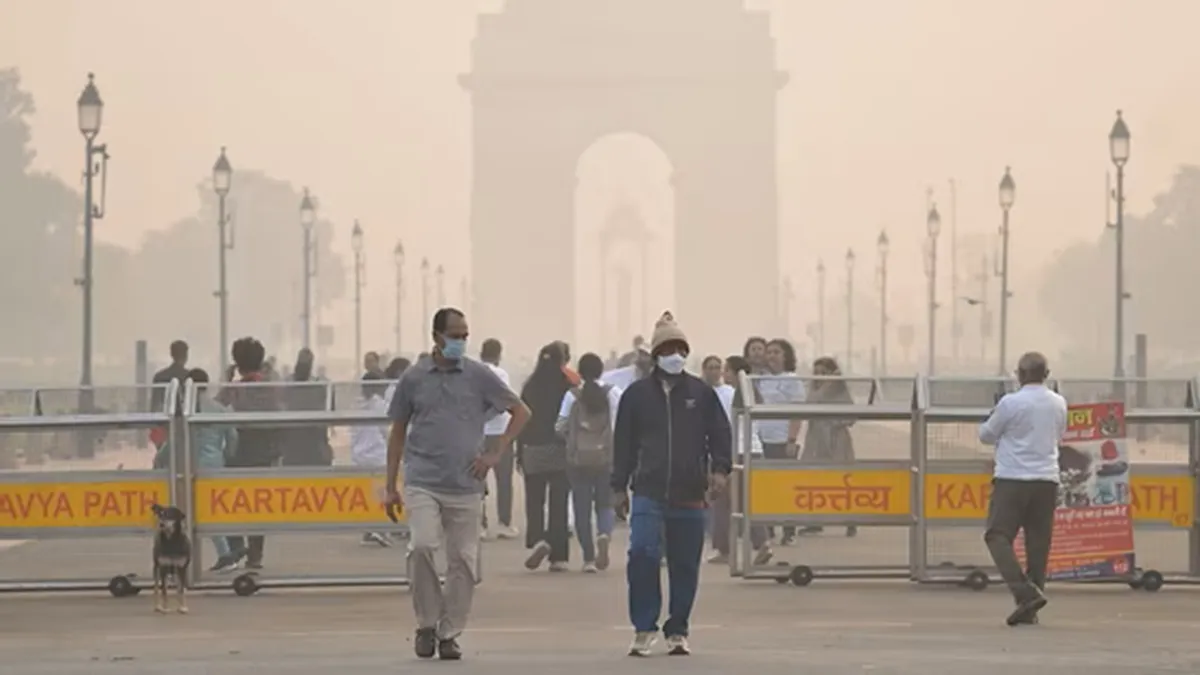
Delhi-NCR woke up on Sunday under a dense blanket of toxic smog, with visibility dropping sharply and air quality plunging to the most hazardous category recorded this year. According to data from the Central Pollution Control Board (CPCB), the Air Quality Index (AQI) touched an alarming 491 at 6:00 am, placing it firmly in the ‘severe plus’ bracket.
This marked a sharp rise from Saturday’s reading of 431, making Sunday the worst air quality day of the year so far. The thick smog engulfed roads, highways and residential areas across Delhi, Gurugram, Noida, Ghaziabad and Faridabad, disrupting daily life from the early hours.
What ‘severe plus’ means
AQI readings between 201 and 300 are considered ‘Poor’, followed by ‘Very Poor’ (301–400). Once the index crosses 401, air quality enters the ‘Severe’ zone. Any reading above 450 is classified as ‘severe plus’ the most dangerous category, posing serious health risks to all age groups. On Saturday evening, the overall AQI stood at 448 at 7 pm, while the 24-hour average was 349 (‘Very Poor’) at 4 pm. The overnight spike pushed pollution levels beyond the critical threshold by Sunday morning.
GRAP stage-IV restrictions rolled out in Delhi
In response to the rapidly worsening conditions, the Commission for Air Quality Management (CAQM) invoked Stage-IV of the Graded Response Action Plan (GRAP) the strictest level of anti-pollution measures with immediate effect across the entire NCR. Stage-IV is triggered when AQI breaches the 450 mark and is aimed at preventing further deterioration while safeguarding public health.
Construction, mining and stone crushers shut
Among the most stringent measures under GRAP-IV is a complete ban on construction and demolition activities throughout Delhi-NCR. Authorities have also ordered the closure of stone crushers, mining operations and all related activities, which are known to contribute significantly to dust and particulate pollution. These steps come in addition to curbs already imposed under GRAP Stages I, II and III.
Schools shift to hybrid mode
To limit children’s exposure to hazardous air, educational institutions have been directed to move classes up to Class 5 to a hybrid mode. Schools have been advised to minimise physical attendance while continuing lessons through a combination of online and offline learning. Under GRAP-IV, state governments and the Delhi government also have the option to suspend physical classes for Classes VI to IX and Class XI, depending on local conditions.
Strict vehicle curbs across NCR
Transport restrictions have been significantly tightened. The movement of BS-III petrol and BS-IV diesel four-wheelers has been strictly curtailed across Delhi and adjoining districts, including Gurugram, Faridabad, Ghaziabad and Gautam Buddha Nagar.
Under GRAP-IV:
- Entry of trucks into Delhi is prohibited, except those carrying essential goods or providing essential services
- LNG, CNG, electric and BS-VI diesel trucks are allowed
- Light commercial vehicles registered outside Delhi are barred, unless they run on electric, CNG or BS-VI diesel, or are transporting essential commodities
Offices to function at 50% capacity
To reduce traffic congestion and emissions, the government has ordered all offices both government and private to operate at 50 per cent capacity. The remaining staff will work from home. This directive has been issued under Section 5 of the Environment (Protection) Act, 1986. The Centre may also decide on extending work-from-home provisions to central government offices.