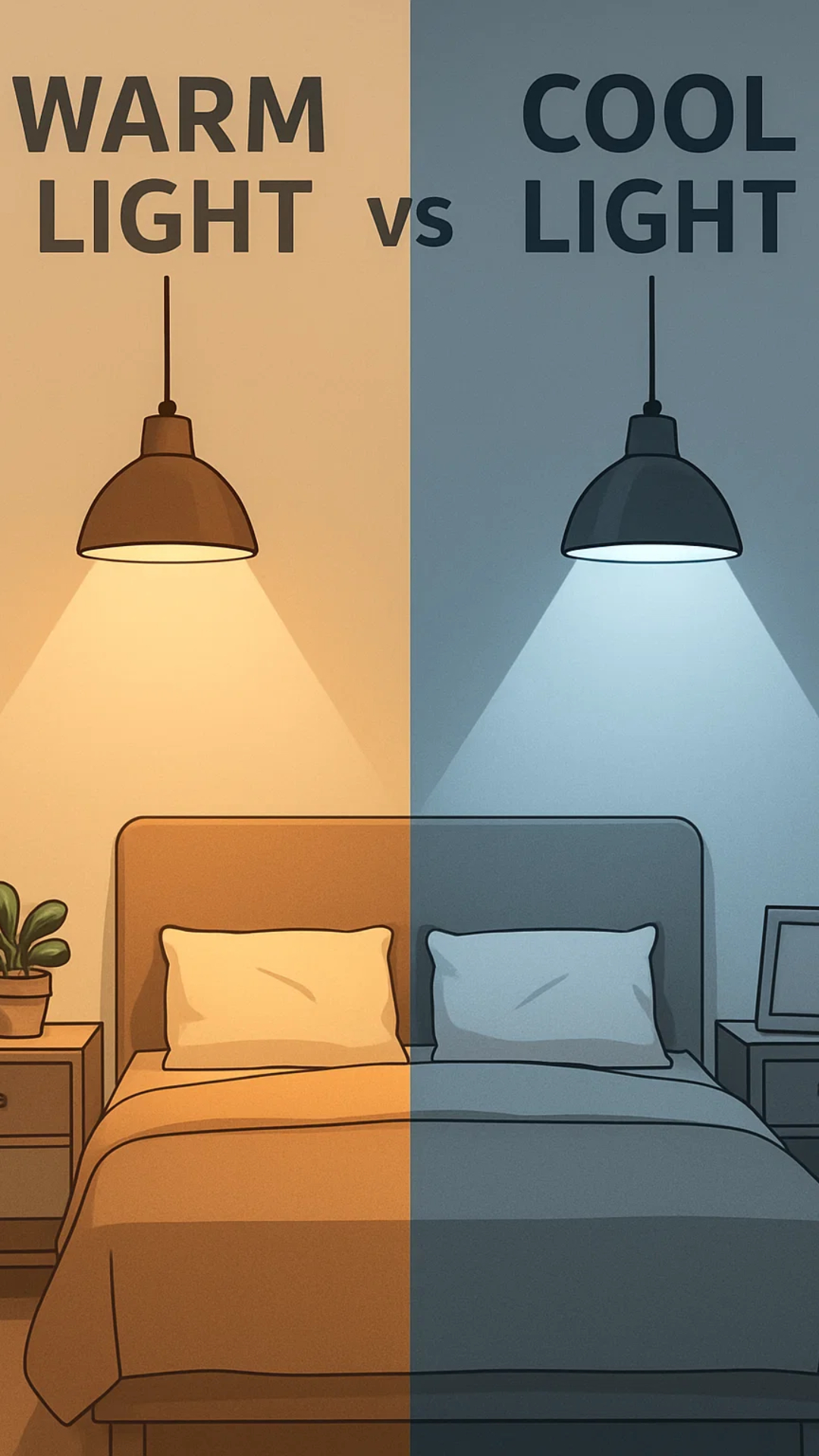
Warm light vs Cool light: Which one is better for you?
Image Source : AI-generatedColour Temperature: Warm light typically ranges from 2700K to 3000K, resembling the glow of sunset or incandescent bulbs. Cool light is between 4000K to 6500K, mimicking daylight or overcast sky. This colour temperature affects mood, alertness, and other factors.
Image Source : SocialMood and Ambience: Warm light creates a cosy, calming, and relaxing atmosphere, ideal for bedrooms, living rooms, and dining areas. Cool light feels energising, crisp, and focused, making it better for workspaces, kitchens, or garages.
Image Source : SocialSleep and Circadian Rhythm: Warm light supports your natural sleep cycle by minimising blue light exposure in the evening, which helps in melatonin production. Cool light contains more blue wavelengths, which can disrupt sleep if used at night.
Image Source : SocialProductivity and Focus: Cool light enhances alertness, concentration, and productivity, especially during the daytime. It’s preferred in offices, classrooms, and study areas where mental clarity is essential.
Image Source : SocialEye Comfort and Strain: Warm light is generally easier on the eyes, especially in low-light environments or for extended use. Cool light can cause glare or eye strain if too intense or used in dim surroundings.
Image Source : SocialConclusion: There’s no one-size-fits-all. Warm light is better for rest and relaxation, while cool light is ideal for focus and productivity. The best choice depends on time of day, purpose of the space, and personal preference.
Image Source : AI-generatedNext : From Mathura to Los Angeles: Famous Lord Krishna temples across the world