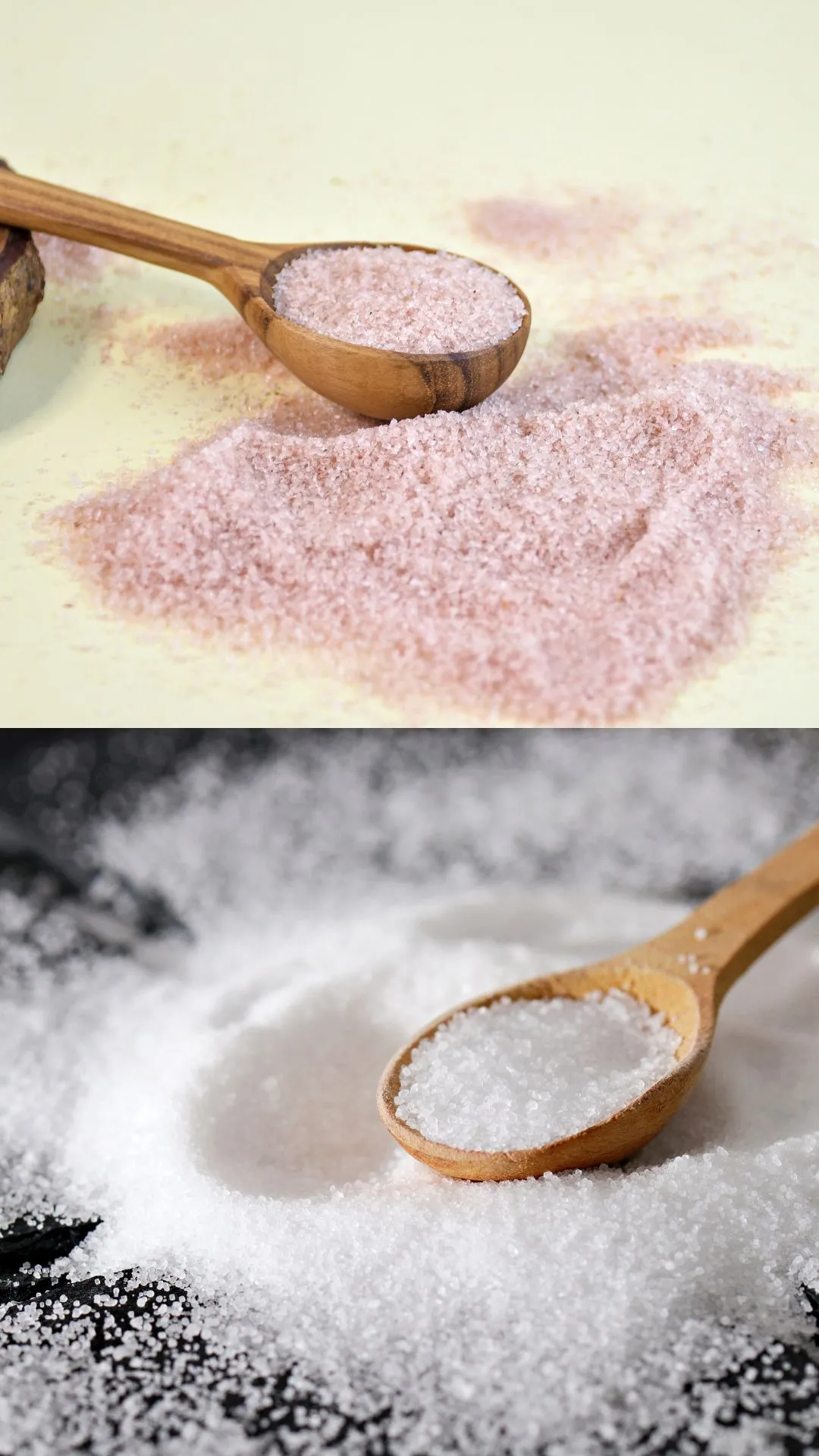
Sendha namak and Normal salt: Know the difference between the two
Image Source : CanvaSource and Processing: Sendha namak is a naturally occurring rock salt, mined from salt deposits in the earth (like those found in the Himalayas). It is minimally processed and retains natural minerals. Normal table salt is extracted from seawater or salt mines and is heavily refined. It often includes additives like anti-caking agents and iodine.
Image Source : CanvaMineral Content: Sendha Namak is rich in natural minerals; it contains up to 84 trace elements beneficial for the body. Normal salt is mostly just sodium chloride, with fewer minerals due to refining.
Image Source : CanvaTaste and Texture: Sendha Namak has a milder taste and coarser texture. Some describe it as slightly sweeter or less sharp than table salt. Normal salt is fine-grained with a sharp, salty flavour due to pure sodium chloride content.
Image Source : CanvaCulinary Use: Sendha namak is widely used in Indian cuisine during fasting periods (like Navratri) because it is considered pure and sattvic. Normal salt is used in everyday cooking and processed foods across the world.
Image Source : CanvaHealth Considerations: Sendha namak is believed to help in digestion, improve hydration, and maintain pH balance when used in moderation. Normal salt, on the other hand, has been linked to high blood pressure and water retention.
Image Source : CanvaNext : From Mathura to Los Angeles: Famous Lord Krishna temples across the world