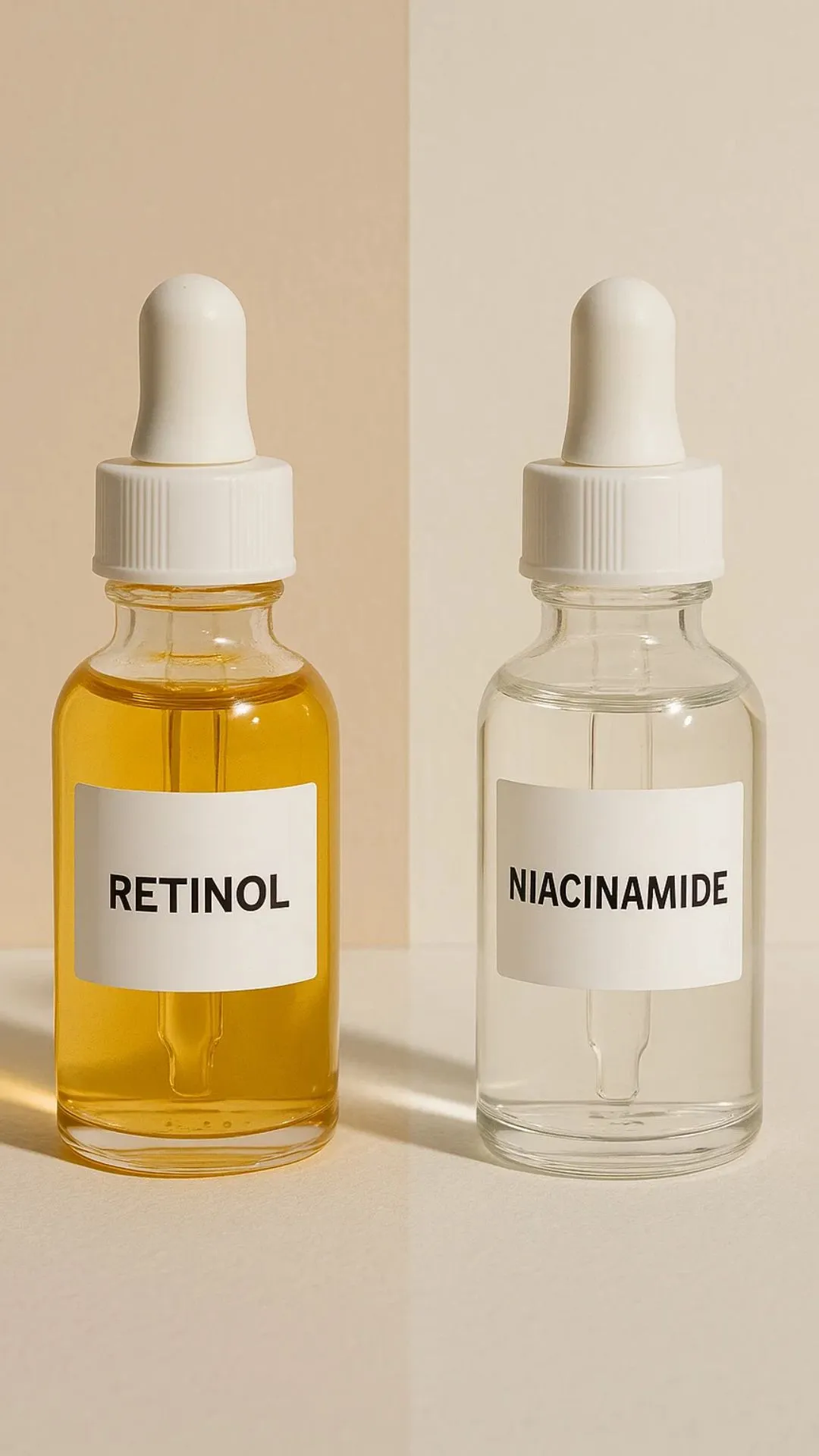
Retinol vs Niacinamide: Which is one better for acne scars?
Image Source : AI-generatedAction: Retinol boosts cell turnover and collagen production, helping fade acne scars by renewing the skin. Niacinamide reduces inflammation and improves skin barrier function, which gradually lightens scars and evens skin tone.
Image Source : PexelsEffectiveness: Retinol is generally more potent for reducing deep, atrophic (indented) scars due to its ability to remodel the skin. Niacinamide is better for treating post-inflammatory hyperpigmentation (PIH) or dark marks rather than textured scars.
Image Source : FreepikSkin Tolerance: Niacinamide is gentle, suitable for sensitive skin, and rarely causes irritation. Retinol, especially at higher strengths, can cause dryness, peeling, and redness, particularly for first-time users.
Image Source : PexelsSpeed of Results: Retinol may show noticeable improvement in scars within 8–12 weeks, depending on the concentration. Niacinamide shows more gradual results, usually visible after consistent use for 4–8 weeks, mainly for discolouration.
Image Source : PexelsAnti-Acne Benefits: Both ingredients help with acne, but retinol directly unclogs pores and prevents new breakouts. Niacinamide reduces oil production and inflammation, making it ideal for maintaining clear skin alongside other treatments.
Image Source : PexelsSide Effects: Retinol can increase sun sensitivity and must be used with sunscreen. Overuse can damage the skin barrier. Niacinamide has minimal side effects and is safe for daily, long-term use, even with other actives.
Image Source : FreepikConclusion: Retinol is more powerful for reducing deep acne scars, while niacinamide is gentler and ideal for fading discolouration and improving overall skin tone. For best results, some dermatologists recommend using both, layered properly or on alternate days.
Image Source : AI-generatedNext : From Mathura to Los Angeles: Famous Lord Krishna temples across the world