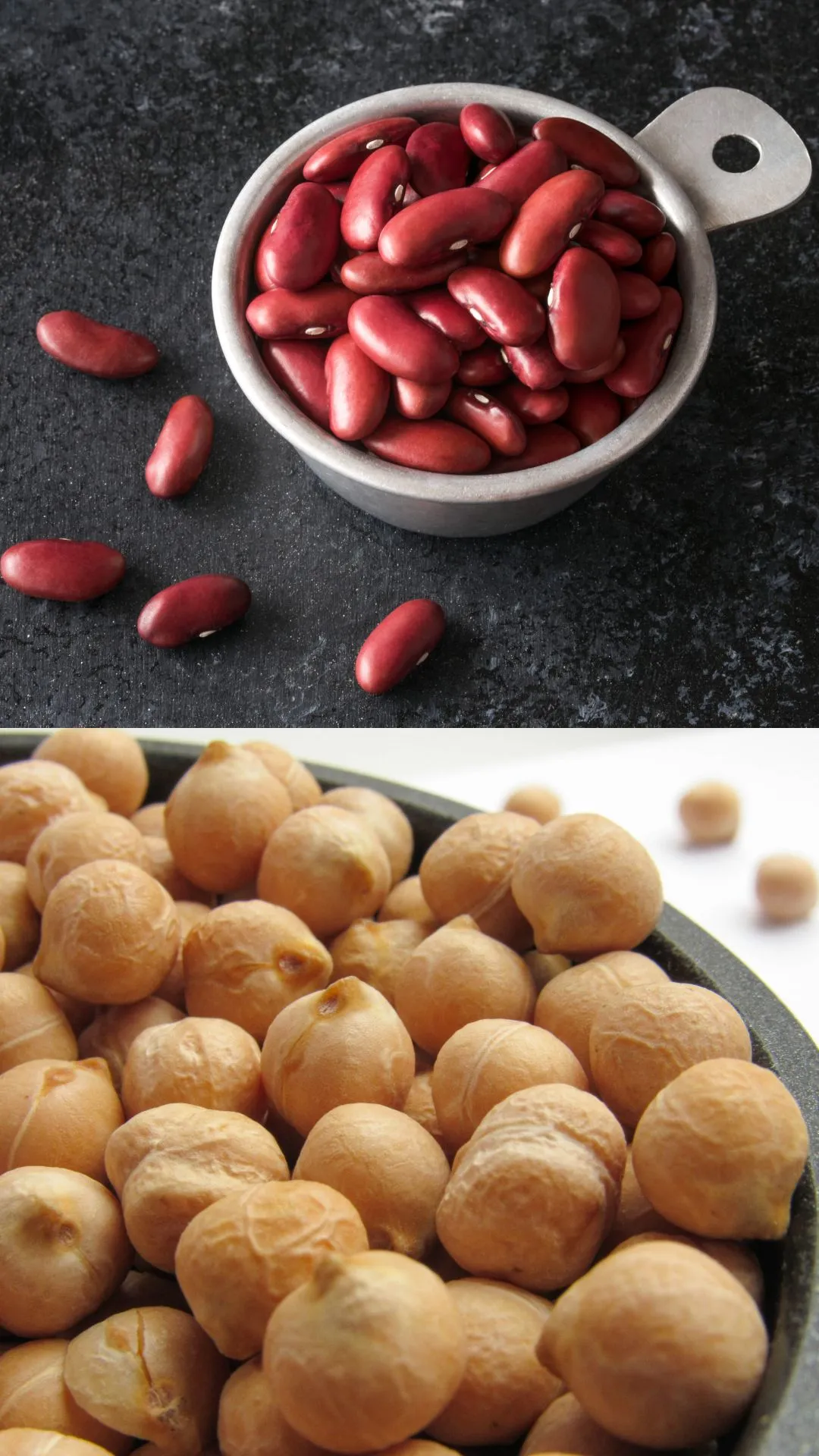
Rajma vs Chole: Which one has higher protein content?
Image Source : CanvaAmino Acid Profile: Rajma contains all nine essential amino acids that the human body cannot produce on its own, making it a complete protein source. Chole, on the other hand, is low in the amino acid methionine, making it an incomplete protein source.
Image Source : CanvaProtein Efficiency Ratio (PER): The PER is a measure of a protein's ability to support growth and maintenance. Rajma has a higher PER than Chole, which means that it is more effective in protein synthesis.
Image Source : CanvaProtein Content: Both Rajma (kidney beans) and Chole (chickpeas) are high in protein, but Rajma has a slightly higher protein content. One cup of cooked Rajma contains about 15-16 grams of protein, while one cup of cooked Chole contains about 12-13 grams of protein.
Image Source : CanvaCalorie Content: Chole is slightly higher in calories than Rajma with one cup of cooked Chole containing about 269 calories compared to 225 calories in one cup of cooked Rajma.
Image Source : CanvaDigestibility: Rajma is generally easier to digest than Chole which can be beneficial for people with digestive issues. The higher digestibility of Rajma means that its protein is more easily absorbed by the body.
Image Source : CanvaMineral Content: Both Rajma and Chole are rich in minerals like potassium, magnesium, and iron. However, Rajma contains more iron than Chole, making it a better option for people with iron deficiency.
Image Source : CanvaIn conclusion, while both Rajma and Chole are high in protein, Rajma has a slightly higher protein content and a more complete amino acid profile. However, Chole is a nutritious and protein-rich food that can be a good addition to a balanced diet.
Image Source : CanvaNext : From Mathura to Los Angeles: Famous Lord Krishna temples across the world