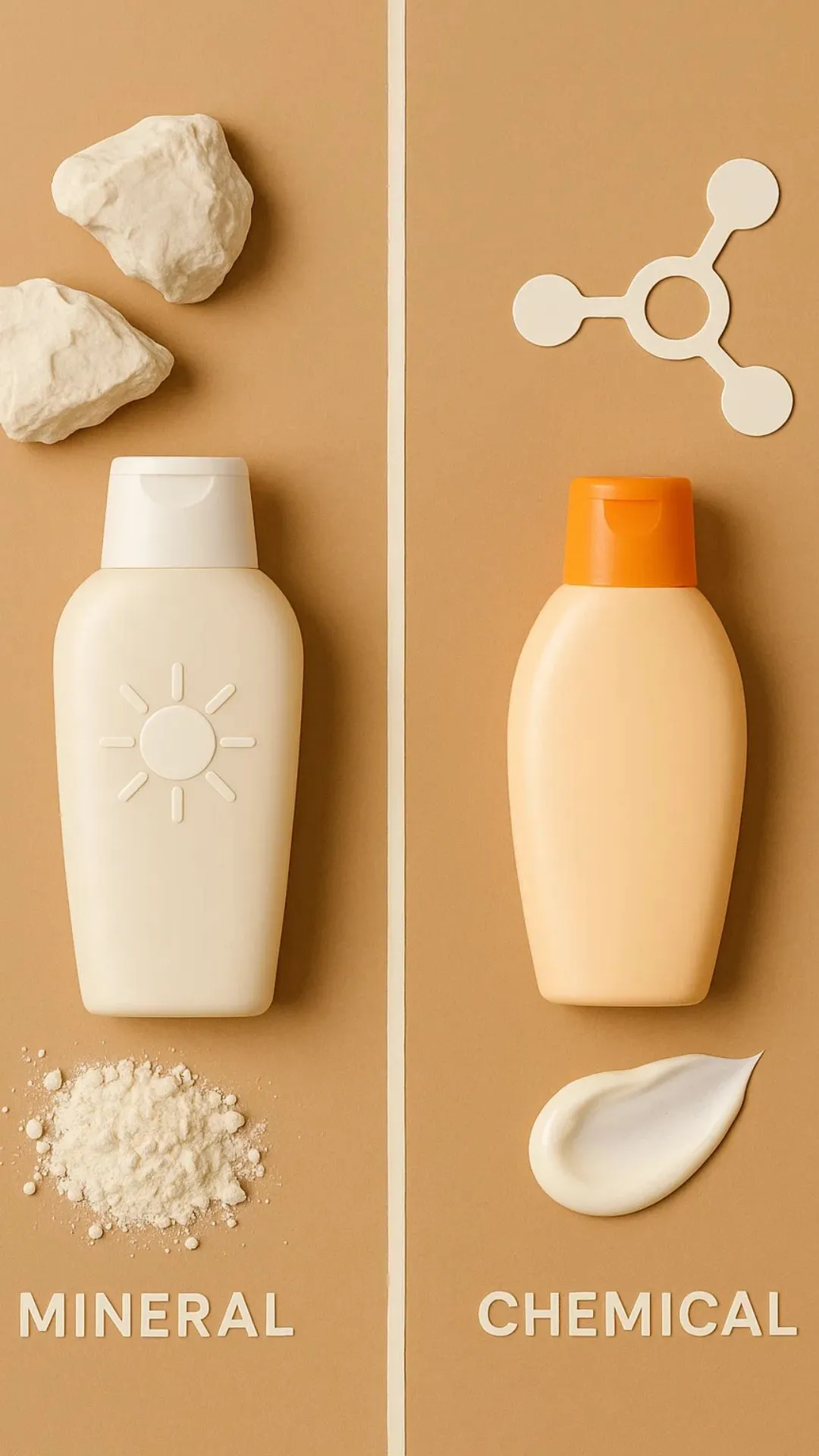
Mineral vs Chemical Sunscreen: Which one is better for you?
Image Source : AI-generatedIngredients and How They Work: Mineral sunscreens (also called physical sunscreens) use compounds which sit on the skin’s surface and physically block or reflect UV rays. Chemical sunscreens contain compounds which absorb UV rays and convert them into heat, releasing it from the skin.
Image Source : CanvaSkin Sensitivity: Mineral sunscreens are gentler on sensitive or acne-prone skin, as they’re less likely to cause irritation or allergic reactions. Chemical sunscreens may cause stinging or redness, especially for those with sensitive skin.
Image Source : CanvaUV Protection: Both types can offer broad-spectrum protection (UVA + UVB), but mineral sunscreens start working immediately upon application. Chemical sunscreens need about 15–30 minutes to become effective, as they must absorb into the skin.
Image Source : CanvaWater Resistance: Both types offer water-resistant formulas, but chemical sunscreens may hold up better during intense sweating or swimming. Mineral sunscreens can rub off more easily and may require more frequent reapplication.
Image Source : CanvaSafety and Hormonal Concerns: Mineral sunscreens are often recommended for pregnant women and children, as they don't penetrate the skin. Some chemical filters may enter the bloodstream in small amounts, raising concerns about hormonal disruption, though more research is needed.
Image Source : CanvaConclusion: If you have sensitive skin, prefer natural ingredients, or are concerned about environmental impact, mineral sunscreen may be the better choice. If you want a lightweight, invisible finish and water resistance, chemical sunscreen might suit you best. Ultimately, the best sunscreen is the one you’ll wear daily.
Image Source : CanvaNext : From Mathura to Los Angeles: Famous Lord Krishna temples across the world