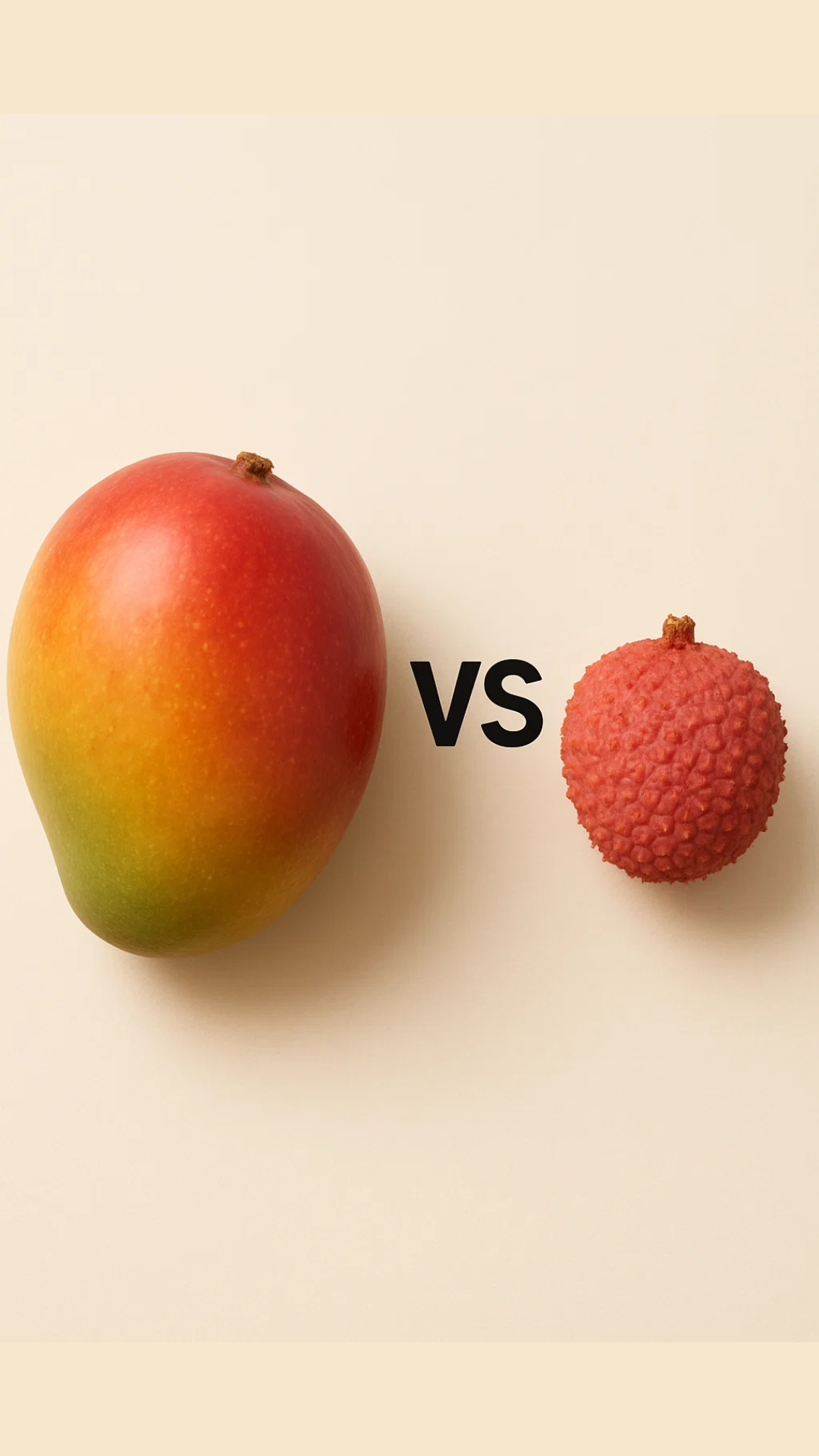
Mango vs Lychee: Which fruit has fewer calories?
Image Source : AI-generatedCalorie Count (Per 100g): Mango has 60 calories and lychee has 66 calories. Mango has slightly fewer calories per 100g compared to lychee, making it a marginally better choice for calorie-conscious eaters.
Image Source : Adobe ExpressSugar Content: Lychee has 15.2g of sugar, and mango has 13.7g of sugar. Lychee has a higher natural sugar content, which contributes to its sweeter taste and slightly higher calorie count.
Image Source : Adobe ExpressPortion Size: Lychee is smaller and can be consumed more quickly. Mango is larger and is usually eaten in slices or chunks. Even though mango has fewer calories per 100g, lychees are easier to overeat due to their small size and snackable nature.
Image Source : Adobe ExpressWater Content: Lychee has 82% water, and mango has 83% water. Both fruits have high water content, making them hydrating and low in calorie density, but mango still has a slight edge in calorie reduction.
Image Source : Adobe ExpressFibre Content: Mango has 1.6g fibre per 100g and lychee has 1.3g fibre per 100g. Mango offers slightly more dietary fibre, improving satiety and digestive health, which can help in weight control
Image Source : Adobe ExpressGlycemic Index (GI): Mango has a GI of 51–60 and lychee has a high GI of almost 79. Lychee causes a faster spike in blood sugar, which might be a concern for those managing blood sugar or insulin levels.
Image Source : Adobe ExpressConclusion: Mango has a lower calorie count. While both fruits are healthy and delicious, mango has slightly fewer calories than lychee per 100g, along with better satiety and blood sugar control properties. However, moderation is key for both.
Image Source : AI-generatedNext : From Mathura to Los Angeles: Famous Lord Krishna temples across the world