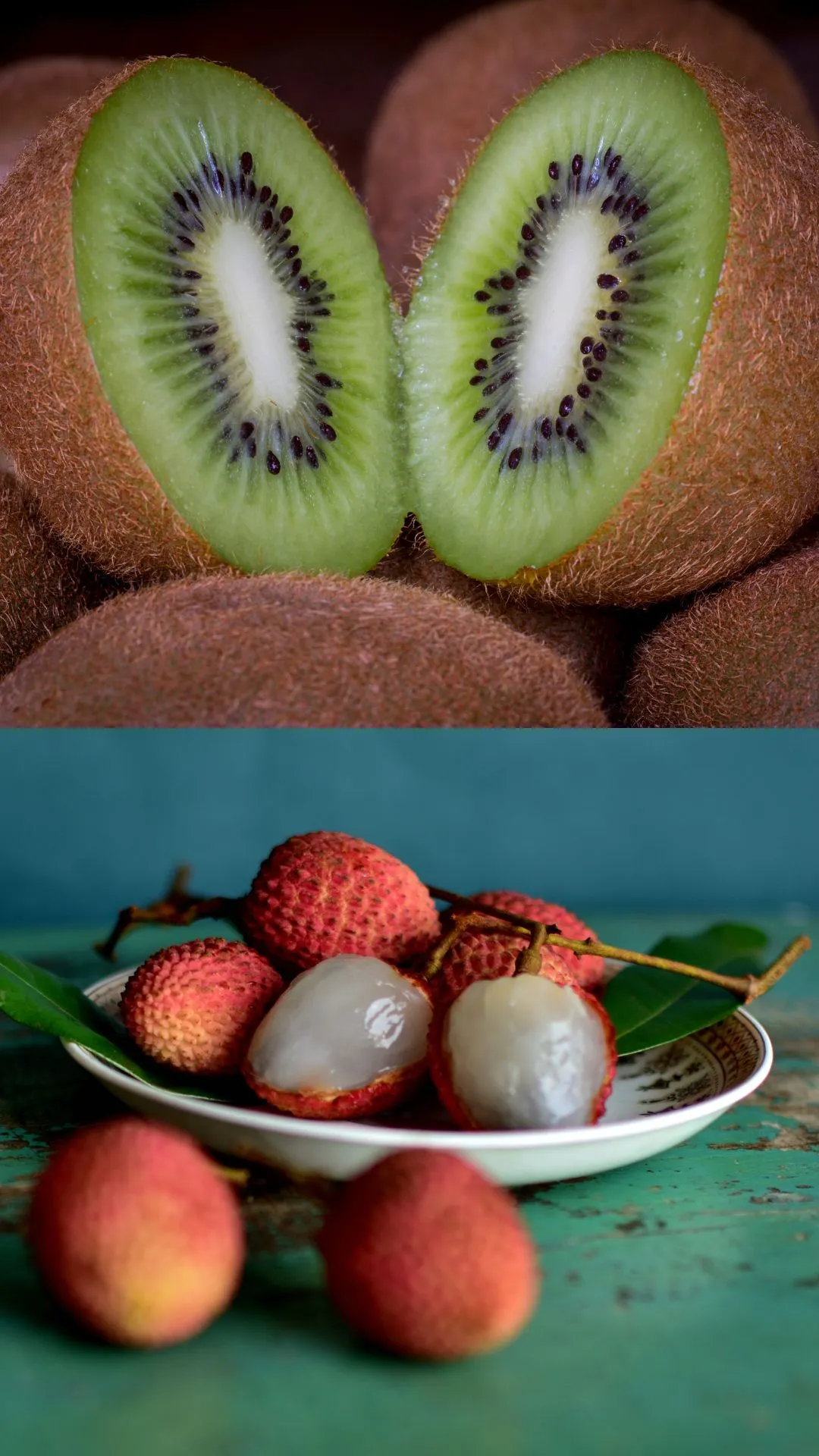
Lychee vs Kiwi: Which fruit is better for you?
Image Source : CanvaVitamin C: Both lychee and kiwi are excellent sources of vitamin C, but kiwi wins here. One medium kiwi provides more than 100% of the daily recommended intake of vitamin C.
Image Source : CanvaFibre: Kiwi is higher in dietary fibre, making it better for digestion and heart health. Fibre helps regulate blood sugar and keeps you feeling full. Lychee has less fibre and more sugar.
Image Source : CanvaSugar: Lychee contains more natural sugar than kiwi, making it sweeter but also higher in calories and less suitable for diabetics or those on low-sugar diets. Kiwi’s lower sugar content makes it a better choice.
Image Source : CanvaAntioxidants: Both fruits are rich in antioxidants, but kiwi has a better profile, including vitamin E, lutein and polyphenols that help protect the body against oxidative stress and support eye and heart health. Lychee also contains polyphenols, but in lower quantities.
Image Source : CanvaAllergy: Kiwi can trigger allergies in some people, especially those with sensitivities to latex or certain fruits. Lychee allergies are rarer, although unripe or overripe lychees may cause digestive issues in children.
Image Source : CanvaDigestive Health: Kiwi helps in digestion since it has the enzyme actinidin, which helps break down proteins. This makes it a helpful post-meal fruit. Lychee does not contain this enzyme and offers fewer digestive benefits.
Image Source : CanvaConclusion: While both lychee and kiwi are nutritious, kiwi is generally the better choice for those seeking a low-sugar, high-fibre, vitamin-packed fruit with digestive benefits. Lychee is still a healthy option in moderation.
Image Source : CanvaNext : From Mathura to Los Angeles: Famous Lord Krishna temples across the world