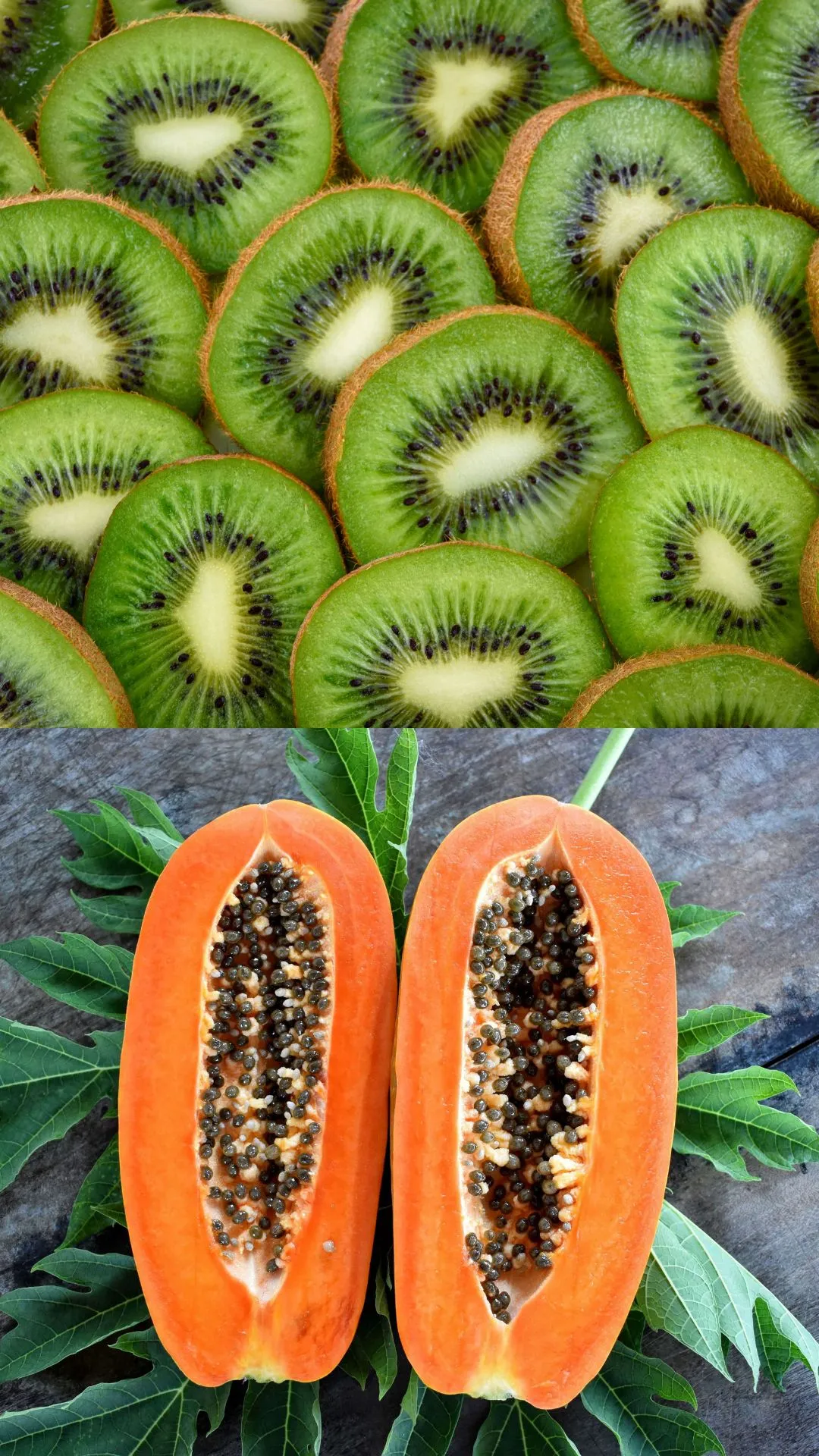
Kiwi vs Papaya: Which is the best fruit to increase platelets?
Image Source : CanvaVitamin C Content: Papaya is an excellent source of vitamin C with a single medium-sized fruit providing over 100% of the daily recommended intake. Kiwi is also a good source of vitamin C but it contains slightly less than Papaya. Vitamin C is required for the production of platelets.
Image Source : CanvaFolate Content: Kiwi is a rich source of folate, a B vitamin that plays a crucial role in the production of platelets. Papaya is also a good source of folate but it contains slightly less than Kiwi.
Image Source : CanvaAntioxidant Properties: Both Kiwi and Papaya are rich in antioxidants, including vitamin C, vitamin E and beta-carotene. These antioxidants help protect the body against free radicals, which can damage platelets and reduce their count.
Image Source : CanvaInflammation Reduction: Papaya contains an enzyme called papain which has anti-inflammatory properties. Chronic inflammation can lead to a decrease in platelet count, so consuming Papaya may help reduce inflammation and help in platelet production.
Image Source : CanvaNutritional Value: Both Kiwi and Papaya are nutrient-dense fruits that provide a range of essential vitamins, minerals and antioxidants. However, Papaya is slightly higher in calories and contains more vitamin C and potassium than Kiwi.
Image Source : CanvaPlatelet-Boosting Properties: Both Kiwi and Papaya are rich in vitamins, minerals and antioxidants that can help increase platelet count. However, Papaya is particularly known for its platelet-boosting properties due to its high content of vitamin C, vitamin A and an enzyme called papain.
Image Source : CanvaIn conclusion, while both Kiwi and Papaya are beneficial for increasing platelet count, Papaya may be better due to its higher vitamin C content, anti-inflammatory properties and platelet-boosting enzyme papain. However, Kiwi is still a nutritious fruit that gives you essential vitamins and minerals.
Image Source : CanvaNext : From Mathura to Los Angeles: Famous Lord Krishna temples across the world