
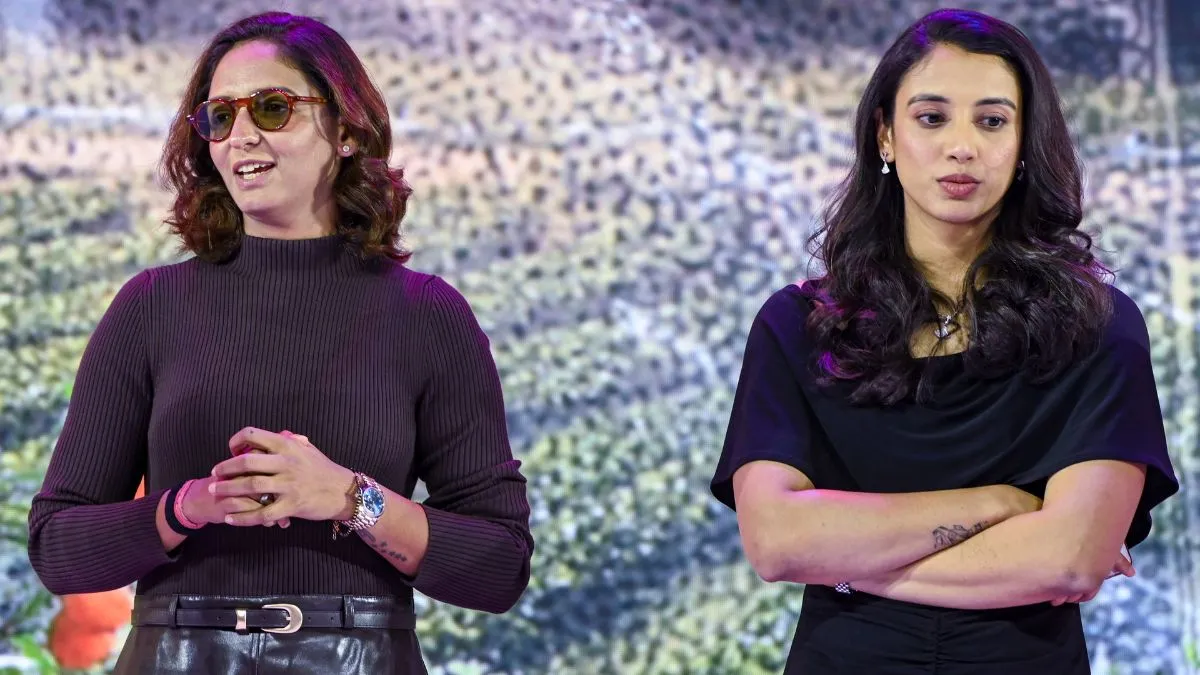
Smriti Mandhana's elevation as captain of the Indian women's cricket team was the expected next step after Harmanpreet Kaur stepped down from the role. But according to a PTI report, the change also comes against the backdrop of growing unease between the two senior players, with a team source saying they "were not seeing eye to eye for a while now", leading to "an obvious unease in the dressing room".
Harmanpreet, who first led India in 2016, decided to give up the captaincy across formats following a review meeting with the BCCI. The 37-year-old from Moga ended her leadership tenure after captaining India to a second consecutive Asian Games gold in Japan. With the 30-year-old Mandhana now taking over, the bigger question is whether the change should have happened earlier.
Why Mandhana was the natural successor
Mandhana made her India debut in 2013 and has since become one of the leading batters in women's cricket, accumulating more than 10,000 runs across formats.
Her ability has long stood out, and she has continued to add new dimensions to her game, particularly by bringing more power into her batting. She had also made no secret of her desire to lead India.
After the Asian Games gold, Mandhana said India should be setting its sights on bigger tournaments. That came after a period in which India had enjoyed a major high in the 50-over game but suffered early exits from back-to-back T20 World Cups.
The leadership question had consequently begun to attract attention, especially around the shortest format. Mandhana was also understood to have become increasingly impatient with the selectors for retaining the existing arrangement even after India's ODI World Cup triumph at home last year ended the country's ICC trophy drought.
Harmanpreet's decision to step down
The turning point came at the BCCI review meeting in Guwahati, chaired by BCCI Secretary Devajit Saikia. Harmanpreet was told that a change in leadership was inevitable and ultimately chose to step down herself.
The decision brought an end to a captaincy stint that began in 2016. Harmanpreet's final major achievement as captain was India's second successive Asian Games gold in Japan.
After India's T20 World Cup exit in the UK earlier this year, former India captain Mithali Raj had told PTI that Mandhana should have been given the captaincy two or three years earlier. She also raised questions about Harmanpreet's form and fitness.
"I thought she would be given the captaincy of the ODI format two-three years back. She can still be the ODI and Test captain and the T20 captaincy could be given to someone younger like Shafali (Verma)," Mithali had said.
India's previous leadership transition
The latest change is not the first time India's women's team has faced questions over how leadership has been handed over.
When Harmanpreet replaced Mithali as ODI captain following the 2022 World Cup, relations between the two veterans were reportedly at an all-time low. The situation contributed to factionalism within the team.
Harmanpreet now wants to continue playing for another two or three years. That leaves a fresh challenge for the team as Mandhana takes charge: whether the two can move past the reported tensions and work together for India's cause.
Harmanpreet now has to prove herself as a batter
India have dominated the recent Asia Cup and Asian Games, but Harmanpreet's own performances were not at their best during that run.
Without the responsibility of captaincy, the focus will now be more firmly on her batting. Expectations are set to rise, and she will need to lift her performances significantly to remain in contention.
For Mandhana, meanwhile, the captaincy she had been waiting for has finally arrived. The question now is whether the change can give India a smoother leadership transition and help the team build on its recent success.
ALSO READ:
India clinches first gold in Asian Games 2026 as Harmanpreet Kaur side thrashes Sri Lanka in final
