
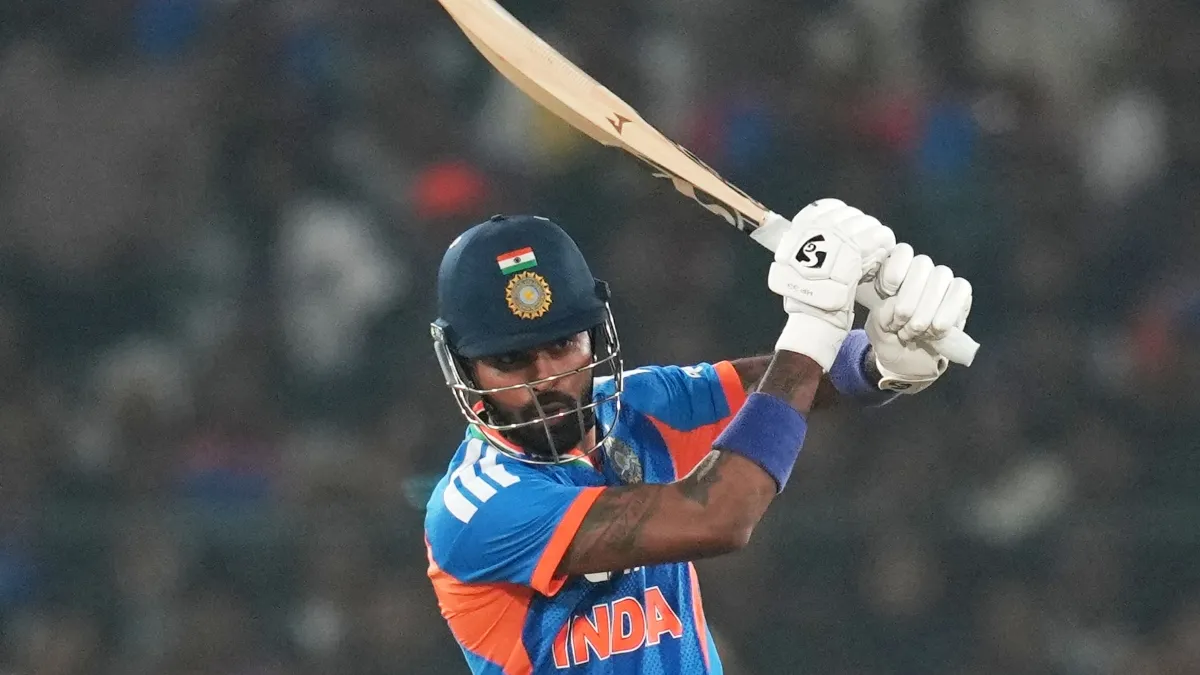
India all-rounder Hardik Pandya achieved a major record in T20I cricket during the first match between India and South Africa at the Barabati Stadium in Cuttack.
Hardik produced a blistering knock while most of the other Indian batters struggled for runs on what appeared a two-paced surface. During the series opener against the Proteas, Hardik completed 100 sixes in the T20I format, becoming just the fourth Indian to achieve the milestone. The star all-rounder joins the likes of Rohit Sharma, Suryakumar Yadav and Virat Kohli on the elite list.
Indian players with most sixes in T20Is:
1 - Rohit Sharma: 205 sixes in 151 innings
2 - Suryakumar Yadav: 155 sixes in 90 innings
3 - Virat Kohli: 124 sixes in 117 innings
4 - Hardik Pandya: 100 sixes in 95 innings
5 - KL Rahul: 99 sixes in 68 innings
Hardik slams half-century to lift India
Hardik completed his half century with the 100th six in the format. He cut Anrich Nortje fine of the deep third to complete his 100th six and his half-century. The all-rounder slammed 58 from 28 balls with six fours and four sixes. Hardil's knock came at a strike rate of 210.71 as he punished the Proteas bowlers while all the other Indian batters struggled big. Apart from Hardik, the other batters made 103 runs from 92 balls at a strike rate of 111.95.
India were asked to bat first after South Africa captain Aiden Markram won the toss. The hosts went with a strong Playing XI, featuring batters and all-rounders till eight. India fielded three specialist bowlers in Jasprit Bumrah, Varun Chakravarthy and Arshdeep Singh, with three all-rounders - Hardik Pandya, Shivam Dube and Axar Patel - also in the team.
South Africa's Playing XI: Quinton de Kock(w), Aiden Markram(c), Tristan Stubbs, Dewald Brevis, David Miller, Donovan Ferreira, Marco Jansen, Keshav Maharaj, Lutho Sipamla, Lungi Ngidi, Anrich Nortje
India's Playing XI: Abhishek Sharma, Shubman Gill, Suryakumar Yadav(c), Tilak Varma, Hardik Pandya, Shivam Dube, Jitesh Sharma(w), Axar Patel, Jasprit Bumrah, Varun Chakaravarthy, Arshdeep Singh
