
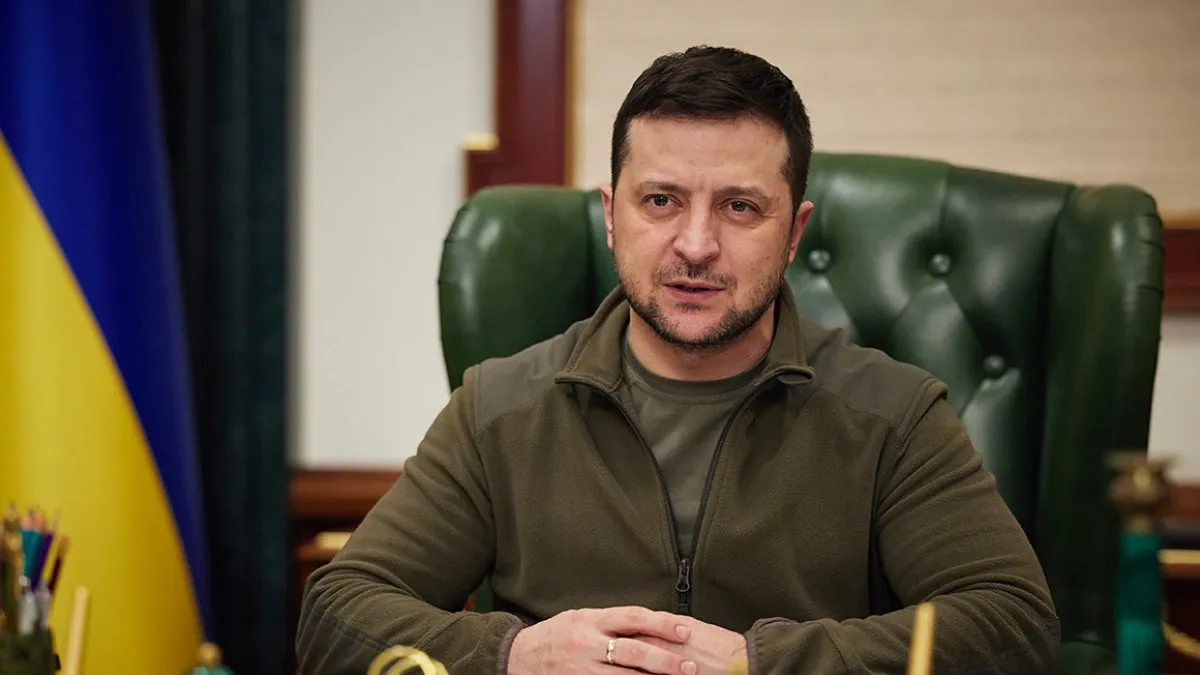
Ukrainian President Volodymyr Zelenskyy voiced strong opposition on Saturday to the upcoming summit between former U.S. President Donald Trump and Russian President Vladimir Putin, cautioning that any agreement struck without Kyiv’s direct involvement would be both ineffective and dangerous.
'Dead solutions' without Ukraine's participation
The meeting, set to take place this Friday in Alaska, is being billed as a potential step toward ending the war in Ukraine. However, Zelenskyy dismissed the notion that peace could be achieved through bilateral talks between Washington and Moscow alone.
In a message posted to his official Telegram account, the Ukrainian leader reaffirmed that the country’s territorial sovereignty, protected by its constitution, is not up for negotiation.
"Ukraine will not give Russia any awards for what it has done," Zelenskyy wrote. "Ukrainians will not give their land to the occupier. Any solutions that are without Ukraine are at the same time solutions against peace. They will not bring anything. These are dead solutions. They will never work."
Fears grow of Ukraine being marginalised
Zelenskyy's remarks reflect growing concerns within Ukraine and Europe that the summit could sideline Kyiv and shift the peace process away from Ukrainian and European interests. Trump's decision to meet with Putin before consulting with Zelenskyy has only intensified those worries.
Ukrainian officials, speaking anonymously to the Associated Press, previously indicated that Kyiv might accept a deal acknowledging its current military limitations — provided it doesn’t formally surrender sovereignty over lost territory.
Trump signals territorial concessions may be on the table
Speaking to reporters at the White House before officially confirming the date and location of the summit, Trump hinted that a potential agreement might involve "some swapping of territories," though he provided no specific details.
The proposed meeting in Alaska marks a break from traditional diplomacy, where such high-stakes talks are typically held in neutral countries. Russian officials, however, welcomed the idea. "It seems entirely logical for our delegation to fly across the Bering Strait... for such an important and anticipated summit," said Yuri Ushakov, a foreign policy aide to Putin, as quoted by Russian state media RIA Novosti.
Analysts cautious on breakthrough prospects
While some observers view the summit as a diplomatic opportunity, others remain sceptical that it will produce tangible results. Despite suggestions that Moscow may be willing to relinquish control of areas outside the four regions it claims to have annexed, the gap between Russian and Ukrainian conditions for peace remains wide.
Trump's willingness to meet with Putin—even without a reciprocal commitment to meet with Zelenskyy — has further stoked fears in Europe that Kyiv may be excluded from shaping the future of its conflict.
Global implications of Alaska summit
Hosting the Russian president on American soil marks a sharp shift in U.S. posture and risks undermining efforts by Western allies to isolate Moscow diplomatically. The war, now in its fourth year, has claimed tens of thousands of lives and remains the most violent conflict in Europe since the Second World War.
Whether the Alaska summit will lead to real progress or deepen divides remains uncertain — but for now, Ukraine is making clear that any peace not forged with its participation will not hold.