
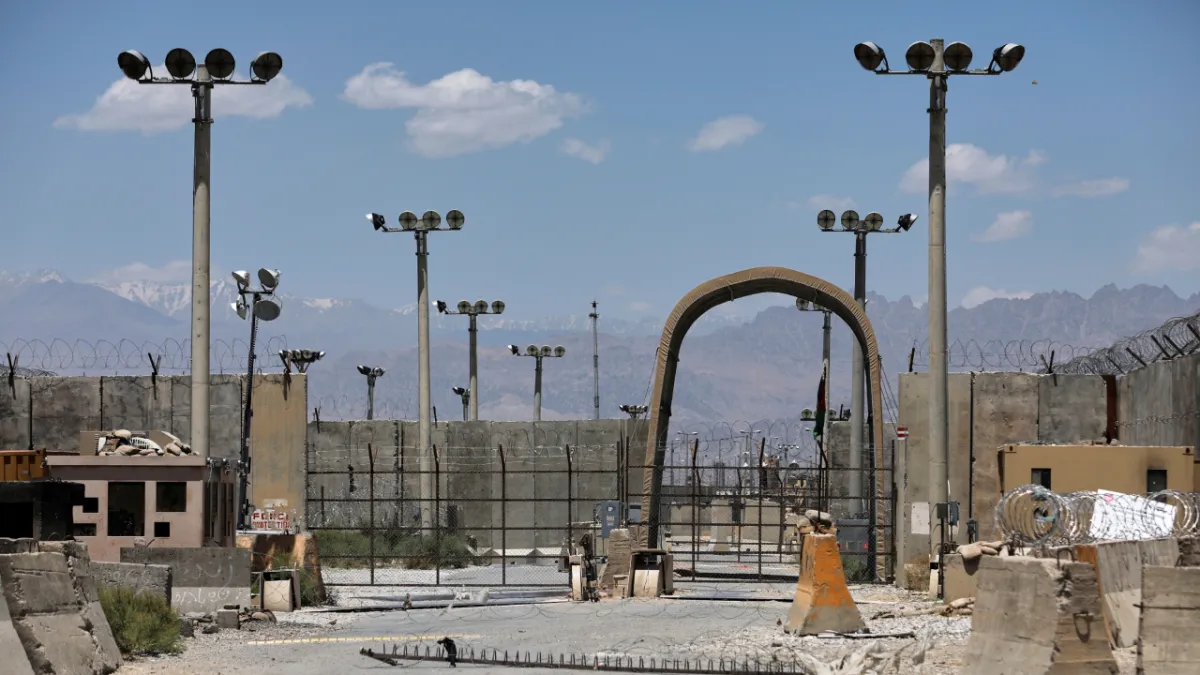
Donald Trump has once again managed to united India, China, Pakistan for a second reason after the imposing of his controversial tariffs. This time, it's not about trade or economy but geopolitical and stratgic dominance as the three neighbouring countries join Taliban in opposing the deployment of foreign military infrastructure on Afghan soil, effectively rejecting Trump's calls to hand over the Bagram airbase.
The joint stance was taken on Tuesday during the 7th Moscow Format Consultations on Afghanistan, which included India, Afghanistan, Russia, China, Iran, Central Asian countries, and Pakistan. During the discussions on promoting prosperity and development in Afghanistan, the participating nations described the presence of foreign military forces in the country as "unacceptable."
"They called unacceptable the attempts by countries to deploy their military infrastructure in Afghanistan and neighbouring states, since this does not serve the interests of regional peace and stability," said a joint statement issued by the Russian foreign ministry.
Significance of Afghanistan's Bagram airbase and why Trump wants it
Bagram Airfield, located in Afghanistan's Parwan province, has long been a cornerstone of U.S. military operations in the region. Established during the Soviet era and later expanded by the US, it became the largest American base in Afghanistan. After the U.S. withdrawal in 2021, the Taliban took control of the facility. In September 2025, former President Donald Trump called for the US to reclaim Bagram, citing its strategic importance.
Strategic importance
Bagram's location provides a critical vantage point for monitoring China's nuclear activities, as it is approximately 92 kilometers from China's nuclear sites. This proximity allows for surveillance of China's nuclear infrastructure and activities. Additionally, Bagram's expansive runways can accommodate large military aircraft, enhancing its utility for rapid deployment and logistics operations.
Regional dynamics
Control of Bagram also positions the US to influence the broader Central Asian region. From India's perspective, the developments surrounding Afghanistan’s Bagram airbase carry significant regional and security implications. India has consistently opposed the presence of foreign military infrastructure on Afghan soil, reflecting concerns over sovereignty, regional stability, and the potential for escalation of external influence in its neighbourhood.
China has been expanding its influence through initiatives like the Belt and Road, and maintaining a presence at Bagram would counterbalance China's growing footprint in the area. Experts suggest that without a US presence, China could gain a strategic foothold in Afghanistan, potentially accessing its mineral resources and establishing a stronger regional presence.
