
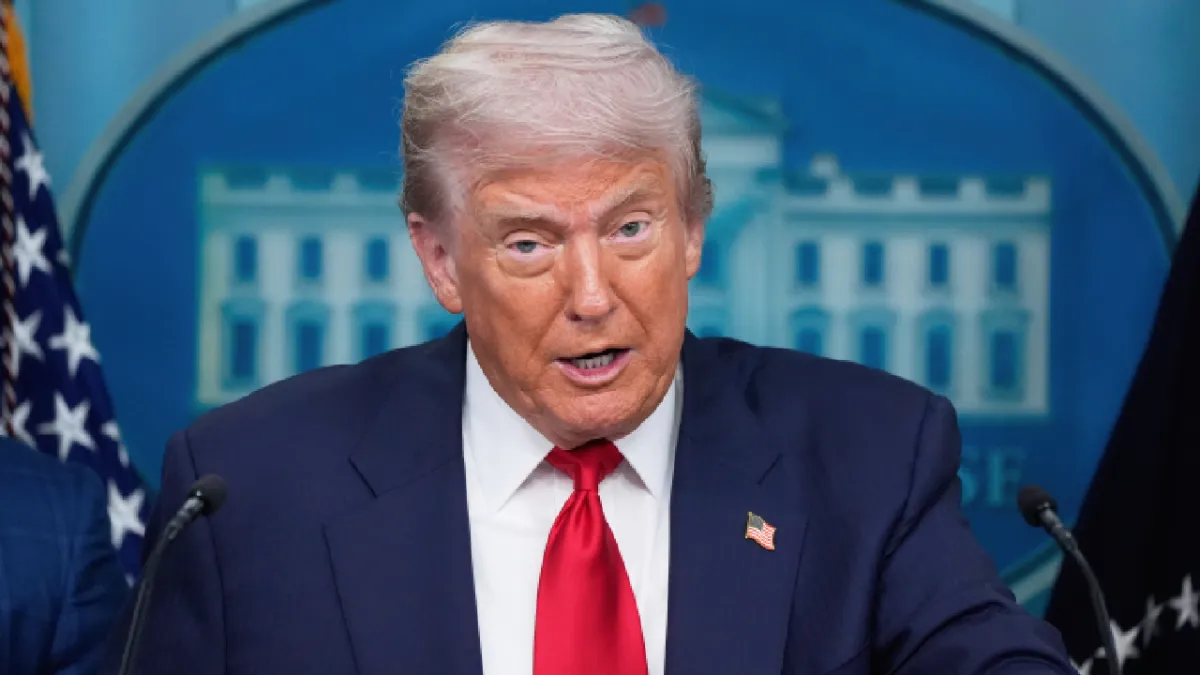
A concerning trade shutdown between the US and China was delayed once again after Donald Trump extended the trade truce between the world's two largest economies for 90 days on Monday. The announcement was made by Trump himself on his Truth Social platform as he informed of signing an executive order in this connection and that all other terms and aspects of the trade agreement will remain as is.
The previous deadline was set to expire at 12.01 am on Tuesday. Without the extension, the US could have increased taxes on Chinese imports from an already steep 30 per cent, and Beijing could have retaliated with higher levies on US exports to China.
Breathing space for negotiations
The extension gives both nations time to work through disputes, possibly paving the way for a summit later this year between Trump and Chinese President Xi Jinping. US businesses with operations in China have welcomed the move.
Sean Stein, president of the US-China Business Council, described the extension as critical for enabling negotiations on a trade agreement that would improve market access in China and provide certainty for medium and long-term planning. He also stressed the need for a pact on fentanyl that would lead to lower tariffs and a reversal of China’s retaliatory measures, helping to revive US agriculture and energy exports.
Trump's tariff tirade
Reaching a final deal with China remains unfinished business for Trump, who has reshaped the global trading system by imposing double-digit tariffs on nearly every country. Many partners, including the European Union and Japan, accepted higher tariffs, 15 per cent on Japanese and EU imports, for example, to avoid even harsher measures.
As a result, the average US tariff has risen from around 2.5 per cent at the start of the year to 18.6 per cent, the highest since 1933, according to the Budget Lab at Yale University.
China pushes back with rare earth leverage
China proved resistant to US pressure tactics, countering with its own leverage by limiting access to rare earth minerals and magnets essential for products like electric vehicles and jet engines.
In June, the two nations agreed to ease tensions. The US promised to scale back export restrictions on computer chip technology and ethane, while China committed to improving US access to rare earths. Claire Reade, a former assistant US trade representative for China affairs, observed that the US had realised it did not hold the upper hand.
In May, both countries stepped back from the brink by reducing massive tariffs that had reached as high as 145 per cent on Chinese goods and 125 per cent on US goods. These levels had threatened to halt bilateral trade entirely and triggered turmoil in financial markets.
At a Geneva meeting, they agreed to keep talking, with US tariffs lowered to 30 per cent and China’s to 10 per cent. The prolonged discussions have continued since then.
Contentious issues on trade between US and China
Major points of contention remain, including China’s weak protection of intellectual property rights, subsidies, and industrial policies that the US says give Chinese firms an unfair global advantage. These have contributed to a US trade deficit with China of USD 262 billion last year.
With inputs from AP