
US envoy Tom Barrack announced early Saturday that Israel and Syria have reached a ceasefire following Israel’s intervention in Syria’s southern region. The ceasefire is reportedly supported by Turkey, Jordan, and other neighbouring states. Barrack issued a public call via X, urging “Druze, Bedouins, and Sunnis to put down their weapons and together with other minorities build a new and united Syrian identity in peace and prosperity with its neighbours.”
Sectarian clashes in Sweida escalate humanitarian crisis
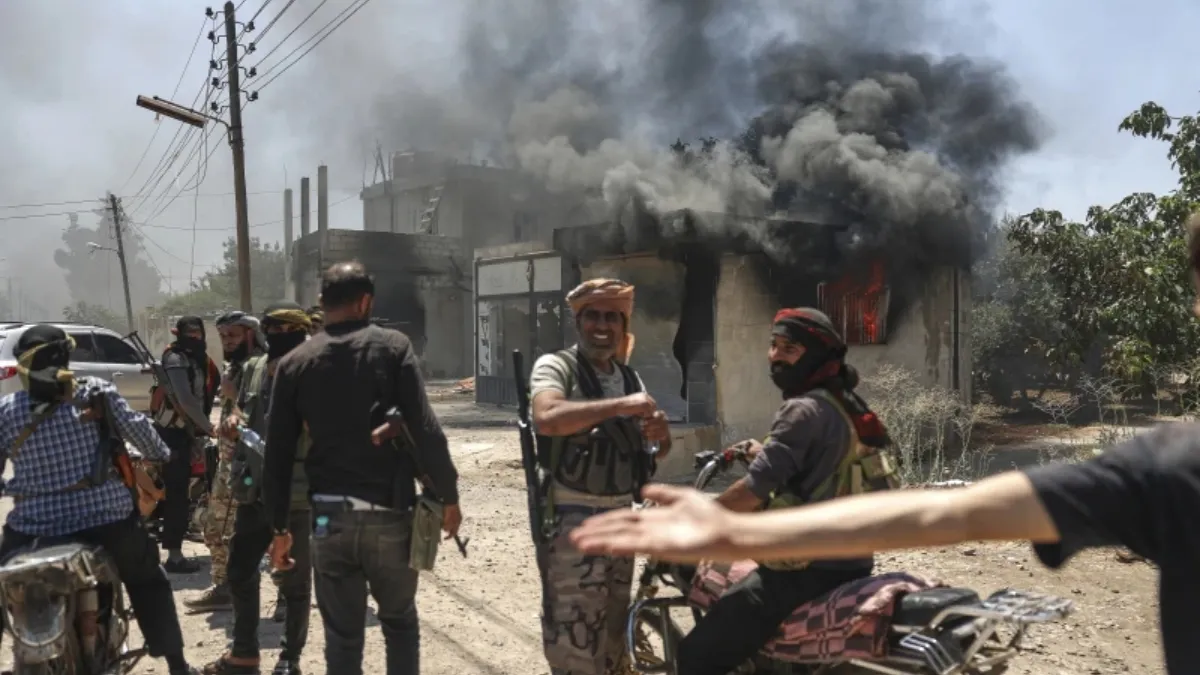
The ceasefire followed intense sectarian violence between Druze militias and Sunni Bedouin tribes across the Sweida province, southern Syria. These hostilities erupted last Sunday and led to a protracted confrontation involving government forces after they intervened in favour of the Bedouin tribes, triggering Israeli airstrikes aimed at protecting the Druze community. Tragically, hundreds have been killed in just four days of fighting.
Mass displacement and collapse of basic services
Nearly 80,000 people have been displaced since the clashes began, according to the UN migration agency. With utilities like water, electricity, and telecommunications disrupted, humanitarian conditions in Sweida and neighbouring Daraa are deteriorating rapidly. Road closures and insecurity are blocking aid delivery, and hospitals are overwhelmed. A White Helmets official was also reportedly kidnapped while attempting to evacuate a UN team.
Government troops return as violence flare-up continues
Despite the truce, violence resumed by late Thursday, prompting Syria’s interim President Ahmad al-Sharaa to announce that “specialised” government forces would be deployed to restore order. Negotiations between the presidency and Druze factions reportedly led to plans for army re-entry to regain stability, with troops slated to return in the following days.
Alarming allegations of war crimes and retaliatory attacks
The latest outbreak of violence has elicited horrifying allegations. Some Druze civilians were allegedly executed by government fighters and militias, while Druze groups launched retaliatory raids on Bedouin communities. Reports surfaced of homes being burned, mass executions, looting, and revenge attacks. One mass killing reportedly occurred at a reception hall in Radwan.
Regional actors raise their voices
In Israel, Druze residents called for support to protect their brethren in Syria. In contrast, Druze religious leaders in Lebanon condemned Israeli intervention, warning it might inflame regional instability and undermine Druze identity. They called for adherence to the ceasefire and for initiating a national dialogue in Syria.
Tension remains as ceasefire holds now
Though a ceasefire is in place, hostilities have reignited, and tens of thousands remain displaced. Aid efforts are still severely limited. Syrian government forces are redeploying amid ruptured trust with Druze and Bedouin communities. The fragile peace could unravel again unless security is restored and humanitarian operations scale up.
(AP inputs)
