
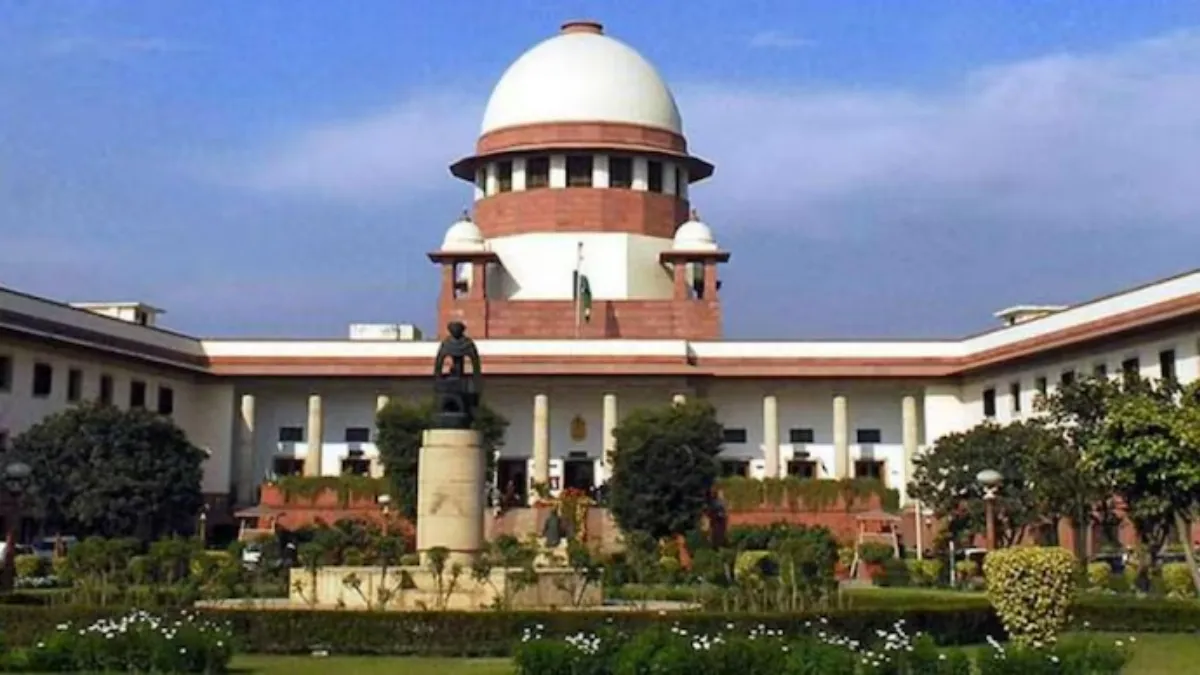
The Supreme Court on Wednesday (September 30) said it would neither impose a complete ban on firecrackers nor allow their use throughout the day, as it heard a plea seeking restrictions on firecrackers amid severe air pollution in Delhi.
"We are neither going to agree to a total ban nor are we going to allow them to do it for 24 hours. A total ban will hurt some sentiments, while allowing firecrackers throughout the day will have a huge impact on every living being, including the elderly, sick people and children," the court observed.
The top court said a middle ground needed to be found by specifying the hours during which firecrackers could be used and identifying the types that would be permitted.
The Supreme Court has directed the Central Pollution Control Board (CPCB) and the Central government to conduct joint tests to examine the use of barium in firecrackers and to assess noise levels (decibel levels).
The next hearing in this matter is scheduled for October 15.
Delhi govt winter pollution measures
The Delhi government has unveiled its Winter Action Plan 2026-27 to combat air pollution, focusing on stricter enforcement, restrictions on vehicles and construction activities, and increased public participation.
Chief Minister Rekha Gupta said the Centre and the Delhi government are working together to tackle pollution across Delhi-NCR. The plan adopts a 'whole-of-government' and 'whole-of-society' approach, bringing together agencies such as the Commission for Air Quality Management (CAQM), the Central Pollution Control Board (CPCB), local bodies, Delhi Police and the Delhi Metro Rail Corporation (DMRC).
Under the plan, the 'No PUCC, No Fuel' campaign will be intensified from October 1 at all 500 petrol pumps equipped with ANPR systems. Vehicles without a valid PUCC and those that have reached the end of their prescribed lifespan will not be provided fuel. From November 1, entry of petrol and diesel vehicles registered outside Delhi that do not meet BS-VI standards will also be prohibited, with CNG and electric vehicles exempted.
Construction-related restrictions will be introduced in phases. From November 1 to January 31, dust-generating demolition and outdoor civil construction activities will be prohibited, while a complete ban on construction and demolition activities will be imposed from December 10 to January 20. The government has also made 100% CCTV coverage mandatory at construction sites.
50% work from home
To reduce traffic and vehicular emissions, government and private offices will implement 50 per cent work from home, or two WFH days per week, from November 1. MCD offices will operate from 8:30 am to 5 pm, while Delhi government offices will function from 10 am to 6:30 pm. Parking charges at authorised parking sites will also be doubled, except at Metro parking facilities.
The government is also pushing public transport as part of the winter strategy. Delhi currently has 6,840 buses, including 5,088 electric buses, and has set a target of taking daily Metro ridership to 72 lakh and DTC ridership to 42 lakh. A campaign to promote the Delhi Metro Sarathi App will also be held from October 1 to 10 to improve last-mile connectivity.
Also Read
Delhi to strengthen 'no PUC, no fuel' policy from October 1 under pollution measures: Sirsa
Delhi govt announces winter pollution measures: Construction ban from December 10 to January 20
