
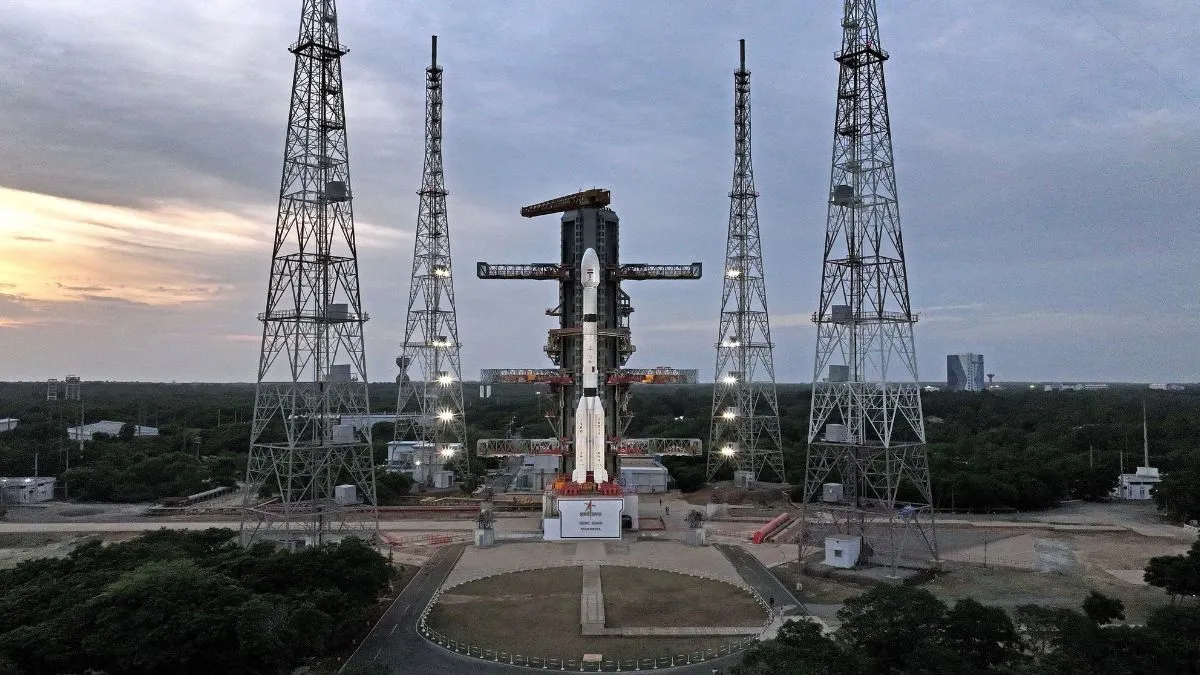
Hailing the launch of GSLV-F17 mission, Indian Space Research Organisation (ISRO) chief V Narayanan said on Friday that the advanced Earth observation satellite (EOS) 05 was successfully placed into the "intended and required" orbit, calling it an incredible achievement for the country and adding that the satellite's health remains in perfect condition.
In an early morning press conference in Andhra Pradesh's Sriharikota, the space agency's chairperson said the GSLV-F17 launch was an important mission for India and an Earth observation satellite was placed in the geosynchronous orbit for the first time. He said this launch was crucial for India to monitor the country and nearby places for Earth observation.
Narayanan said the satellite's assured lifetime is seven years, but he remains confident that it would remain functional for nine years.
"The importance of this satellite is this is the first satellite that is going to be placed in the geo-platform 36,000 km platform for the earth observation purpose of our country for multiple uses," he said, "This is the heaviest satellite lifted by the GSLV vehicle till today... This is the second successful mission in this financial year."
'Work on Gaganyaan mission in full swing'
During the media briefing, Narayanan said that the "vigorous and systematic work" on first uncrewed Gaganyaan mission during this calendar year is in full swing. He further said that the ISRO is targeting six more launches this financial year.
"Gaganyaan is a technology-intensive mission," he said. "Till today, around 8000 tests have been completed. Unlike other satellite mission here the human is involved, the safety of human beings is very important. So, we have planned three uncrewed missions followed by the crewed missions."
The GSLV-F17 launch
The advanced Earth observation spacecraft, India's first-ever imaging satellite in geo-orbit, was successfully launched from the spaceport by a GSLV rocket from the Satish Dhawan Space Centre in Sriharikota. The EOS-05 satellite was successfully placed in the intended sub-geosynchronous transfer orbit, about 18 minutes after it lifted off from the spaceport.
"The eye in the sky," as one of the senior scientists involved in the mission described the satellite, is set to provide real-time imagery and help the nation in areas including agriculture, and disaster management.
ALSO READ:
ISRO to shift focus towards space research, move away from rocket manufacturing: Reports