
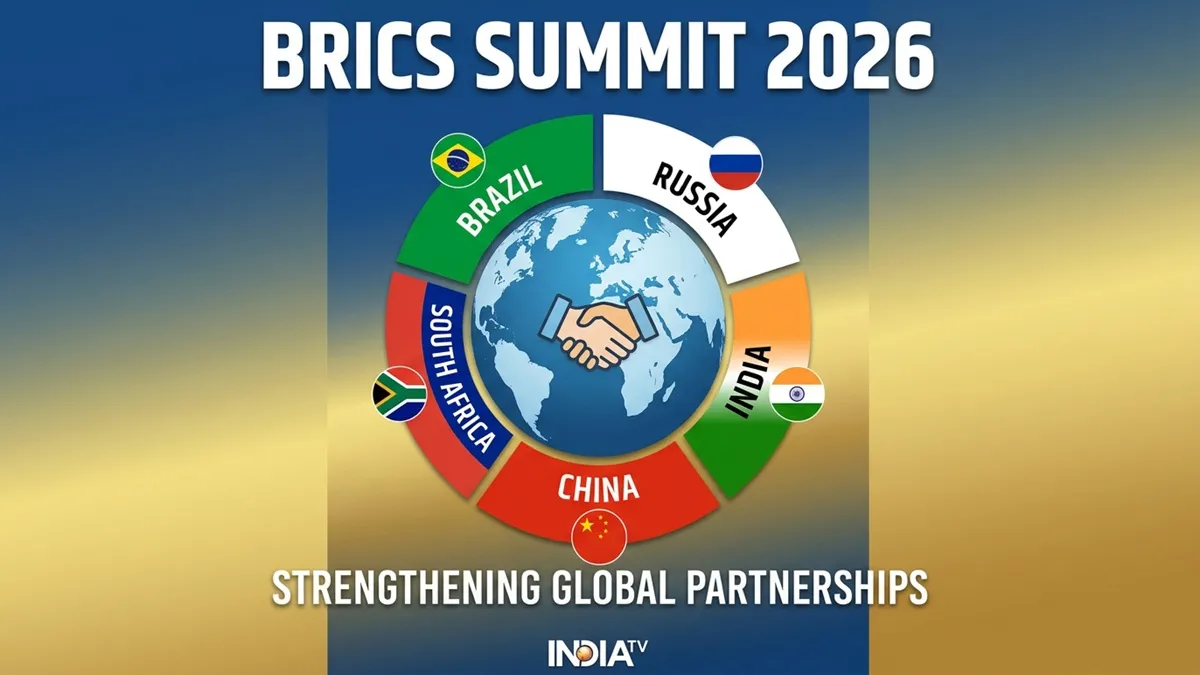
India is all set to host the 18th BRICS Summit in New Delhi on September 12-13, 2026, marking a pivotal moment for the rapidly evolving intergovernmental forum of major emerging market economies and developing nations. First established as the BRIC alliance comprising Brazil, Russia, India, and China, which convened its first Foreign Ministers' meeting on the sidelines of the UN General Assembly in New York in 2006 and held its inaugural summit in Yekaterinburg, Russia, in 2009, the group expanded to BRICS following South Africa's admission in 2011.
The big group has since undergone a transformative expansion, welcoming Egypt, Ethiopia, Iran, Saudi Arabia, and the UAE as full members in January 2024, followed by Indonesia in January 2025. Today, featuring 11 full member states alongside an expanding array of partner nations, the alliance commands significant global economic and diplomatic influence.
Guided by India’s 2026 chairship theme, "Building for Resilience, Innovation, Cooperation and Sustainability," New Delhi's vision for BRICS 2026 mainly focuses on steering the agenda beyond routine political coordination towards tangible, practical cooperation across commerce, agriculture, healthcare, energy, digital technology, urban development, small enterprise empowerment, startups, climate action, and cultural exchanges.
What are India's main focuses for BRICS Summit 2026
Resilience
India’s leadership framework is organised around four primary pillars, starting with Resilience, which aims to protect institutions, societies, and economies from supply-chain disruptions, health crises, geopolitical shocks, and climate risks.
Innovation
Innovation also forms the second pillar, concentrating on the deployment of artificial intelligence, financial technologies, digital public infrastructure, and data-driven systems.
Cooperation
The third pillar, Cooperation, mainly focuses on broadening trade flows, institutional linkages, development financing, and economic policy alignment.
Sustainability
The fourth pillar, Sustainability, seeks to promote global climate action, green finance, energy transitions, and sustainable development, ensuring that established mechanisms deliver enduring operational benefits beyond the summit.
To strengthen trade corridors, member states have adopted the BRICS Global Value Chains Action Plan 2026-2030, alongside guiding principles designed to assess export-oriented micro, small, and medium enterprises (MSMEs).
Moreover, to build an integrated innovation ecosystem, India's agenda includes the BRICS Incubator Network to link startup incubators across member economies. New Delhi has additionally proposed the BRICS Startup Innovation Fund to catalyse early-stage and growth financing for promising enterprises.
As agriculture showcases India’s efforts to deliver direct societal benefits, led by the BRICS Network on Digital Agriculture, where India is coordinating the initial phase to integrate artificial intelligence, geospatial tools, and digital public infrastructure into farming. This is accompanied by the Global Forum on Farmers' Rights in Seed Systems to promote dialogue on traditional knowledge, alongside the "BRICS AGRIN - Agro-Inputs, Genetic Resources and Information Network" initiative to strengthen cooperation in seeds and agricultural inputs.
With inputs from ANI
Also Read:
BRICS: What are key highlights, vision and theme of India's 2026 Presidency