
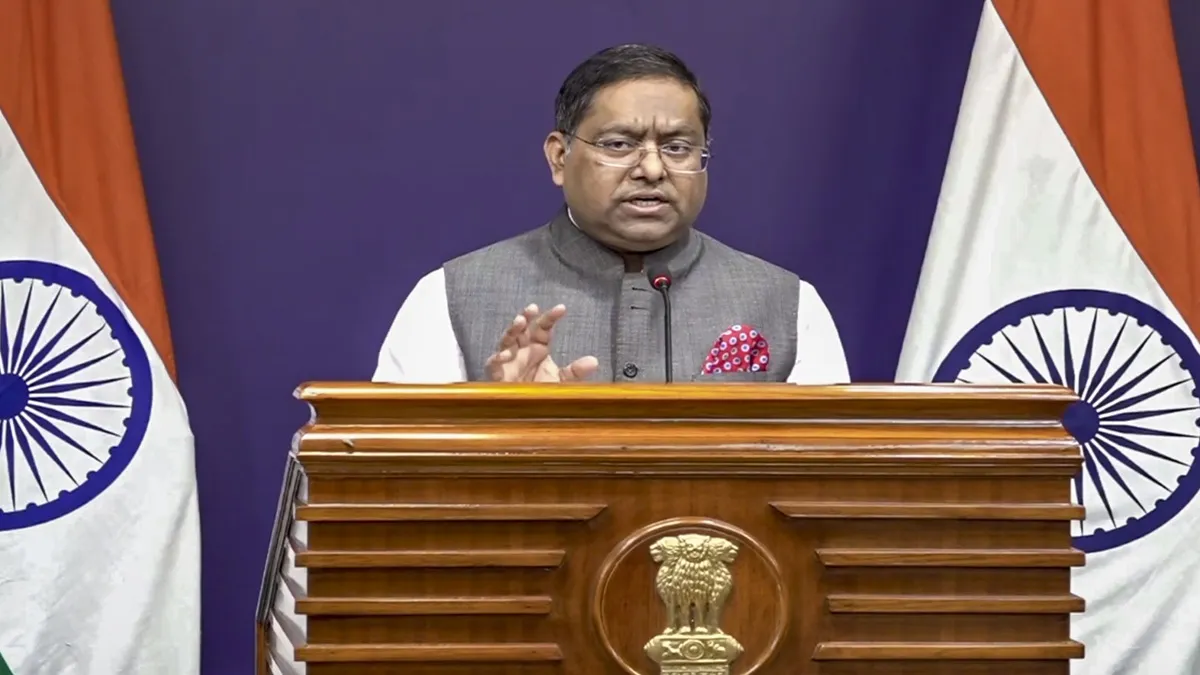
In response to media queries regarding comments made by the Chinese side on Ladakh, Ministry of External Affairs (MEA) official spokesperson Randhir Jaiswal on Tuesday said it is reiterated that the UT of Ladakh is an integral and inalienable part of India. He stated that no amount of denial by the Chinese side can change this established fact. In a statement, the MEA said that 28 places located in the UT of Ladakh have been identified with standard place and feature names on the official map of the Survey of India, and it has been done in consultation with the Union Territory of Ladakh and local stakeholders.
MEA on why India formally identified places in Ladakh
He said that identifying these places formally on the Survey of India map of UT of Ladakh is aimed at facilitating their accurate recognition and better awareness among the public at large. The statement from MEA comes after China on Tuesday opposed India's decision to assign standardised names to 28 strategic locations and geographical features in Ladakh, claiming that the areas belonged to it.
"China has never recognised the so-called 'Union Territory of Ladakh' unilaterally and illegally established by India," Foreign Ministry spokesperson Mao Ning told a media briefing. She said Beijing firmly opposes India's announcement of so-called standard names". Mao was responding to a question on India's Ministry of Home Affairs announcing standardised names for 28 places and geographical features in Ladakh.
"The move is illegal and invalid and cannot change the fact that the relevant areas in the western sector of the China-India boundary have always belonged to China," she said.
India on October 2 formally identified 28 strategic locations
The central government on October 2 formally identified 28 strategic locations and geographical features in Ladakh, including key border friction points along the Line of Actual Control (LAC) such as Gogra and Hot Spring, on the official Indian map.
The step was taken by the government in consultation with the Ladakh administration, aiming at streamlining official cartography, facilitating precise identification, and fostering better public awareness of the sensitive border region.
Gogra and Hot Spring are among the major strategic locations and were friction points during the 2020 standoff between Indian and Chinese forces. The locations are crucial for Indian patrolling along the LAC. The eastern Ladakh border standoff erupted on May 5, 2020, following a violent clash between Indian and Chinese troops in the Pangong Lake area. Both sides began the disengagement process in 2022.
Check the list of identified places in Ladakh
The other locations identified by India include Alisha Giri, a high-altitude peak; Brangsa; Chapchingal Pass; Kanishka Peak; Karun Pir mountain; Kuksel; Martand Giri; Parpik glacier; Skamri Glacier; Shachmirik Pass; Shkorga Valley; Zorawar Peak; Dehra Compass; and Drak Karpo. The list also includes Jolmori, Kumarayana Point, Panglung, Rinchen Zangpo, Sakyasri Giri, Guru Rinpoche, Shamal Lungpa (a patrol and staging route in the 1950s), Yangpa River, Marpa Lotsava Ri, Milarepa Kangri, Shiva Ri and Maheshwara Ri.
Also Read:
Centre decides to set up bench of High Court of Jammu and Kashmir in Ladakh, announces Amit Shah
