
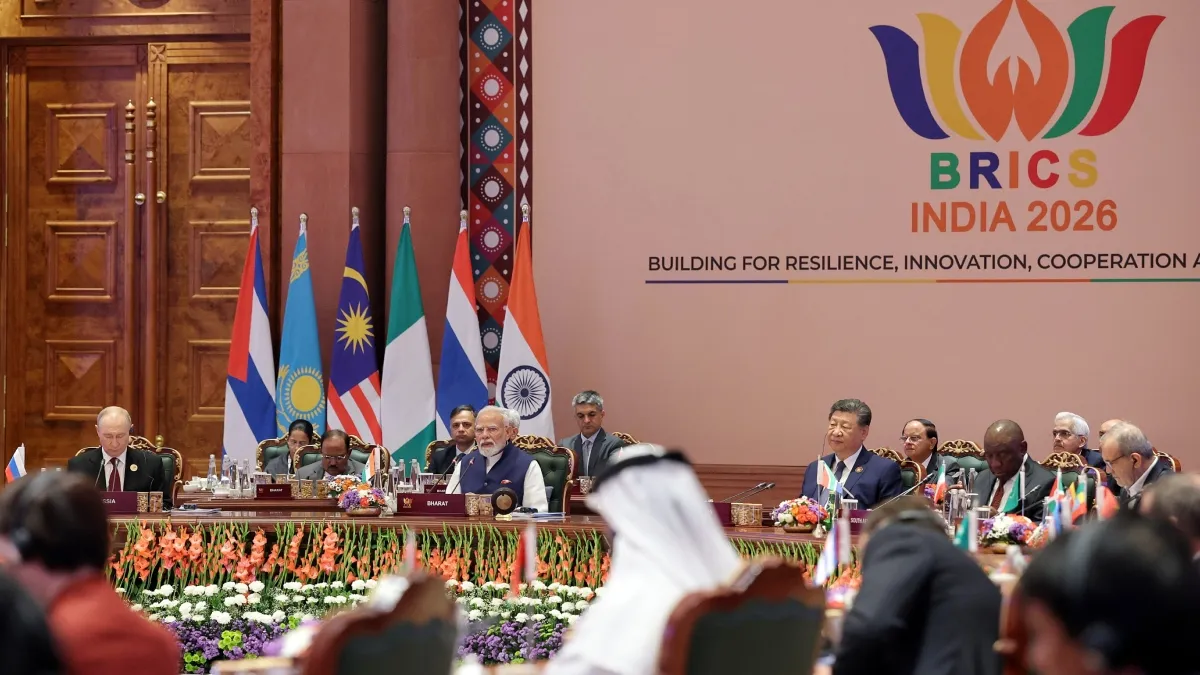
The Ministry of External Affairs (MEA) on Thursday rejected reports claiming that multiple world leaders had fallen sick after attending the BRICS Summit in New Delhi, calling the reports 'fake' and 'misleading'. The MEA fact-check unit warned against 'malicious posts' circulating online.
"Fake Alert!!! We caution against such malicious posts on social media platforms!" the MEA fact-check unit said in a post on X.
The warning came amid social media claims about the health of leaders who attended the BRICS summit, including Chinese President Xi Jinping and South African President Cyril Ramaphosa.
BRICS Summit
The 18th BRICS Summit was held in New Delhi, India, from September 12 to 13, 2026. The Summit concluded in the national capital with the adoption of the New Delhi Declaration 2026 on September 12, emphasising expanded cooperation in global health initiatives and a shared dedication to universal health coverage through resilient and inclusive measures.
The declaration was adopted on the opening day of the two-day BRICS Summit, in what is being seen as a significant diplomatic achievement for India. Negotiations over the text went down to the wire as Iran and the UAE had initially hardened their positions.
Prime Minister Narendra Modi had announced the adoption of the declaration at the end of the opening day's deliberations with Chinese President Xi Jinping, Russian President Vladimir Putin, Iranian President Masoud Pezeshkian, Abu Dhabi Crown Prince Mohamed bin Zayed Al Nahyan, and other leaders of the bloc present. "We express deep concern over the continued escalation of tensions in West Asia and, recalling our respective national positions, call for exercising maximum restraint, as well as avoiding actions that could further aggravate the situation," the declaration said.
What is in the New Delhi Declaration?
The BRICS countries, in the declaration, expressed serious concern over the growing use of unilateral tariffs and non-tariff measures that distort trade and are inconsistent with World Trade Organisation rules. They also condemned unilateral coercive measures that run contrary to international law.
The declaration called for greater engagement in conflict prevention, including efforts to address the root causes of conflicts. The grouping also reaffirmed its commitment to resolving international disputes peacefully through dialogue, consultation, and diplomacy.
BRICS countries further advocated a multilateral approach that takes into account diverse national perspectives on key global issues, stressing the importance of dialogue and cooperation in addressing international challenges.
Also Read:
India brought consensus despite global conflicts: Jaishankar on 'successful' BRICS Summit
PM Modi, Xi Jinping agreed to mutual respect and sensitivity to India-China ties: MEA
