
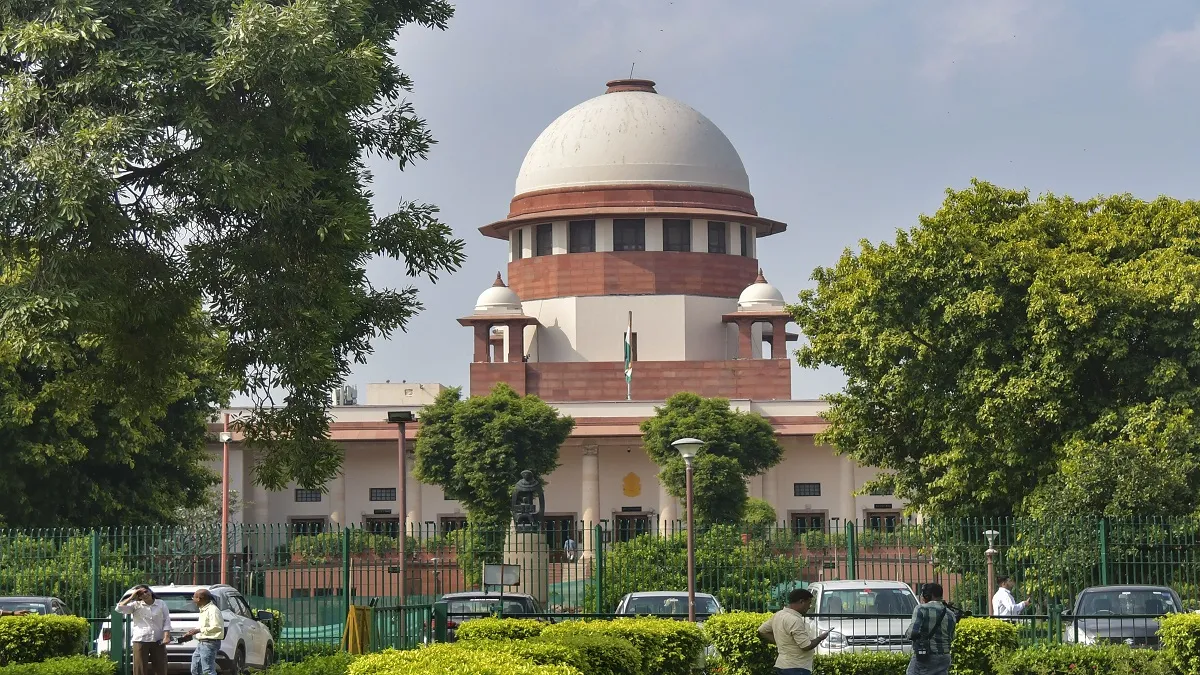
In a significant observation on marriage and dependency, the Supreme Court on Thursday (August 21) asserted that it is “impossible” for a husband or wife to claim complete independence while their marriage continues. A bench of Justices BV Nagarathna and R Mahadevan cautioned that those unwilling to depend on each other should not enter matrimony in the first place.
“Marriage means the coming together of two souls, two persons. No husband or wife can say ‘I want to be completely independent of my spouse,’” Justice Nagarathna remarked during the proceedings.
The case: A broken relationship with young children
The observations came while hearing a dispute involving an estranged couple with two minor children. The husband, who works in Singapore, is currently in India, while the wife resides in Hyderabad. The bench expressed concern for the children, emphasising, “If they come together, we will be happy because the children are very young. What is their fault that they should face a broken home?”
The wife, appearing via video conference, argued that her husband was interested only in custody and visitation, not reconciliation. She also claimed she had received no maintenance, making life difficult as a single mother.
Court questions both sides
The bench asked the wife why she could not return to Singapore, where she and her husband once had “the best jobs.” She responded that her husband’s past actions had made it nearly impossible for her to go back. She also stressed her need to work for her livelihood.
When the wife insisted she did not want to be “dependent on anyone,” Justice Nagarathna interjected, “You can’t say that. Once you are married, you are emotionally, if not financially, dependent on your spouse. If you didn’t want dependency at all, then why did you get married?”
Attempts at reconciliation
Despite heated allegations, the bench urged both parties to resolve their differences amicably, reminding them that “every husband and wife has disputes.” The judges noted the husband’s willingness to pause divorce proceedings in the hope of reconciliation.
As an interim arrangement, the bench directed that the father be allowed custody of the children on weekends in August. It also permitted him to celebrate his younger son’s birthday with the children, instructing that they be returned to their mother’s house the same evening.
Financial support for the wife and children
Addressing the wife’s plea of financial distress, the Supreme Court ordered the husband to deposit ₹5 lakh towards the maintenance of his wife and children. This, the bench clarified, would be without prejudice to any future financial orders.
Next hearing
The Supreme Court has posted the matter for further hearing on September 16, leaving open the possibility of reconciliation but emphasising that the welfare of the children must remain paramount.