
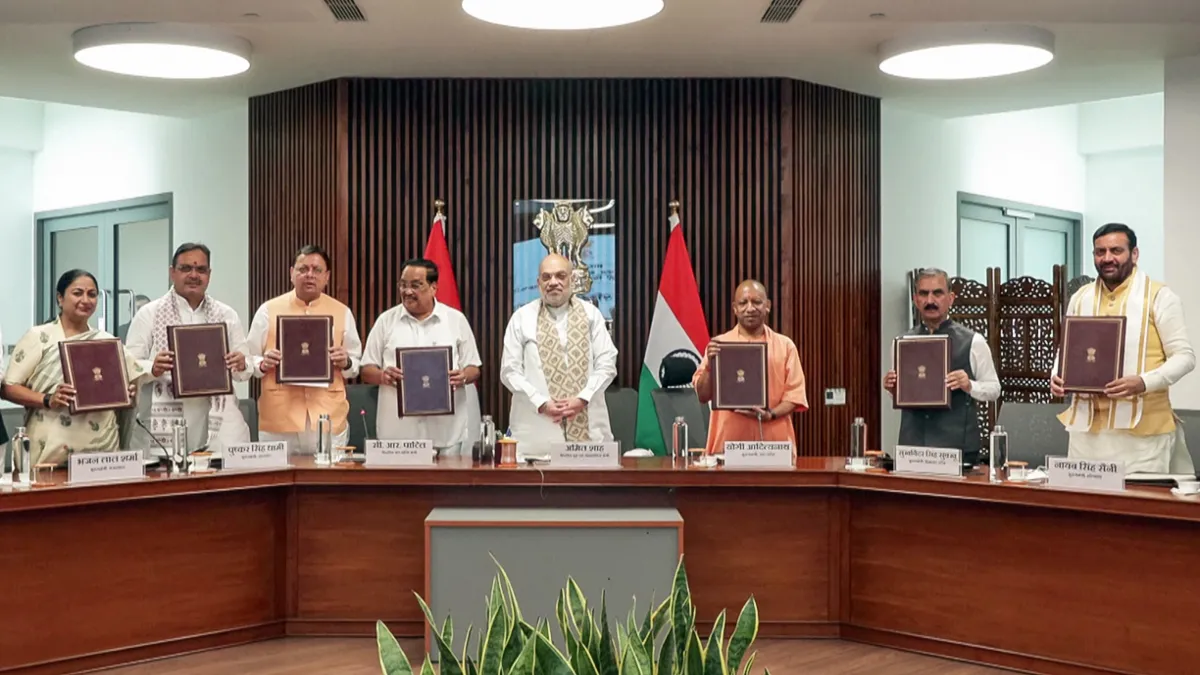
The long-pending Kishau Multipurpose Dam Project received a major push on Tuesday, with the chief ministers of Uttarakhand, Himachal Pradesh, Uttar Pradesh, Rajasthan, Delhi and Haryana reaching a consensus on the project in a meeting with Union Home Minister Amit Shah.
The agreement comes nearly three months after a similar meeting chaired by Shah on June 16, when the six states agreed to move ahead with a Memorandum of Understanding (MoU) for implementing the project. The latest meeting was attended by most of the chief ministers in person, along with the chief secretaries and other officials of the participating states and senior officials of the Ministry of Home Affairs, including Union Home Secretary Govind Mohan.
The project is expected to be placed before the Union Cabinet for approval soon.
What is the Kishau Multipurpose Dam Project?
The Kishau Multipurpose Dam Project is a proposed multipurpose water storage and hydroelectric project on the Tons River in Uttarakhand. The Tons is a major tributary of the Yamuna River.
The project envisages storing water in the Kishau reservoir for multiple purposes, including irrigation, hydroelectric power generation, and augmenting drinking water supplies. It is also expected to help increase the flow of cleaner water into the Yamuna and contribute to efforts to rejuvenate the river.
The project has been under consideration for several years. It involves six states -- Himachal Pradesh, Uttarakhand, Uttar Pradesh, Haryana, Rajasthan and Delhi — because of its implications for water sharing, power generation and financing.
How will the project be funded?
Under the consensus reached by the states, 90 per cent of the cost of the project's water component will be borne by the Centre as central assistance.
The remaining 10 per cent will be shared by the six participating states.
The states have also agreed on a mechanism to address Himachal Pradesh's share of water. Himachal Pradesh's allocated water share will be given to Delhi and Rajasthan, while the two states will share the cost of Himachal Pradesh's portion of the power component of the project.
The arrangement is expected to help resolve one of the key outstanding issues between the participating states and pave the way for implementation of the project.
How will the states benefit?
Once completed, the project is expected to provide additional water to several states and Delhi.
The nearly Rs 15,000-crore project is expected to provide:
- Haryana: 836 cusecs of water
- Uttar Pradesh: 543.2 cusecs
- Rajasthan: 163.52 cusecs
- Delhi: 105.28 cusecs
The increased availability and flow of water is also expected to support irrigation and drinking-water requirements in the beneficiary regions.
Why is the project important for the Yamuna?
One of the key objectives of the project is to augment the flow of water in the Yamuna through regulated storage and release from the Kishau reservoir.
The Centre and the participating states have linked the project to the broader objective of rejuvenating the Yamuna. The additional flow of water is expected to help improve the availability of cleaner water in the river, while the reservoir will also serve irrigation, drinking-water and power-generation needs.
What comes next?
With the six states reaching a consensus, the project is now expected to move towards the next stage of approval. The Kishau Multipurpose Dam Project will be placed before the Union Cabinet for approval, after which the implementation process can move forward.
The latest agreement marks a significant step towards resolving the long-standing inter-state issues surrounding the project and advancing a project that has implications for water security, hydropower, irrigation and the rejuvenation of the Yamuna.
Also Read: