
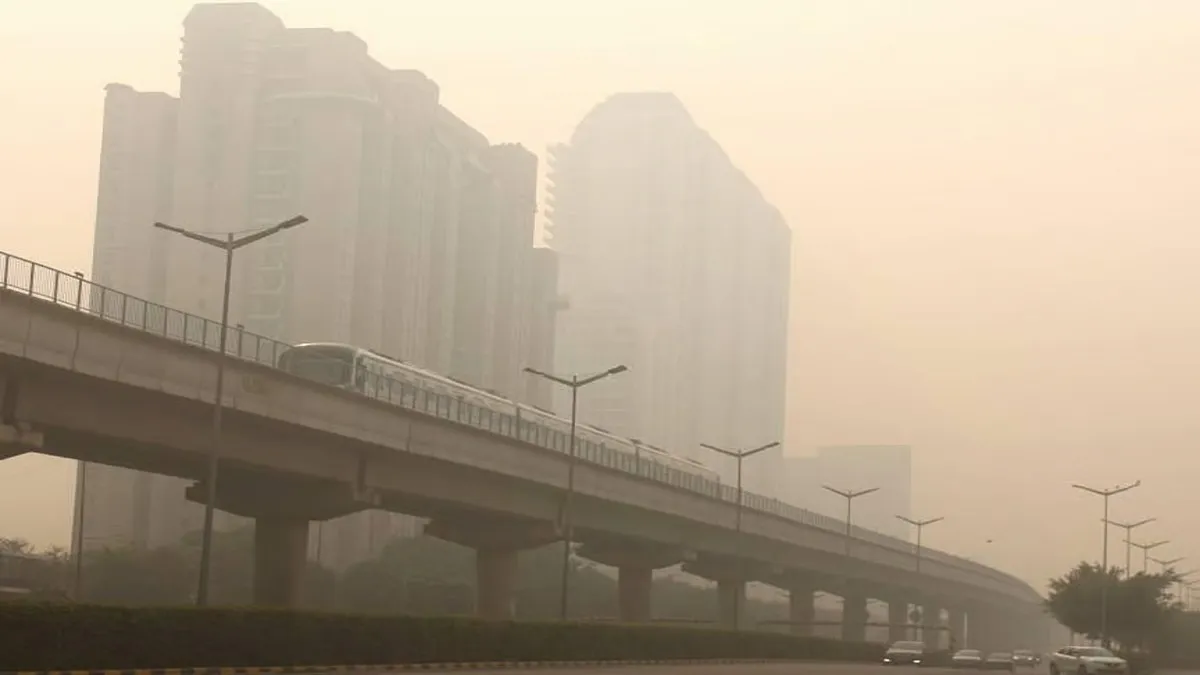
The Gurugram administration has announced a fresh set of restrictions to tackle worsening air pollution, imposing a temporary ban on dust-generating construction and demolition activities across the district from November 5 to November 20. The move comes in accordance with directions issued by the Commission for Air Quality Management (CAQM) to contain pollution levels in the National Capital Region (NCR).
Alongside the construction restrictions, the administration has directed Haryana government departments and private offices in Gurugram to adopt a work-from-home arrangement for their employees. Under the order, only 50 per cent of the workforce will be permitted to attend offices physically, while the remaining employees will work remotely. Deputy Commissioner Uttam Singh issued the directions on Tuesday, making it clear that the restrictions must be followed by all concerned establishments during the specified period.
Gurugram construction ban from November 5 to 20, check exempted projects
The prohibition covers dust-producing construction and demolition work across several categories of infrastructure projects. These include highways, roads, flyovers, overbridges, pipelines and other linear public infrastructure developments.
However, the administration has provided exemptions for certain essential and strategically important projects to ensure that critical services and infrastructure work are not disrupted.
Industrial establishments and essential services have been kept outside the restrictions. Construction activities associated with railways, metro projects, airports, hospitals, water supply systems, sanitation facilities and national security will also be allowed to continue. The exemptions are intended to ensure that essential infrastructure and public services remain operational even as the administration steps up efforts to control pollution.
Gurugram offices to follow 50% work-from-home rule
The administration has also made a 50 per cent physical attendance arrangement mandatory for Haryana government and private offices operating in Gurugram. Under the directive, organisations will have to ensure that no more than half of their employees report to workplaces at a given time. The remaining workforce must work from home during the period covered by the order.
Offices have additionally been instructed to prepare and maintain attendance records based on employee rosters. This will help authorities verify whether establishments are complying with the revised workplace arrangements. The measure is aimed at reducing commuting-related activity and limiting the number of people travelling to workplaces amid the worsening pollution situation.
Daily inspections ordered, violations to invite action
To ensure that the restrictions are implemented effectively, the administration has assigned monitoring responsibilities to the Sub-Divisional Magistrates (SDMs) concerned and officials of the Haryana State Pollution Control Board. The designated officials will carry out inspections every day to check whether construction activities and office attendance arrangements comply with the orders. The administration has also warned that violations will invite legal action under the Commission for Air Quality Management Act, 2021. This makes compliance mandatory for the establishments and agencies covered by the restrictions.
Severe air pollution poses health risks, warns Medanta doctor
Amid the deteriorating air quality, Dr Randeep Guleria, Chairman of the Institute of Internal Medicine, Respiratory and Sleep Medicine at Medanta, Gurugram, has raised concerns over the health implications of prolonged exposure to polluted air.
He cautioned that air quality in the severe and very severe categories presents a major health challenge, particularly for people suffering from chronic respiratory and cardiovascular conditions. Children and elderly people are also among the most vulnerable groups. "The AQI has now reached the severe or very severe range, which is very troublesome and poses a major challenge, especially for people with chronic respiratory problems, chronic heart disease, young children, and the elderly," Guleria said.
He explained that hospitals generally witness an increase in emergency cases involving breathing difficulties and persistent coughs when pollution levels rise sharply. While some patients require treatment in hospital wards, others may need admission to intensive care units.
The impact is not limited to people with pre-existing medical conditions. Even otherwise healthy individuals can experience chest tightness, breathlessness, coughing and watering of the eyes when exposed to severely polluted air.
How severe pollution affects lungs and heart
Explaining the medical consequences of deteriorating air quality, Guleria said exposure to pollutants can increase inflammation in the lungs and blood vessels. This can aggravate existing conditions such as chronic obstructive pulmonary disease (COPD), asthma and heart disease.
For people already dealing with respiratory or cardiovascular illnesses, the additional stress caused by pollution can result in worsening breathlessness and a decline in oxygen saturation levels. The warning highlights the importance of taking precautions, particularly for vulnerable groups, during periods when air quality deteriorates into the severe category.
Why does pollution remain trapped over the Indo-Gangetic Plain?
Guleria also highlighted the role of geographical and meteorological conditions in worsening air pollution during winter. According to him, the Indo-Gangetic Plain's landlocked geography, coupled with low wind speeds during the winter months, creates conditions in which pollutants remain concentrated close to the ground. Instead of getting dispersed through stronger winds, polluted air tends to accumulate near the surface, increasing people's exposure to harmful pollutants. This combination of emissions and unfavourable weather conditions makes controlling pollution particularly challenging during the winter season.
(With inputs from agencies)
Also Read:
